

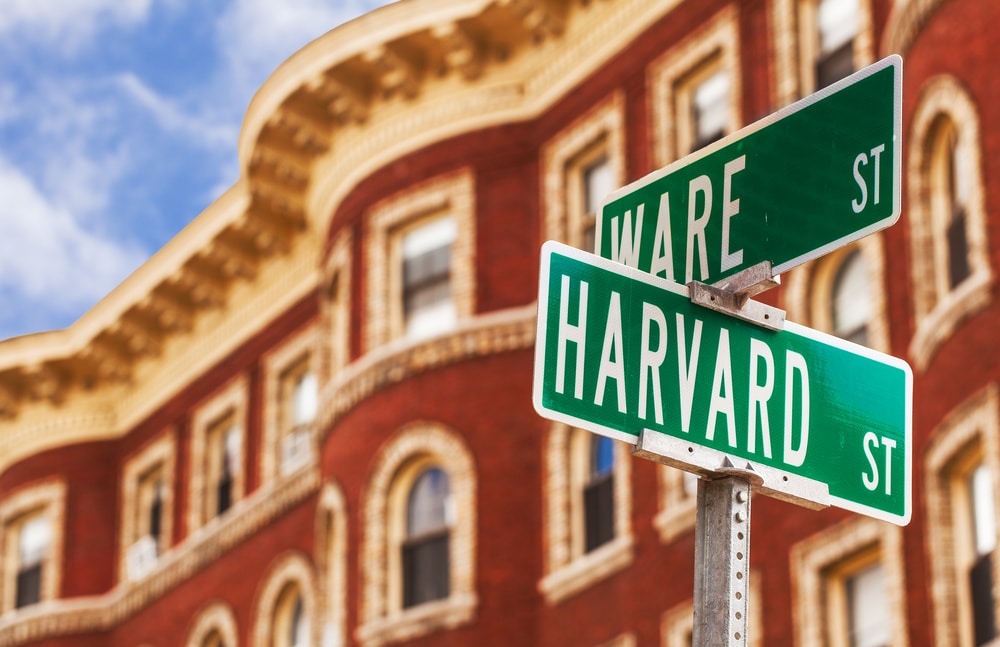
Despite popular belief—and contrary to what a certain statue might suggest—John Harvard did not found Harvard University. Instead, he was its first major benefactor, donating half of his estate and a library of over 400 books to the institution.
In reality, Harvard was officially established by a vote of the Great and General Court of the Massachusetts Bay Colony. Let’s explore the origins of Harvard University and how this iconic institution came to be.
- Who Was John Harvard?
- Why Was Harvard Founded?
- Harvard’s Growth and Early Challenges
- How Harvard’s Foundation Still Influences Admissions
- Frequently Asked Questions
- Takeaways
Who Was John Harvard?
John Harvard was an English clergyman and scholar born in 1607 in Southwark, England. He came from a family of tradespeople—his father, Robert Harvard, was a butcher and tavern owner, while his mother, Katherine, came from a family of cloth merchants. Despite his modest beginnings, John Harvard’s educational pursuits and marriage to a wealthy family later gave him a considerable inheritance, which helped establish his legacy.
After studying at Emmanuel College, Cambridge, John Harvard immigrated to the Massachusetts Bay Colony in 1637. While he didn’t run a business, Harvard inherited significant wealth from his parents and his wife, Ann Sadler, whose family was also relatively prosperous. This inheritance and his dedication to higher education led him to make a substantial donation to the newly established college in Cambridge, Massachusetts.
John Harvard’s gift of £779 and over 400 books was pivotal for the fledgling institution. John Harvard’s books helped the college develop an academic culture, and his donation showed the importance of supporting higher education. At a time when books were scarce and expensive, his library formed the backbone of Harvard College’s early academic resources. His contribution set a trend of philanthropic support that helped Harvard grow and thrive, inspiring future benefactors to invest in higher education and academic advancement.
When was Harvard founded?
Harvard, the first college in the American colonies, was founded on October 28, 1636. The Puritans’ desire to create a center of learning that would preserve their religious beliefs and societal values for future generations drove Harvard’s founding.
The Puritans were a religious group that emerged in England during the late 16th and early 17th centuries. They were part of the broader Protestant Reformation, which sought to reform the practices and beliefs of the Roman Catholic Church. Dissatisfied with the Church of England, which they felt retained too many Catholic influences, the Puritans aimed to “purify” the church and adhere strictly to their interpretation of the Bible. They believed in a simple, disciplined lifestyle guided by strong religious and moral values, emphasizing the importance of community, hard work, and personal piety.
The Puritans faced significant persecution in England for their beliefs and practices, often clashing with the monarchy and established church. This led many Puritans to seek religious freedom elsewhere, culminating in the Great Migration to America in the early 1600s. Arriving in the Massachusetts Bay Colony, they sought to build a “city upon a hill,” a model Christian society based on their religious ideals.
Their faith greatly valued education, especially for reading the Bible and raising a well-informed clergy. This conviction inspired the Puritans to establish Harvard College in 1636, believing that a learned ministry was essential for maintaining their religious and social values in the New World. Harvard thus became the first institution of higher learning in the American colonies, reflecting the Puritans’ commitment to a literate and theologically grounded society. Their influence on early American education and society would impact the nation’s cultural and religious landscape.
Why Was Harvard Founded?
The Puritans strongly emphasized education, not just for religious reasons but also for the practical needs of their community. They believed that an educated populace was crucial for the success of their new society.
By establishing Harvard, they hoped to create a foundation for intellectual growth to support their community’s leaders in the church and civic life. This dual focus on religion and public service helped shape Harvard’s mission and identity from its earliest days.
While Harvard started with religious goals, it quickly expanded. By the 18th century, it became more secular, admitting students with various interests and career goals. Today, Harvard is much more than just a school for clergy.
It has evolved into a university known for its liberal arts education, research opportunities, and producing influential graduates. The shift from a strictly religious institution to a more inclusive and secular one was gradual, reflecting broader changes in colonial society and the growing importance of science, philosophy, and the humanities.
Harvard’s Growth and Early Challenges
Founding a college in the middle of a developing colony wasn’t easy. In the early 1600s, the Massachusetts Bay Colony was a rough place. Supplies were scarce, resources were stretched thin, and money was often a problem.
Despite these hardships, the colony’s leaders remained committed to building Harvard. By 1650, Harvard had obtained a charter from the Massachusetts General Court, officially incorporating the college. This allowed Harvard to continue expanding.
The early years of Harvard were marked by financial instability and logistical challenges. The college relied heavily on donations and support from the local community and wealthy benefactors in England. Initially, the curriculum was limited, focusing mainly on theology, Latin, and Greek.
However, as the colony grew and prospered, Harvard began expanding its offerings, adding new subjects considered essential for an educated leader. The college’s ability to adapt and grow during these challenging times was a testament to the commitment of its founders and supporters.
To keep up with colonial society’s increasing demands, Harvard started adding programs that extended beyond clergy training. By the 1700s, Harvard began offering a broader curriculum that included the classics, mathematics, and philosophy—considered necessary for educated leadership in the colony.
The addition of these subjects helped Harvard transition from a purely religious institution to a more well-rounded center of learning, capable of preparing students for various roles in the growing colonial society.
Early benefactors and the tradition of philanthropy
John Harvard’s initial donation was just the beginning. Throughout the 17th and 18th centuries, wealthy individuals and public figures donated to the college.
One notable example was Ann Radcliffe, Lady Mowlson, who donated funds for the first scholarship for female students at Harvard’s associated college for women, Radcliffe College. This helped to establish a pattern of philanthropic support that became central to Harvard’s development.
One key factor that has helped Harvard maintain its position as a world-class university is its ability to attract and retain talented individuals. As of October 2024, their endowment is estimated to be at around $53.2 Billion. The generous financial aid packages funded by this endowment make it possible for students from diverse backgrounds to attend Harvard.
This commitment to accessibility and excellence directly results from the philanthropic tradition that began with John Harvard and continues to this day. Such a large endowment helps ensure that the university remains where the best and brightest can come together to learn and grow.
Harvard and the Ivy League connection
The Ivy League is now synonymous with academic excellence, and Harvard’s role in its formation is a significant part of its history. Although the Ivy League was initially formed as an athletic conference, it quickly became associated with its member schools’ high academic standards and rigorous admissions processes.
Getting into Harvard University is exceptionally challenging. Ranked 3rd in the U.S. by U.S. News & World Report and 4th globally in the latest QS World University Rankings, Harvard’s renowned academic excellence, and history of producing top leaders across nearly every field make it one of the most sought-after institutions worldwide.
Harvard’s early commitment to excellence in education and its ability to attract talented students and faculty helped set the standard for what it means to be an Ivy League institution. Today, Harvard is often seen as the gold standard of higher education in the United States and worldwide.
How Harvard’s Foundation Still Influences Admissions
When considering Ivy League admissions today, Harvard’s origins influence its culture. Harvard was founded to develop educated leaders, and this legacy is still evident in the types of students it seeks to admit. Academic excellence is a given, but leadership qualities, community involvement, and a strong work ethic often set successful applicants apart.
Harvard wants to build a community that continues to influence the world, just like the original Puritan settlers wanted for their fledgling society. Applicants with a track record of leadership and a genuine desire to make an impact often have a better chance of being admitted.
The emphasis on leadership and community involvement can be traced back to Harvard’s early mission of preparing individuals for public service. Today, Harvard looks for students who excel academically and are committed to making a difference in their communities and beyond.
The admissions process at Harvard is exceptionally competitive, with thousands of high-achieving applicants competing for a limited number of spots each year. Harvard looks for students who excel academically and bring unique qualities that will contribute to the Harvard community and, ultimately, to society as a whole. The university values leadership and a commitment to service, reflecting the core principles that have been part of Harvard’s mission since its founding.
Harvard’s reputation for academic excellence and producing leaders across nearly every field makes it one of the world’s most coveted institutions. With an acceptance rate of just 3.6% for the Class of 2028, gaining admission to Harvard has become increasingly challenging as competition intensifies yearly.
Harvard’s evolving mission
While Harvard started with a focus on educating clergy, its mission has continually evolved to meet the needs of the time. In the 19th and 20th centuries, Harvard moved away from strictly religious instruction and embraced a more secular and research-oriented focus. It became a leader in various fields, including law, business, and medicine, providing a broad education that equips students for various professions.
In the 21st century, Harvard continues to focus on producing leaders. It looks for students who excel academically and are passionate about innovation, public service, and making a difference in the world.
Harvard’s diverse curriculum, interdisciplinary approach, and access to global opportunities all help fulfill this mission. The university’s commitment to excellence in education, research, and public service has helped it maintain its status as one of the world’s leading institutions of higher learning.
Harvard’s ability to adapt to changing times and its willingness to embrace new ideas and approaches have been key to its success. From its early days as a small college training clergy for the Puritan church to its current role as a global leader in education and research, Harvard has always been at the forefront of innovation and change. This ability to evolve and grow is one of the reasons why Harvard remains such a respected and influential institution today.
Frequently Asked Questions
1. How did Harvard get its name?
Harvard was named after John Harvard, who donated his library and half of his estate to the college in 1638. This significant contribution helped ensure the college’s early survival and growth.
2. What was Harvard’s original purpose?
Harvard was founded to train Puritan ministers for the Massachusetts Bay Colony, emphasizing religious education and community leadership.
3. How did Harvard become a part of the Ivy League?
Harvard’s early focus on academic excellence and its rigorous standards eventually led it to become one of the founding members of the Ivy League. This athletic conference evolved to symbolize academic prestige.
4. How has Harvard’s mission evolved over time?
Originally focused on religious education, Harvard transitioned to a broader liberal arts curriculum by the 18th century, and today it emphasizes innovation, public service, and leadership in various fields.
5. Why is Harvard considered prestigious today?
Harvard’s long history, influential alumni, rigorous admissions standards, and commitment to excellence in education and research have contributed to its reputation as one of the most prestigious universities in the world.
Takeaways
- Harvard was founded in 1636 by the Massachusetts Bay Colony and named after John Harvard.
- John Harvard’s donation of books and money was crucial in establishing the college.
- The original goal was to train Puritan clergy, but Harvard’s mission evolved over time.
- Harvard’s legacy of producing leaders is still a core aspect of its admissions process today.
- Considering Harvard as your college of choice? Seek help from an admissions consultant to guide you along the application process.










