


Engineering competitions for high school students are a great way to build practical skills, all while exploring your passion for science and technology. Research from the Orlando Science Center shows that students who participate in STEM competitions develop essential skills such as critical thinking, collaboration, and mental toughness. These experiences also help students manage stress and build resilience.
These competitions often provide valuable prizes such as scholarships, mentorship programs, and opportunities to connect with universities and industry leaders. Let’s check the top engineering competitions for high school students to help you find the right challenge that fits your interests and goals.
- Best Engineering Competitions for High School Students
- Regeneron International Science and Engineering Fair (ISEF)
- Regeneron Science Talent Search (STS)
- FIRST Robotics Competition (FRC)
- First Tech Challenge (FTC)
- Tests of Engineering, Aptitude, Math and Science (TEAMS)
- Science Olympiad
- National Science Bowl
- Davidson Fellows Scholarship
- Zero Robotics Competition
- VEX Robotics Competition
- Frequently Asked Questions
- Takeaways
Best Engineering Competitions for High School Students
Many engineering competitions for high school students offer scholarships, mentorship opportunities, and recognition from top universities and industry professionals. Participating can give you a competitive edge in college admissions and provide connections that support your future studies and career path.
Below is an overview of the 10 leading engineering competitions for high school students:
|
Rank |
Competition Name | Location |
Dates |
|
1 |
Regeneron International Science and Engineering Fair (ISEF) | Phoenix, Arizona, USA | Year-round; Event week on May 9-15, 2026 |
| 2 | Regeneron Science Talent Search (STS) | Washington, D.C., USA |
Opens on June 1; Finals Week on March 5–11, 2026 |
|
3 |
FIRST Robotics Competition (FRC) | Houston, Texas, USA | Kick-off on January 10; Championship on April 29 – May 2, 2026 |
| 4 | First Tech Challenge (FTC) | Houston, Texas, USA |
Opens on September 6; Championship on April 29 – May 2, 2026 |
|
5 |
Tests of Engineering, Aptitude, Math and Science (TEAMS) | Washington, D.C., USA | Opens January 10, 2026; National Competition on June 22– 26, 2026 |
| 6 | Science Olympiad | University of Southern California (USC), Los Angeles, California, USA |
Opens on January; National Tournament on May 22–23, 2026 |
|
7 |
Science Bowl | Washington, D.C., USA | Opens on October 6; National Finals on April 30 – May 4, 2026 |
| 8 | Davidson Fellows Scholarship | Online; United States |
Submissions until February 11, 2026; Scholarship notification on or before July 15 |
|
9 |
Zero Robotics Competition | Online; International | Launch on January 9; Finals on February 21, 2026 |
| 10 | VEX Robotics Competition | St. Louis, Missouri, USA |
Year-round; World Championship in April 2026 |
Let’s discuss each competition one by one.
1. Regeneron International Science and Engineering Fair (ISEF)
- Dates: Year-round; Event week on May 9-15, 2026
- Location: Phoenix, Arizona (Event week 2026)
- Prizes: $9 million in scholarships, awards, and prizes
The Regeneron ISEF is a top-tier competition for high school students globally, focusing on original research projects across science and engineering fields. Students typically participate individually, presenting their experiments and research to panels of expert judges.
Open to students in grades 9–12 (generally ages 14–19), the competition requires qualification through regional or national science fairs. With its international scope, the fair creates a diverse and enriching environment, supported by universities and industry sponsors such as Regeneron Pharmaceuticals, Microsoft, and Jacobs.
Prizes include significant scholarships, cash awards, internships, and invitations to prestigious science forums. If you want step-by-step advice on how to submit a strong entry, check out our full guide to Regeneron ISEF.
2. Regeneron Science Talent Search (STS)
- Dates: Opens on June 1; Finals week on March 5–11, 2026
- Location: Washington, D.C., USA (2026 Finals week)
- Prizes: Over $1.8 million in awards, with a top prize of $250,000
The Regeneron Science Talent Search (STS) is the oldest and most prestigious science competition for high school seniors in the U.S. Each year, around 2,500 students enter, submitting original research papers in science, technology, engineering, and mathematics. Participants compete individually by submitting a detailed research paper and project summary, reviewed by expert judges.
Eligibility is limited to U.S. high school seniors under 20 who have conducted independent research. STS awards substantial scholarships ranging from $25,000 to $250,000 for top winners, along with internships and recognition that greatly enhance college applications.
For a detailed overview and tips on how to excel at the Regeneron STS, read our full guide to Regeneron STS.
3. FIRST Robotics Competition (FRC)
- Dates: Kick-off on January 10; Championship on April 29 – May 2, 2026
- Location: Houston, Texas, USA (2026 Championship)
- Prizes: Scholarships, awards, and recognition
The FIRST Robotics Competition (FRC) is a high-energy team-based engineering contest that challenges students in grades 9–12 to design, build, and compete with robots. Teams of up to 25 students work together over six weeks to build a robot based on yearly game challenges that test mechanical design, programming, and teamwork.
FRC offers numerous awards supported by major sponsors such as NASA, Being, Google, and the Gene Haas Foundation for engineering excellence, innovation, and community impact. Industry mentors support teams during the build season, providing guidance on engineering and project management skills.
For more information and tips on how to join or excel in FRC, check our First Robotics Competition guide.
4. First Tech Challenge (FTC)
- Dates: Opens on September 6; Championship on April 29 – May 2, 2026
- Location: Houston, Texas, USA (2026 Championship)
- Prizes: Scholarships, awards, and advancement opportunities
First Tech Challenge (FTC) is an engineering competition for high school students (grades 7–12) that focuses on designing, building, and programming robots to compete in a themed challenge. Teams work collaboratively to create robots using a modular robotics platform. The season includes community events, regional qualifiers, and state or national championships.
Competitions involve robot matches, judged awards for innovation, design, and community outreach, and opportunities to advance to higher-level tournaments. Scholarships sponsored by colleges and corporations like RTX and General Motors are awarded to standout participants.
FTC’s global reach and emphasis on programming and design make it popular for students interested in robotics careers. To learn more about participation, rules, and resources, visit our guide about the First Tech Challenge.
5. Tests of Engineering, Aptitude, Math and Science (TEAMS)
- Dates: Opens January 10, 2026; National Competition on June 22– 26, 2026
- Location: Washington, D.C., USA (2026 National Competitions)
- Prizes: Awards, scholarships, and recognition
TEAMS is a team-based competition designed for high school students in grades 9–12 that combines engineering, math, and science problem-solving. Teams of up to four students collaborate to solve real-world engineering challenges through tests and design tasks.
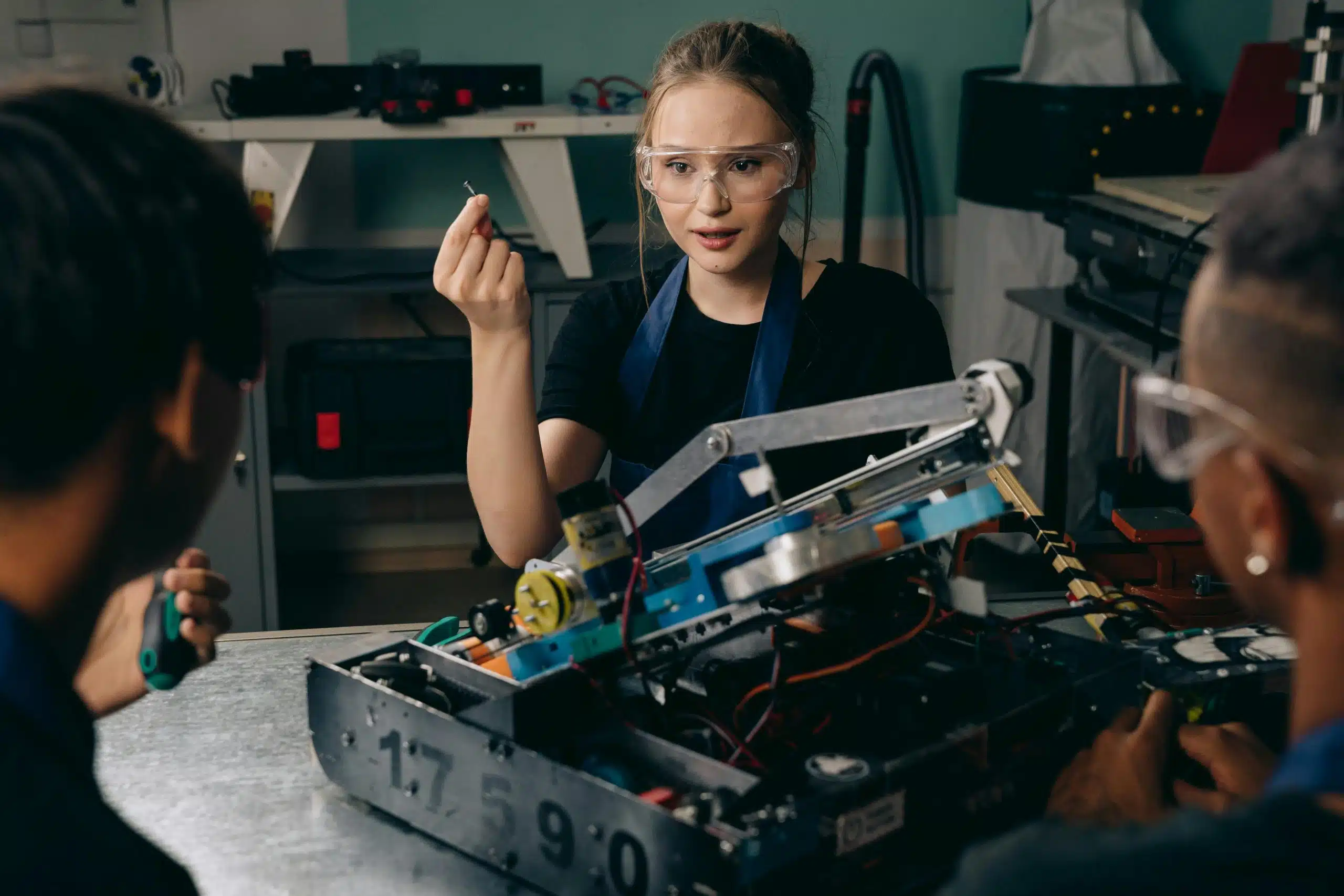
Organized by the Technology Student Association (TSA), TEAMS emphasizes practical, creative application of classroom learning to real engineering problems. The competition includes four parts: Design/Build, Multiple Choice, Mathematical Modeling, and Essay under the 2026 theme “Engineering the Past”.
Prizes include trophies, certificates, and scholarships awarded to top-performing teams and individuals. TEAMS provides a valuable introduction to collaborative STEM problem-solving and is accessible across many U.S. locations.
For detailed information and preparation tips on the TEAMS competition, check our comprehensive TSA TEAMS guide. It offers guidance on competition rules, formats, and strategies to help your team succeed in this collaborative engineering challenge.
6. Science Olympiad
- Dates: Opens on January; National Tournament on May 22–23, 2026
- Location: University of Southern California (USC), Los Angeles, California, USA
- Prizes: Trophies, scholarships, and recognition
Science Olympiad is a well-known team STEM competition with 15-member high school teams competing in events like bridge building, tower construction, technical problem-solving, and engineering design. These contests require application of physics, mechanics, and materials science to real-world problems, emphasizing collaboration, innovation, and communication.
Teams qualify by registering with their state chapter and advancing through regional and state tournaments. High placements can earn students prestigious scholarships such as the $10,000 Founders’ Scholarship and research grants, which can support college ambitions and STEM careers.
Qualifying involves joining or forming a school team, registering through your state chapter, and performing well at regional and state tournaments. The top teams advance to nationals, held in 2026 at the University of Southern California in Los Angeles.
For a complete overview and expert tips on how to prepare, qualify, and succeed, check out our full guide to Science Olympiad. It offers everything you need to know to make the most of this team-based STEM competition and boost your chances of winning scholarships and recognition.
7. National Science Bowl
- Dates: Opens on October 6; National Finals on April 30 – May 4, 2026
- Location: Washington, D.C., USA (2026 National Finals)
- Prizes: Scholarships, trophies, and recognition
The National Science Bowl, organized by the U.S. Department of Energy, is one of the nation’s premier academic STEM competitions. Established in 1991, the program was created to encourage excellence in science and mathematics.
The competition is offered in two divisions—Middle School and High School—with teams composed of four students, one alternate, and a teacher who serves as advisor and coach. Teams compete in fast-paced, buzzer-style rounds that test knowledge across biology, chemistry, Earth science, physics, energy, mathematics, and applied engineering topics such as circuitry, energy systems, mechanical design, and robotics.
Each year, more than 10,000 students participate in approximately 65 regional tournaments held across the United States. Regional competitions may be conducted in person or virtually, depending on location and circumstances. Top-performing teams from each division advance to the National Finals, an in-person event hosted in Washington, D.C.
For detailed guidance on preparing, qualifying, and succeeding in the competition, explore our full guide to the National Science Bowl.
8. Davidson Fellows Scholarship
- Dates: Submissions until February 11, 2026; Scholarship notification on or before July 15
- Location: Online (United States)
- Prizes: Scholarships of $100,000, $50,000, or $25,000 awarded for educational expenses.
The Davidson Fellows Scholarship awards students 18 or younger who complete significant, original work at an advanced academic level in various categories.
One of its core categories, Engineering, requires applicants to submit a project in a defined field such as bioengineering, chemical, civil, electrical, environmental, or mechanical. Submissions must include a formal research report with bibliography, a visual model illustrating methods or results, and any code (in text or PDF format) used in the project.
Eligible applicants must be U.S. citizens or permanent residents (including those living abroad with active‑duty military parents), and demonstrate that the submitted work is their own; two‑person teams are allowed if both students meet the criteria.
Every application must include category‑specific materials, two nominator forms from adults familiar with the project, and a signed commitment to attend the awards ceremony if selected.
Each year, only a small cohort of Fellows is chosen, and they are formally recognized at an awards reception in Washington, D.C.
If you’ve developed a standout engineering project and want to learn how to apply effectively, explore our complete guide to the Davidson Fellows Scholarship.
9. Zero Robotics Competition
- Dates: Launch on January 9; Finals on February 21, 2026
- Location: Online (International)
- Prizes: Scholarships, internships, and opportunities to collaborate with NASA engineers
Zero Robotics is a unique online programming and engineering competition in which high school students design software to control robots in space aboard the International Space Station (ISS). Teams program autonomous maneuvers for space-themed tasks such as formation flying, obstacle avoidance, and resource optimization.
Regional leagues in the United States, Europe, and Australia run separate qualifying rounds before a joint finals event, where finalist teams’ code is uploaded and executed on ISS robots in microgravity. Finalists gain direct interaction with NASA and aerospace professionals, and stand-out teams may receive scholarships, internship pathways, and high-profile recognition.
For a complete guide on how to join, prepare, and succeed in the Zero Robotics Competition, check our full guide to Zero Robotics. It offers in-depth information on competition rules, coding tips, and strategies to help you take your team’s algorithms to space aboard the International Space Station.
10. VEX Robotics Competition
- Dates: Year-round; World Championship in April 2026
- Location: St. Louis, Missouri, USA (2026 World Championship)
- Prizes: Trophies, scholarships, and global recognition
The VEX Robotics Competition (VRC) challenges middle and high school students to design, build, and program robots using the VEX V5 system to play a new game each season, with both autonomous and driver-controlled periods.
Teams progress from local and regional qualifiers to state and national events, culminating in the VEX Robotics World Championship, where top teams from around the world compete for titles in robot performance, design, and teamwork.

Key awards include the Excellence Award, Design Award, and Robot Skills Champion, all of which are strong signals of technical and leadership ability for college applications. Partner universities, such as Worcester Polytechnic Institute, offer up to $80,000 in scholarships.
For a detailed guide on how to get started and excel in this contest, read our full guide to the VEX Robotics Competition.
Frequently Asked Questions
1. What are the best engineering competitions for high school students?
Regeneron ISEF, FIRST Robotics Competition, VEX Robotics Competition, and Zero Robotics top the list for high school students seeking hands-on engineering challenges with scholarships and global recognition. These competitions emphasize design, coding, and teamwork while building skills for college and STEM careers.
2. How do high school students qualify for engineering competitions?
Most engineering competitions require joining a school team, registering through official portals, and performing well in regional qualifiers to advance to nationals or worlds. Strong performances in skills challenges, judged awards, or research presentations secure spots in top events like VEX Worlds or ISEF.
3. Are engineering competitions good for college applications?
Yes, engineering competitions like FIRST Robotics, Science Olympiad, and Davidson Fellows count as Tier 1 extracurriculars that demonstrate innovation, leadership, and technical skills valued by top universities. National wins or finalist status significantly boost STEM applications.
4. When do most engineering competitions for high school students occur?
Many run from fall to spring with regional events in January–March and nationals in April–May, such as Science Bowl finals April 30–May 4, 2026, and VEX Worlds April 23–May 2, 2026. Check specific dates as seasons align with the school year.
5. Do engineering competitions offer scholarships?
Top engineering competitions offer scholarships like $250,000 from Regeneron STS, $100,000 from Davidson Fellows, and university-funded awards through FIRST and VEX Robotics. These prizes support college tuition and recognize outstanding high school engineering talent.
Takeaways
- Engineering competitions for high school students offer valuable experiences in problem-solving, design, coding, and teamwork that are essential for future STEM careers.
- Participating in contests like FIRST Robotics, VEX Robotics, Regeneron ISEF, and Zero Robotics can provide scholarships, mentorships, and national recognition.
- Many competitions run on a fall-to-spring schedule with regional qualifiers early in the year and national or international finals in the spring.
- These challenges boost critical thinking, communication, and leadership skills, making students more competitive in college admissions.
- Excelling in engineering competitions demonstrates innovation and persistence—qualities that top universities seek in applicants.
- Get expert coaching and support from AdmissionSight to maximize your chances of success in engineering competitions for high school students and help boost your college applications.










