
The rivalry between MIT vs Princeton isn’t loud or intense like the legendary Harvard-Yale matchups or the West Coast energy of Stanford vs. Cal. But make no mistake: there’s a low-key, very real competition, especially for high-achieving students trying to choose between them.
You’ll find both MIT and Princeton at the top of just about every ranking, but they each have a totally different vibe. In this blog, we’ll break down what truly sets MIT and Princeton apart—academics, admissions, cost, and financial aid. This side-by-side comparison will help you determine which school better aligns with your goals, personality, and learning style.
- MIT vs Princeton: Quick Overview
- MIT vs Princeton: Acceptance Rates
- MIT vs Princeton: Rankings
- MIT vs Princeton: Admission Requirements
- MIT vs. Princeton: Cost of Attendance
- MIT vs Princeton: Financial Aid and Scholarships
- Final Verdict: MIT vs. Princetonftakeaways
- Frequently Asked Questions
- Takeaways
MIT vs Princeton: Quick Overview
Before diving into all the details, here’s a quick general look at MIT and Princeton to help you get your footing.
Massachusetts Institute of Technology
MIT—short for the Massachusetts Institute of Technology—got its start in 1861, right as the Civil War was beginning. While most schools back then were focused on the classics, MIT had a different idea. Instead of just learning from books, students were encouraged to roll up their sleeves and dive into hands-on, practical learning, especially in science and engineering.
The school officially opened in 1865, just after the war, and from the beginning, it set itself apart by focusing on real-world problem-solving. That mindset never really left. In fact, it’s become a core part of what MIT is all about.
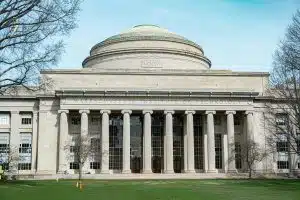
Over time, MIT has reshaped how people think about education in STEM fields. It was one of the first to push project-based learning—basically, learning by doing. A great example is UROP (Undergraduate Research Opportunities Program), which lets students get involved in real research, often as early as their first year. And long before online classes became mainstream, MIT launched its OpenCourseWare project in 2001, putting course materials online for free.
MIT’s alumni list is just as impressive. You’ve got Kofi Annan, a Nobel Peace Prize winner and former UN Secretary-General. Amar Bose, founder of the Bose Corporation, started there. And Drew Houston, co-founder of Dropbox, also came out of MIT. And that’s just scratching the surface—MIT grads have been changing the world in all kinds of ways.
Princeton University
Princeton University, founded way back in 1746, is one of the oldest and most respected schools in the U.S. It originally opened as the College of New Jersey in Elizabeth, then made the move to its iconic Princeton campus in 1756.
What began as a small colonial college has grown into a globally recognized institution known for academic excellence and forward-thinking research. While Princeton is famous for its strength in math and the sciences, it also shines in the humanities and the arts. Its creative writing program, for example, has launched the careers of some of the most influential writers out there today.

Princeton’s impact goes far beyond the classroom. In environmental science, its researchers were early leaders in modeling climate change and continue to innovate through the Andlinger Center, working on projects like sustainable energy and carbon capture. In global affairs, faculty from the School of Public and International Affairs have helped shape U.S. policy and advised major international organizations on conflict resolution and development.
Princeton’s alumni list is full of heavy hitters. Two U.S. Presidents—James Madison and Woodrow Wilson—got their start at Princeton. The university also boasts Nobel Prize winners, including Maria Ressa (Peace, 2021), Kip Thorne (Physics, 2017), A. Michael Spence (Economics, 2001), and Woodrow Wilson again (Peace, 1919). It’s a long legacy of people using their Princeton education to change the world.
MIT vs Princeton: Acceptance Rates
MIT vs. Princeton isn’t a loud rivalry, but when it comes to admissions, the competition is intense. Both schools attract some of the brightest, most ambitious students around the world, and their selectivity proves it:
| School | Acceptance Rate (Class of 2028) |
| MIT | 4.5% |
| Princeton | 4.6% |
For the Class of 2028, MIT admitted just 4.5% of applicants. Out of 28,232 students who applied, only 1,284 received an acceptance letter. Meanwhile, Princeton was close behind with a 4.6% acceptance rate—only 1,868 got the green light out of 40,468 applicants—also keeping its admit pool incredibly tight.
These numbers make it clear that neither school is easy to get into. To have a real shot, you’ll need more than stellar grades and test scores—you’ll need something that sets you apart in a sea of top performers.
MIT vs Princeton: Rankings
When you’re trying to choose between MIT and Princeton, checking out university rankings can help you get a clearer picture of each school’s strengths. Rankings aren’t everything, but they do offer useful insight, especially if you care about research reputation, global influence, or where graduates tend to end up after college.
Here’s a quick look at how MIT and Princeton have compared in recent years across three major rankings: Times Higher Education, QS World University Rankings, and U.S. News & World Report.
| World Rankings | MIT | Harvard |
| Times Higher Education 2025 | #2 | #4 |
| Times Higher Education 2024 | #3 | #6 |
| Times Higher Education 2023 | #5 | #7 |
| QS World University Rankings 2025 | #1 | #22 |
| QS World University Rankings 2024 | #1 | #17 |
| QS World University Rankings 2023 | #1 | #16 |
| US News Best National University Rankings 2025 | #2 | #1 |
| US News Best National University Rankings 2024 | #2 | #1 |
| US News Best National University Rankings 2023 | #2 | #1 |
MIT and Princeton might both be elite schools, but when you look at the rankings, they tell slightly different stories depending on the source:
- Let’s start with Times Higher Education (THE). Princeton has been making steady gains, climbing from #7 in 2023 to #4 in 2025. MIT, however, has consistently stayed ahead, jumping from #5 in 2023 to an impressive #2 in 2025. So if you’re measuring global academic reputation and research strength, MIT has a slight edge in the latest THE rankings.
- Now switch over to the QS World University Rankings, and MIT completely dominates. It’s held the #1 spot for three years in a row—2023, 2024, and 2025. Princeton doesn’t appear in this specific chart, but based on past trends, it tends to rank slightly lower in QS compared to THE, often due to differences in how the two systems measure reputation, employer opinion, and international outlook.
- When we look at the U.S. News Best National University Rankings, it’s Princeton’s time to shine. The university has locked in the #1 spot in 2023, 2024, and again in 2025. MIT, while still outstanding, comes in right behind at #2 in all three years.
So what does all this mean? If you’re focused on global reputation in science and innovation, MIT clearly holds a commanding lead. But if you’re looking for the top-ranked undergraduate experience in the U.S., Princeton consistently claims that crown.
Rankings can be helpful, but they don’t tell the full story, especially when it comes to fit, campus culture, or the kind of academic experience you’re looking for.
MIT vs Princeton: Admission Requirements
Let’s take a look at what it takes to apply to MIT and Princeton. These are two of the most prestigious universities out there, but their admissions processes and what they value in applicants aren’t exactly the same.
Here’s a quick breakdown of what you’ll need for both the MIT and Princeton applications:
| Application Requirement | MIT Requirements | Princeton Requirements |
| Application Platforms | MIT Application Portal
QuestBridge Application |
Common Application
Coalition Application QuestBridge Application |
| Application Fee | $75 or fee waiver available | $70 or fee waiver available |
| Standardized Tests | MIT requires test scores.
SAT: 1520-1580 ACT: 34-36 |
Test optional
Average test scores: 1510-1560 (SAT), 34-35 (ACT) |
| High School Coursework Recommendations | No specific requirements but the requirements are typically:
Math including calculus Science,including physics, chemistry, and/or biology Humanities, arts, and social sciences (English, history, economics, music, and/or foreign languages) |
4 years of English
4 years of mathematics (including calculus for engineering applicants) 4 years of one foreign language At least 2 years of laboratory science (including physics and chemistry for engineering applicants) At least 2 years of history |
| GPA | No minimum requirements
Average GPA: 4.2 |
No minimum requirements
Average GPA: 3.94 |
| Letters of Recommendation | 3 recommendations required:
2 teacher recommendation letters 1 counselor letter (included in the School Report) |
1 counselor recommendation
2 teacher recommendations from core academic subjects |
| Supplemental Essays | 5 short-answer essay questions | 6 Princeton-specific questions
Graded written paper |
| Application Deadlines | Early Action: November 1
Regular Decision: January 6 |
Single-Choice Early Action: November 1
Regular Decision: January 1 |
For the 2024–2025 admissions cycle, both MIT and Princeton require standardized test scores. That means the SAT or ACT is mandatory, and you’ll want to aim high.
At MIT, most admitted students score between 1520 and 1580 on the SAT, or 34 to 36 on the ACT. Princeton’s score ranges are nearly the same, with typical scores falling between 1500 and 1580 on the SAT, and 34 to 36 on the ACT. In both cases, top applicants usually have near-perfect GPAs and a track record of excelling in the toughest courses available at their schools.
But strong academics are just the baseline—what each school looks for beyond that is where the differences start to show.
Princeton values intellectual depth, originality, and strong communication skills. If you’ve written compelling essays, published original work, earned national recognition in writing or the arts, or conducted in-depth research through programs like the Telluride Association Summer Seminar, that’s the kind of initiative that stands out. Leadership in service or community-focused projects, especially with a creative twist, is also a big plus.
MIT, meanwhile, is all about innovation, curiosity, and hands-on impact. If you’ve built robots, written code, launched a startup idea, or competed in science and math competitions like MIT THINK, Regeneron, Google Science Fair, or participated in FIRST Robotics, CodeDay, or Girls Who Code, MIT will take notice. Summer programs focused on STEM research like COSMOS, BU RISE, or MIT’s own Research Science Institute (RSI) are also great ways to show alignment with MIT’s values.
Both schools are ultra-selective but they’re looking for different flavors of brilliance. Princeton wants future scholars, leaders, and thoughtful changemakers. MIT is drawn to builders, inventors, and problem-solvers who take action and push boundaries.
If you’re trying to craft a standout application for either school, we’ve got up-to-date guides that can walk you through every part of the process.
MIT vs. Princeton: Cost of Attendance
Here’s a quick breakdown of the estimated cost of attending MIT and Princeton for the 2024–2025 academic year:
| School | Tuition and Fees | Living Costs | Total |
| MIT | Tuition: $61,990
Student life fee: $406 |
Housing: $13,060
Food: $7,220 Books: $910 Personal: $2,374 Student activities fee: |
$85,960 |
| Princeton | Tuition: $65,210
Fees: $288 |
Housing: $12,450
Food: $8,720 Books: $250 Miscellaneous fees: $4,050 |
$90,878 |
For the 2024–2025 school year, the estimated total cost of attendance is $85,960 at MIT and $90,878 at Princeton. That puts Princeton at roughly $4,900 more expensive than MIT for the year.
Princeton is located in New Jersey, which generally has a higher cost of living compared to Cambridge, Massachusetts—especially when it comes to food and personal expenses. That might help explain why Princeton’s living expenses, particularly food and miscellaneous fees, are noticeably higher.
MIT vs Princeton: Financial Aid and Scholarships
MIT and Princeton both come with high sticker prices, but they also offer some of the most generous financial aid programs in the country—making a top-tier education more accessible to students from all backgrounds.
Princeton is especially known for its no-loan financial aid policy. It’s need-blind for all applicants, which means your ability to pay won’t impact your chances of admission. Once you’re in, Princeton commits to covering 100% of your demonstrated need entirely through grants, not loans, so you won’t graduate with debt hanging over your head. In fact, many students from families earning under $100,000 pay nothing at all for tuition, room, or board.
MIT takes a similar approach. It’s also need-blind for domestic and international applicants and meets full demonstrated need. Roughly 90% of students receive some form of aid, and families making under $200,000 often attend with zero tuition cost. The aid package might include a modest student contribution or a work-study opportunity, but the overall goal is the same: to make an MIT education financially doable, no matter your income level.
So while both schools may seem expensive on paper, the actual cost for most students ends up being far more manageable thanks to these strong aid commitments.

Here’s a look at the types of financial aid and scholarship support offered by MIT and Princeton:
Financial aid and scholarships at MIT
- MIT Scholarship. This is MIT’s main form of need-based aid, awarded solely on your family’s financial circumstances. It’s funded through the university’s endowment and generous alumni donations. Best part? It doesn’t have to be paid back.
- First-Year Grant. To help ease the transition to college life, MIT offers incoming low-income students a $2,000 grant to cover essentials like bedding, winter clothes, school supplies, and other personal expenses.
- Federal Grants. Students who qualify based on financial need may also receive federal grants such as the Pell Grant, FSEOG (Federal Supplemental Educational Opportunity Grant), or the Iraq and Afghanistan Service Grant. These are awarded independently of MIT and also do not need to be repaid.
- Jack Kent Cooke Foundation College Scholarship. This highly competitive scholarship offers up to $55,000 per year for high-achieving students with significant financial need. It covers tuition, housing, books, and additional academic costs.
- Elks National Foundation Most Valuable Student Scholarship. Open to high school seniors across the U.S., this scholarship awards $1,000 to $12,500 per year, renewable for four years. It considers both leadership potential and financial need.
Financial Aid and Scholarships at Princeton
- Need-based grants. Princeton ensures that finances don’t become a barrier to earning a world-class degree. The university meets 100% of demonstrated financial need through grants, with no loans involved.
- Stamps Scholarship. In collaboration with the Stamps Scholars Program, Princeton offers a competitive merit-based scholarship that includes additional funding for enriching experiences like academic research, global travel, internships, or attending conferences.
- Davis UWC Scholars Program. Students who have graduated from a United World College (UWC) may qualify for this scholarship, which helps offset the cost of attending Princeton.
- QuestBridge National College Match. Princeton is a long-standing partner of QuestBridge, an initiative that matches high-achieving, low-income students with top-tier schools. Through this program, selected students can receive a full four-year scholarship that covers tuition, housing, meals, and student fees.
Final Verdict: MIT vs. Princeton
MIT and Princeton are both world-class universities, but they offer very different kinds of academic journeys:
- Princeton is rooted in tradition, with a strong emphasis on undergraduate teaching and close-knit academic communities. Classes are small, and professors are heavily involved in mentoring their students. While it’s widely known for its excellence in math and the sciences, Princeton also stands out in the humanities, public policy, and the arts.
- MIT, on the other hand, is high-energy and future-focused. It’s a place where innovation, engineering, and applied problem-solving take center stage. The pace is fast, and the culture leans toward experimentation and entrepreneurship. Students are hands-on, tech-savvy, and driven by curiosity.
So which one’s right for you?
If you’re drawn to classic academics, interdisciplinary exploration, and strong faculty mentorship, Princeton might be the better match. If you’re excited by technology, experimentation, and solving real-world problems, MIT may be the place where you’ll thrive.
Both will challenge you. Both will shape your future. It really comes down to how you learn and where you see yourself growing.
Frequently Asked Questions
1. Which school is harder to get into, MIT or Princeton?
Both schools are extremely selective, with acceptance rates around 4–5%. MIT tends to attract more STEM-heavy applicants, while Princeton receives a broader range across humanities and sciences. Neither is “easier” or “harder” to get into—it depends on your profile and fit.
2. Is MIT or Princeton better for STEM?
MIT is considered the global leader in applied science, engineering, and technology. If you’re into robotics, computer science, or innovation-driven research, MIT is unmatched. Princeton, however, offers top-tier programs in theoretical math, physics, and natural sciences with strong faculty mentoring.
3. Which school has better financial aid?
Both schools offer outstanding need-based financial aid. Princeton stands out for its no-loan policy, meaning students graduate debt-free. MIT also covers full demonstrated need and offers generous grants, especially for families making under $140,000.
4. Can I double major or explore non-STEM fields at both schools?
Yes. MIT offers flexibility and interdisciplinary options, though many programs are STEM-leaning. Princeton encourages exploration across departments and is especially strong in public policy, economics, literature, and philosophy.
Takeaways
Choosing between MIT and Princeton means deciding between two top-tier but very different experiences. Both schools offer unmatched academic quality, low acceptance rates, and excellent financial aid—but their cultures, priorities, and strengths point in different directions.
- MIT is innovation-driven, while Princeton leans into tradition and mentorship.
- Both schools are extremely selective and expect more than top grades. With acceptance rates under 5%, neither school is easy to get into.
- Rankings vary depending on what you’re measuring. MIT consistently tops global rankings like QS for innovation and STEM reputation, while Princeton ranks #1 in U.S. News for undergraduate experience.
- Cost of attendance is high at both, but MIT is slightly less expensive. MIT’s total estimated cost is around $85,960 compared to Princeton’s $90,878.
- Working with a college admissions expert can help you clarify your fit. An expert can guide you through the subtle differences between schools like MIT and Princeton.