

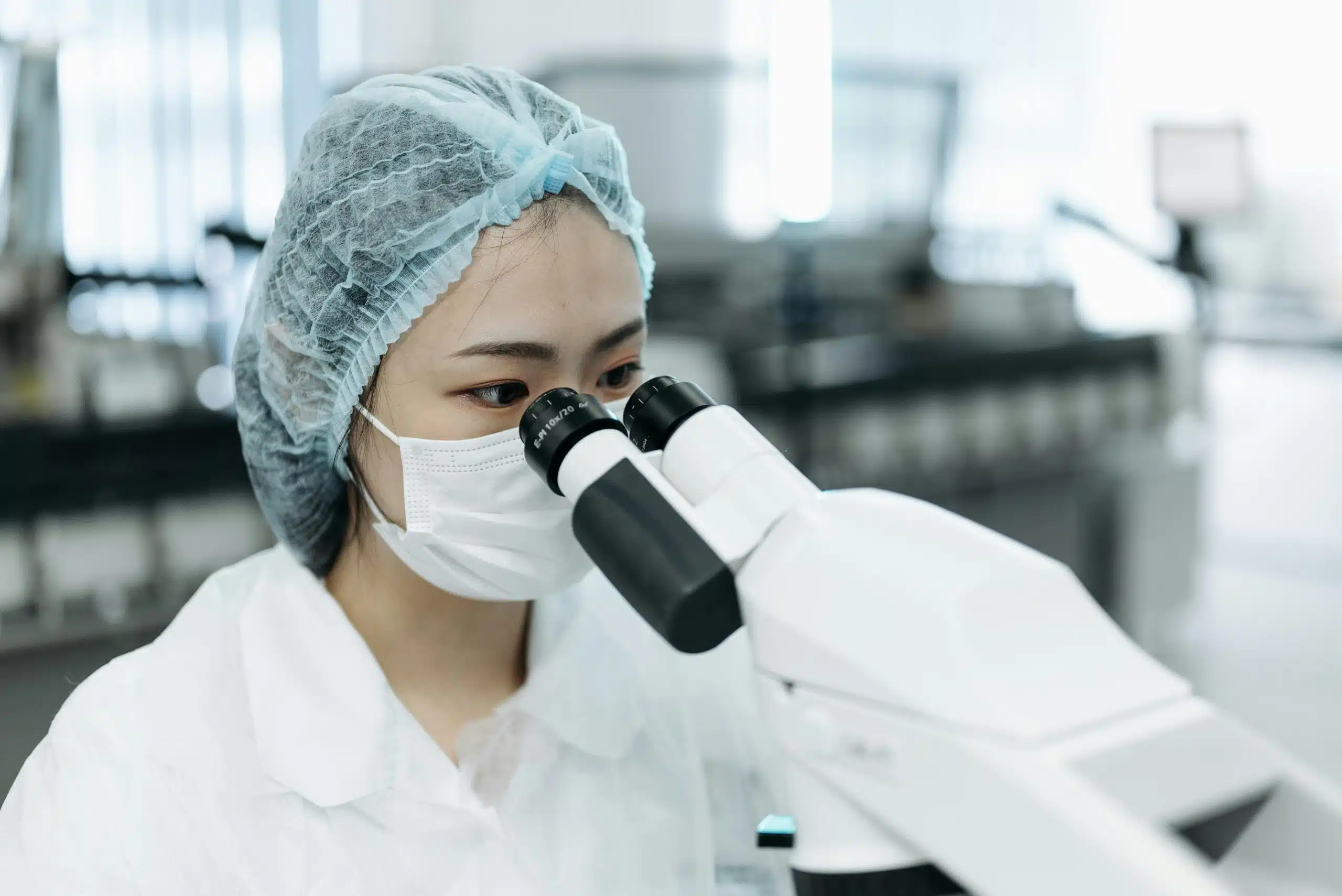
If you are aiming for a top research-focused college, participating in summer research programs for high school students gives you leverage and early academic momentum. You study college-level science or engineering, work with experts, and take part in real research projects that sharpen your skills.
In this blog, you will explore the best summer research programs for high school students. You will see what each program offers, who can apply, and how these programs can strengthen your profile for competitive schools.
- Best Summer Research Programs for High School Students
- Research Science Institute (RSI)
- Simons Summer Research Program
- Summer Science Program (SSP)
- Garcia Center Summer Scholars Research Program
- Anson L. Clark Scholars Program
- Stanford Institutes of Medicine Summer Research Program (SIMR)
- Boston University Research in Science & Engineering (RISE)
- Iowa Secondary Student Training Program (SSTP)
- Beaver Works Summer Institute (BWSI)
- UCSB Research Mentorship Program (RMP)
- UC Santa Cruz Science Internship Program (SIP)
- UC Davis Young Scholars Program
- Program in Mathematics for Young Scientists (PROMYS)
- NIH/NIA Summer Internships in Biomedical Research
- Yale Summer Program in Astrophysics
- UT Austin Summer High School Research Academy
- UPenn Summer Research Academy
- ARISE (Applied Research Innovations in Science and Engineering)
- Princeton Laboratory Learning Program (LLP)
- COSMOS (California State Summer School for Mathematics and Science)
- Frequently Asked Questions
- Takeaways
Best Summer Research Programs for High School Students
Summer research programs for high school students focus on building research experience, technical ability, and strong problem-solving skills through guided projects and structured mentorship.
Through these programs, you explore careers in science, technology, engineering, and math with clarity. You learn how to collect data, test ideas, and present findings in a professional setting.
Below, the top summer research programs for high school students will be reviewed in a table summarizing program name, location, and dates:
| Rank | Program Name | Location | Dates |
| 1 | Research Science Institute (RSI) | MIT, Cambridge, Massachusetts | June 28 – August 8, 2026 |
| 2 | Simons Summer Research Program | Stony Brook University, New York | June 29 – August 7, 2026 |
| 3 | Summer Science Program (SSP) | Multiple U.S. campuses | June 8 – August 1, 2026 |
| 4 | Garcia Center Summer Scholars Research Program | Stony Brook University, New York | June 24 — August 7, 2026 |
| 5 | Anson L. Clark Scholars Program | Texas Tech University, Lubbock, Texas | June 21 – August 6, 2026 |
| 6 | Stanford Institutes of Medicine Summer Research Program (SIMR) | Stanford University, California | June 8 – July 30, 2026 |
| 7 | Boston University RISE | Boston University, Massachusetts | June 8 – August 7, 2026 |
| 8 | Iowa Secondary Student Training Program (SSTP) | University of Iowa, Iowa City, Iowa | June 17 – July 24, 2026 |
| 9 | Beaver Works Summer Institute (BWSI) | MIT Lincoln Laboratory, Massachusetts | July 6 – August 2, 2026 |
| 10 | UCSB Research Mentorship Program (RMP) | UC Santa Barbara, California | June 15 – July 31, 2026 |
| 11 | UC Santa Cruz Science Internship Program (SIP) | UC Santa Cruz, California | June 15 – August 8, 2026 |
| 12 | UC Davis Young Scholars Program | UC Davis, California | June 21 – August 1, 2026 |
| 13 | Program in Mathematics for Young Scientists (PROMYS) | Boston University, Massachusetts | June 28 – August 8, 2026 |
| 14 | NIH/NIA Summer Internships in Biomedical Research | NIH research facilities, U.S. | At least 8 continuous weeks between May and September, depending on the project |
| 15 | Yale Summer Program in Astrophysics | Yale University, Connecticut | July 5 — August 2, 2026 |
| 16 | UT Austin Summer High School Research Academy | University of Texas at Austin | June 8 – July 15, 2026 |
| 17 | UPenn Summer Research Academy | University of Pennsylvania, Philadelphia | July 11 — August 1, 2026 for 2-week academies; July 11 – July 25, 2026 for 3-week academies |
| 18 | ARISE (Applied Research Innovations in Science and Engineering) | NYU Brooklyn, New York | June 1 — August 14, 2026 |
| 19 | Princeton Laboratory Learning Program (LLP) | Princeton University, New Jersey | June – August 2026 |
| 20 | COSMOS (California State Summer School for Mathematics & Science) | Various UC campuses | July 5 — August 1, 2026 |
Let’s discuss each program one by one.
1. Research Science Institute (RSI)
- Dates: June 28 – August 8, 2026
- Location: MIT, Cambridge, Massachusetts
- Cost: Free
Research Science Institute is one of the most selective summer research programs for high school students, accepting only about 80 students globally each year. It is designed for rising seniors with exceptional strength in math, science, or engineering who are ready for advanced research immersion.
You begin with one week of intensive theoretical coursework. Then, you are placed in an MIT research lab, where you conduct an original research project under the direct supervision of MIT faculty and graduate researchers.
You are expected to produce formal research papers and present findings during a closing symposium, which makes it one of the most prestigious free summer programs for high school students.
If you want to learn more, explore our complete guide to the MIT Research Science Institute.
2. Simons Summer Research Program
- Dates: June 29 – August 7, 2026
- Location: Stony Brook University, Stony Brook, New York
- Cost: Free
The Simons Summer Research Program is a six-week summer research program for high school students who are rising juniors.
You participate in hands-on lab or theoretical research in fields such as physics, chemistry, mathematics, or biology. Daily responsibilities include data collection, coding, lab experimentation, and scientific documentation. The program ends with a completed research abstract and formal poster presentation.
Eligibility requires nomination, U.S. citizenship or permanent residency, and strong academic performance. Since the program covers all tuition costs, it remains one of the most respected free summer programs for high school students in the U.S.
For a more in-depth look at how this program shapes future scientists, read our full guide on the Simons Summer Research Program.
3. Summer Science Program (SSP)
- Dates: June 8 – August 1, 2026 (depending on the project and campus)
- Location: Multiple campuses across the U.S.
- Cost: $9,800 (financial aid available)
Summer Science Program is an intensive 39-day residential summer research program for high school students that focuses on a single large-scale scientific project. Students choose among astrophysics, biochemistry, bacterial genomics, and synthetic chemistry and spend the entire program solving one real research problem.
For instance, astrophysics students calculate the orbit of a near-earth asteroid using telescope data and advanced mathematical modeling. Meanwhile, biochemistry students conduct enzyme kinetics research, performing lab experiments to analyze reaction rates and molecular behavior. All work is done in teams under strict academic schedules.
Learn more about how the program offers one of the most in-depth summer research experiences in our comprehensive guide to SSP.
4. Garcia Center Summer Scholars Research Program
- Dates: June 24 — August 7, 2026
- Location: Stony Brook University, New York
- Cost: $4,000 lab fee; housing and meals extra through Stony Brook
The Garcia Center program stands out among summer research programs for high school students due to its specialization in materials science, nanotechnology, and biomedical engineering. You conduct applied research involving polymer design, tissue engineering, microfluidics, or nanomaterials.

The program culminates in a formal research paper and presentation to university faculty. Students often gain exposure to publishable research, making it particularly valuable for those planning engineering or biomedical careers.
See what sets the program apart in advanced materials science research by exploring our in-depth breakdown of the Garcia Center summer program.
5. Anson L. Clark Scholars Program
- Dates: June 21 – August 6, 2026
- Location: Texas Tech University, Texas
- Cost: Free
The Anson L. Clark Scholars Program admits only 12 students nationwide each year, making it one of the most exclusive summer research programs for high school students. You are paired one-on-one with a Texas Tech professor to create and complete an original research project in STEM disciplines such as chemistry, computer science, or environmental engineering.
The program also includes academic seminars and weekly progress presentations. Because it is fully funded and extremely selective, it is widely recognized as one of the best free summer programs for high school students seeking personalized research training.
To better understand this highly selective research opportunity, read our detailed breakdown of the Anson L. Clark Scholars Program.
6. Stanford Institutes of Medicine Summer Research Program (SIMR)
- Dates: June 8 – July 30, 2026
- Location: Stanford University, Stanford, California
- Cost: Free (students cover housing and transportation)
SIMR is a biomedical summer research program for high school students that places you inside Stanford’s working medical research laboratories. It is designed for students interested in medicine, life sciences, or biomedical research.
As a participant, you are assigned to one of several research tracks—such as neurobiology, cancer biology, immunology, bioengineering, or stem cell medicine. You work full-time alongside Stanford researchers performing tasks such as lab sample preparation, genetic analysis, controlled experiments, and data interpretation. The program concludes with a formal research poster session where you present your findings to faculty and peers.
See how Stanford SIMR shapes early exposure to clinical research in our SIMR program overview.
7. Boston University Research in Science & Engineering (RISE)
- Dates: June 8 – August 7, 2026
- Location: Boston University, Boston, Massachusetts
- Cost: $6,200 commuter; $9,800 residential
RISE is a structured summer research program for high school students offering two formats. The Internship Track places you inside a real BU research lab, while the Practicum Track guides you through designing your own research project under faculty-led instruction.
Research options include robotics, computational science, biophysics, chemistry, and environmental engineering. You attend weekly professional seminars and complete a formal research presentation.
RISE stands out for its track-based structure, allowing you to choose between immersive lab work or guided independent research.
Get a clearer view of how RISE operates inside BU’s research labs in our Boston University RISE program breakdown.
8. Iowa Secondary Student Training Program (SSTP)
- Dates: June 17 — July 24, 2026
- Location: University of Iowa, Iowa City, Iowa
- Cost: $7,800 (includes tuition, housing, and meals)

SSTP is an academically rigorous summer research program for high school students that combines hands-on lab research with university-level coursework. You enroll in credit-bearing science classes while simultaneously working on an independent research project.
You conduct laboratory experiments in fields such as biomedical science, environmental chemistry, or engineering while earning college credit. Each student completes a final research presentation and report.
Its compressed college-semester format and academic workload make it one of the most intensive STEM research programs in the Midwest.
See how SSTP combines university coursework and hands-on research by exploring our SSTP program overview.
9. Beaver Works Summer Institute (BWSI)
- Dates: July 6 – August 2, 2026
- Location: MIT Lincoln Laboratory, Lexington, Massachusetts
- Cost: Free for selected students
BWSI is a highly technical summer research program for high school students focused on applied engineering and defense technology systems. You choose from specialized courses such as autonomous drones, cybersecurity systems, embedded programming, AI for defense analytics, or autonomous racetrack vehicles.
The program begins with a prerequisite online course, followed by competitive on-site collaboration. Teams build working prototypes and solve mission-style engineering problems.
BWSI is especially unique for its connection to national defense research and real-world engineering applications.
Check out our full guide to BWSI for a more in-depth exploration of the program.
10. UCSB Research Mentorship Program (RMP)
- Dates: June 15 – July 31, 2026
- Location: University of California, Santa Barbara
- Cost: $5,795 program fee; residential costs may push the total above $9,000
UCSB RMP is an individualized summer research program for high school students that allows you to design your own research topic and work directly with a UCSB faculty mentor. You complete an independent project resulting in a formal research paper.
Fields include physics, marine science, chemistry, computer modeling, and environmental systems. You meet weekly with your mentor to review progress and refine your project.
This program is ideal for self-directed students who want full control over their research direction and academic outcome.
Interested in how this program supports independent student research? Take a closer look at our UCSB RMP program profile.
11. UC Santa Cruz Science Internship Program (SIP)
- Dates: June 15 – August 8, 2026
- Location: University of California, Santa Cruz
- Cost: $4,750 program fee; optional campus housing about $625–$900 per week depending on room type
The UCSC SIP places you directly into active UC Santa Cruz research labs, where you work as a research intern rather than a passive observer. You contribute to ongoing faculty-led projects in areas such as environmental science, astronomy, computational biology, data science, and toxicology.
You begin with foundational research training and then move into structured lab responsibilities such as specimen analysis, field data collection, and scientific documentation. Each student presents their findings at a formal SIP Research Symposium.
Explore how students gain real lab experience through the UC Santa Cruz Science Internship Program in our SIP program profile.
12. UC Davis Young Scholars Program
- Dates: June 21 – August 1, 2026
- Location: University of California, Davis
- Cost: $7,500

UC Davis Young Scholars Program is a competitive summer research program for high school students from underrepresented backgrounds who demonstrate high academic potential. You participate in lab research alongside UC Davis faculty while also taking academic enrichment courses.
Projects focus on biological sciences, agricultural research, environmental systems, and medical science. Students also attend college preparation seminars and leadership development sessions.
As a fully funded opportunity, it remains one of the most impactful free STEM summer programs for high school students seeking structured guidance and access to research.
Want to see how this program supports early access to university-level research? Read our UC Davis Young Scholars Program overview for more information.
13. Program in Mathematics for Young Scientists (PROMYS)
- Dates: June 28 – August 8, 2026
- Location: Boston University, Massachusetts
- Cost: up to $7,000 (need-based aid and full funding for many domestic students available)
PROMYS is a math-focused summer research program for high school students emphasizing number theory and proof-based reasoning. Unlike lab-based research programs, PROMYS centers on theoretical mathematics and deep problem-solving. The program emphasizes constructing original proofs and understanding abstract concepts through logical reasoning.
PROMYS is uniquely designed for students who want to pursue pure mathematics rather than experimental science, making it one of the most respected theoretical STEM research programs in the U.S.
To have a better understanding of how PROMYS challenges students through intensive problem-solving, visit our PROMYS breakdown.
14. NIH/NIA Summer Internships in Biomedical Research
- Dates: At least 8 continuous weeks between May and September, depending on the project
- Location: National Institutes of Health facilities across the U.S.
- Cost: Free; with monthly stipend
NIH and NIA place high school students as interns in federally funded biomedical research facilities, allowing you to contribute to real government-funded medical research projects.
You work under NIH scientists on topics such as neuroscience, aging studies, molecular biology, and clinical trials. Responsibilities may include collecting lab data, analyzing patient-related research, and modeling health outcomes.
Participation provides rare access to federal research infrastructure. It is ideal for students aiming for careers in biomedical science or medical research.
15. Yale Summer Program in Astrophysics
- Dates: July 5 — August 2, 2026
- Location: Yale University, Connecticut
- Cost: $8,000
The Yale Summer Program in Astrophysics provides focused research exposure in astrophysics and space science. Students work with telescope data, simulation modeling, and analytical frameworks to study stellar evolution, galactic systems, and cosmology.
You attend lectures by Yale scientists and participate in guided research exercises centered on data interpretation and astrophysical modeling. The program concludes with a final research presentation.
Its narrow focus on astrophysics makes it distinctive among summer research programs for high school students, making it ideal for students pursuing space science or physics careers.
Discover how this program prepares students for future work in space science in our YSPA overview.
16. UT Austin Summer High School Research Academy
- Dates: June 8 – July 15, 2026
- Location: University of Texas at Austin
- Cost: $4,000; scholarship support available
The UT Austin Summer High School Research Academy immerses you in real UT Austin research labs where you complete a structured research project under faculty guidance. You focus on fields such as biomedical engineering, environmental science, computer science, or applied physics.
You participate in weekly research workshops, academic writing sessions, and project design discussions. Each student produces a formal research presentation and documentation aligned with university standards.
Curious about how this program prepares students for real academic research? Our UT Austin HSRA profile explains it in detail.
17. UPenn Summer Research Academy
- Dates: July 11 — August 1, 2026 for 2-week academies; July 11 – July 25, 2026 for 3-week academies
- Location: University of Pennsylvania, Philadelphia
- Cost: $6,700 for 2-week academies; $10,050 for 3-week academies
UPenn’s Summer Research Academy places students into interdisciplinary research environments led by Penn faculty. You explore emerging scientific fields such as bioengineering, neuroscience, digital health, and computational systems.
You analyze real data sets, develop research questions, and collaborate with peers under faculty supervision. The academy closes with scholarly presentations evaluated by university researchers.
Its Ivy League research exposure and structured academic framework make it ideal for students seeking elite-level research preparation.
18. ARISE (Applied Research Innovations in Science and Engineering)
- Dates: June 1 — August 14, 2026
- Location: NYU Brooklyn, New York
- Cost: Free
ARISE is a competitive summer research program for high school students from New York City public schools, designed to provide direct exposure to engineering and applied sciences.
Students work on research projects in robotics, renewable energy systems, data science, and environmental engineering. Mentors from NYU guide you through lab-based problem solving and technical experimentation.
Its focus on local access, equity, and applied engineering research makes ARISE unique among urban-based research programs.
19. Princeton Laboratory Learning Program (LLP)
- Dates: June – August
- Location: Princeton University, New Jersey
- Cost: Free
Princeton LLP places high school students directly into Princeton research laboratories, where you assist with ongoing university research projects in science, engineering, or social science.
You perform tasks such as data analysis, laboratory testing, research documentation, and experimental support. The program emphasizes direct participation rather than classroom instruction.
Its position within Princeton’s active research infrastructure makes LLP highly valuable for students seeking authentic university-level research experience.
20. COSMOS (California State Summer School for Mathematics and Science)
- Dates: July 5 — August 1, 2026
- Location: Multiple UC campuses
- Cost: $5,256–$5,518 depending on campus
COSMOS is a cluster-based research program where students select specialized STEM tracks such as artificial intelligence, robotics, genomics, environmental engineering, or data analytics.
Each cluster combines classroom instruction with hands-on laboratory research and culminates in a team-based research project and presentation.
Its structured academic clusters and statewide UC integration make COSMOS one of the most organized and academically diverse STEM summer research programs.

Learn how COSMOS delivers advanced, discipline-specific research through our COSMOS program breakdown.
Frequently Asked Questions
1. What are the best summer research programs for high school students?
Top summer research programs for high school students include RSI, Simons Summer Research Program, Summer Science Program (SSP), Stanford SIMR, Anson L. Clark Scholars Program, and COSMOS. These programs are known for rigorous research work and strong academic recognition.
2. Are there free summer research programs for high school students?
Yes. Several summer research programs for high school students are free, including RSI, Simons, Anson L. Clark Scholars Program, ARISE, Princeton LLP, and MIT BWSI.
3. What subjects do summer research programs typically cover?
Summer research programs for high school students cover fields such as biology, engineering, computer science, physics, mathematics, and environmental science.
4. How can summer research programs help with college admissions?
Summer research programs for high school students show academic readiness, research ability, and commitment to advanced study, which strengthens competitive college applications.
5. When should I apply for summer research programs?
Most summer research programs for high school students open applications from late fall to early winter. Start preparing by early fall to meet early deadlines.
Takeaways
- Summer research programs for high school students place you in real research environments where you solve problems, run experiments, and apply advanced scientific methods used by professional researchers.
- Highly selective programs like RSI, Simons Summer Research Program, SSP, SIMR, and COSMOS offer rigorous training, and several of these summer research programs for high school students are free or fully funded.
- Strong mentorship is a defining feature. You learn directly from university researchers and graduate mentors who guide your work and refine your technical and analytical skills.
- Completing summer research programs for high school students highlights initiative and academic maturity, qualities that strengthen competitive college applications.
- If you are serious about advanced research, working with a college admissions consultant can help you choose the right summer research programs for high school students and strategically align them with your long-term academic goals.










