


Founded in 1821 by Samuel Fowler Dickinson and Congregational clergy Noah Webster, Amherst College was built on a mission to educate talented students who lacked access to higher education. That spirit of intellectual openness still defines the college today.
Located at South Pleasant Street and Route 116 in Amherst, Massachusetts, the campus sits adjacent to downtown in a town of about 35,000 people, roughly 90 minutes from Boston and three hours from New York City.
This guide covers the Amherst College campus, its landmark buildings, transportation options, and what life is like in the surrounding Pioneer Valley.
- Amherst College Campus Location
- Getting to Amherst College
- Living Near Amherst College
- Why You Should Visit Amherst College Campus
- Frequently Asked Questions
- Takeaways
Amherst College Campus Location
Amherst College’s mailing address is P.O. Box 5000, Amherst, MA 01002-5000. The campus is physically located at the intersection of South Pleasant Street and Route 116, with most college buildings visible as you approach from that intersection.
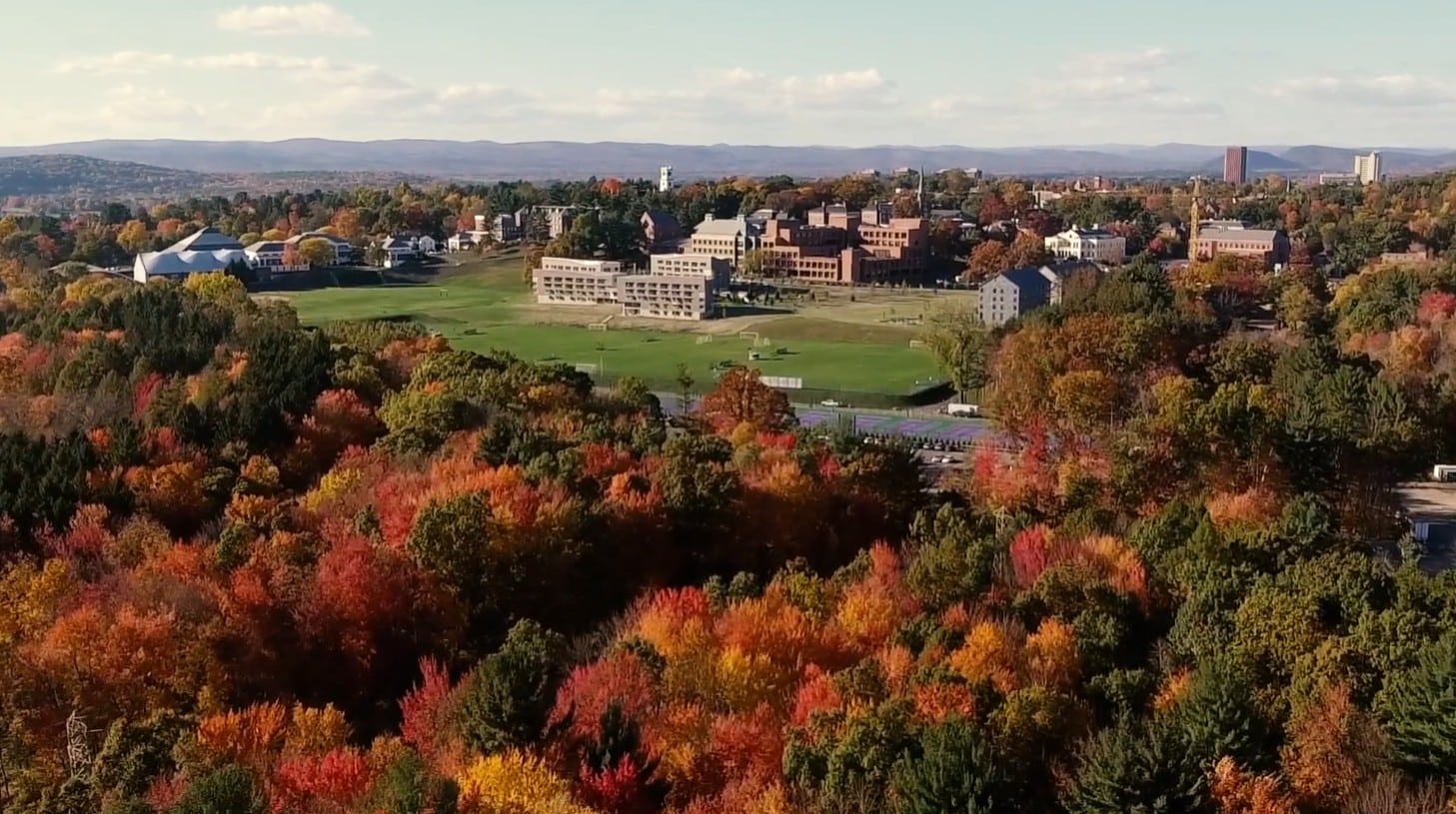
At 1,000 acres, it is one of the larger liberal arts campuses in New England, yet it carries an intimate, coherent feel shaped by two centuries of careful development. Blair Kamin ’79, a Pulitzer Prize-winning architecture critic and Amherst alumnus, describes the campus in his book “Amherst College: The Campus Guide” as a living museum of architectural history.
Distinguished firms (including Frederick Law Olmsted, McKim, Mead & White, Benjamin Thompson, and Michael Van Valkenburgh) have all left their mark here. McKim, Mead & White had the most decisive influence, steering the campus along a classical Palladian path from the late 19th through mid-20th centuries. The result is a campus with a sense of harmony and visual consistency that persists today.
The main quad sits at the heart of campus, reoriented southward by landscape architect Arthur Shurcliff after the Hurricane of 1938, opening views toward the Holyoke Range that remain one of the campus’s most distinctive features.
Beyond the main campus, Amherst is a founding member of the Five College Consortium alongside UMass Amherst, Hampshire, Smith, and Mount Holyoke, all within easy reach in the Pioneer Valley. The college also owns the Inn on Boltwood, a historic 49-room inn on the Amherst town common that has served students, families, and alumni since 1926, extending the college’s presence into the heart of downtown.
Main campus landmarks
Amherst’s 1,000-acre campus is home to buildings that span two centuries of architectural history, each carrying its own story.
Johnson Chapel is the most recognizable structure on campus, a Greek Revivalist anchor of College Row housing 35 artworks, including portraits of past presidents, prominent alumni, and Emily Dickinson. The chapel takes its name from Adam Johnson, a Pelham farmer whose fortune endowed it in 1823, though his story remains largely untold inside.
Fayerweather Hall, designed in 1894 by McKim, Mead & White, is widely regarded as the campus’s finest building. This Renaissance Revival gem currently houses the Eli Marsh Gallery, where students, faculty, alumni, and visiting artists exhibit contemporary work.
The Arms Music Center, completed in 1968 by Benjamin Thompson, is one of the campus’s most successful modernist buildings. Kamin describes it as the building that persuaded him to choose Amherst, praising its transparent, almost floating quality that feels genuinely modern without being aggressive.
Chapin Hall is frequently cited as one of the campus’s architectural low points, a 1950s Georgian Revival structure that Kamin calls a “Georgian gas-station building.” Hidden inside, however, is Pemberton Lounge, a cozy gathering space students have made their own.
Newport House on College Street honors two descendants of Amos Newport, an eighteenth-century enslaved man from neighboring Hatfield, and sits on the former site of Zion Chapel, built in 1869 for Black Amherst residents.
Valentine Dining Hall is the campus’s primary dining and social hub, drawing ingredients from the college’s own Book & Plow Farm and hydroponic greenhouse.
The Greenway is the newest residential corridor, a 12-acre natural feature with footpaths, gardens, and outdoor recreation spaces connecting the college’s most recently built residence halls.
Frost Library anchors academic life and houses Archives and Special Collections in its lower level, with more than 80,000 books, 11,000 linear feet of archival materials, and one of the largest collections of Native American literature in the United States.
Amherst College’s other sites and affiliated locations
Amherst College operates primarily from its main campus, but several significant sites extend the college’s presence into the surrounding community and beyond.
The Emily Dickinson Museum, located a short walk from the main campus on Main Street, comprises two historic structures: The Homestead, where Emily Dickinson was born and spent most of her life, and The Evergreens, the adjacent home of her brother Austin Dickinson and his family. The Evergreens remain largely unaltered from the period when the family lived there. The museum offers tours and public programming centered on Dickinson’s life and revolutionary poetic voice.
The Mead Art Museum sits on the main campus and houses Amherst College’s extensive art collection. With free admission and more open hours than most college art museums in the country, the Mead functions as a public resource for the broader community, not just a campus amenity.
The Beneski Museum of Natural History, also on campus, is one of New England’s largest natural history museums, with three floors of exhibits and more than 1,700 specimens on display, including fossils and dinosaur tracks discovered in the Connecticut River Valley.
The Bassett Planetarium and Wilder Observatory extend the college’s scientific presence on campus. The observatory houses an 18-inch refracting telescope available for public viewing of the moon, planets, nebulae, and galaxies. The planetarium is currently closed for renovations.
The Book & Plow Farm, operated by the college, supplies fresh produce to Valentine Dining Hall and functions as a working educational resource connecting students to sustainable agriculture.
Through the Five College Consortium, Amherst students also have access to ten museums, a library system containing more than 11 million items, and more than 6,000 courses across the five campuses. A free bus connects all five schools throughout the academic year, making the resources of UMass Amherst, Hampshire, Smith, and Mount Holyoke effectively extensions of the Amherst College experience.
Amherst also maintains institutional partnerships with colleges and universities across the globe, offering students and faculty opportunities for exchange and collaboration.
Partners include the American University of Beirut (Lebanon), Ashoka University (Delhi, India), Doshisha University (Kyoto, Japan), FLAME University (Pune, India), Göttingen University (Germany), NUS College at the National University of Singapore, Underwood International College at Yonsei University (Seoul, South Korea), and Universidad de los Andes (Bogotá, Colombia).
Getting to Amherst College
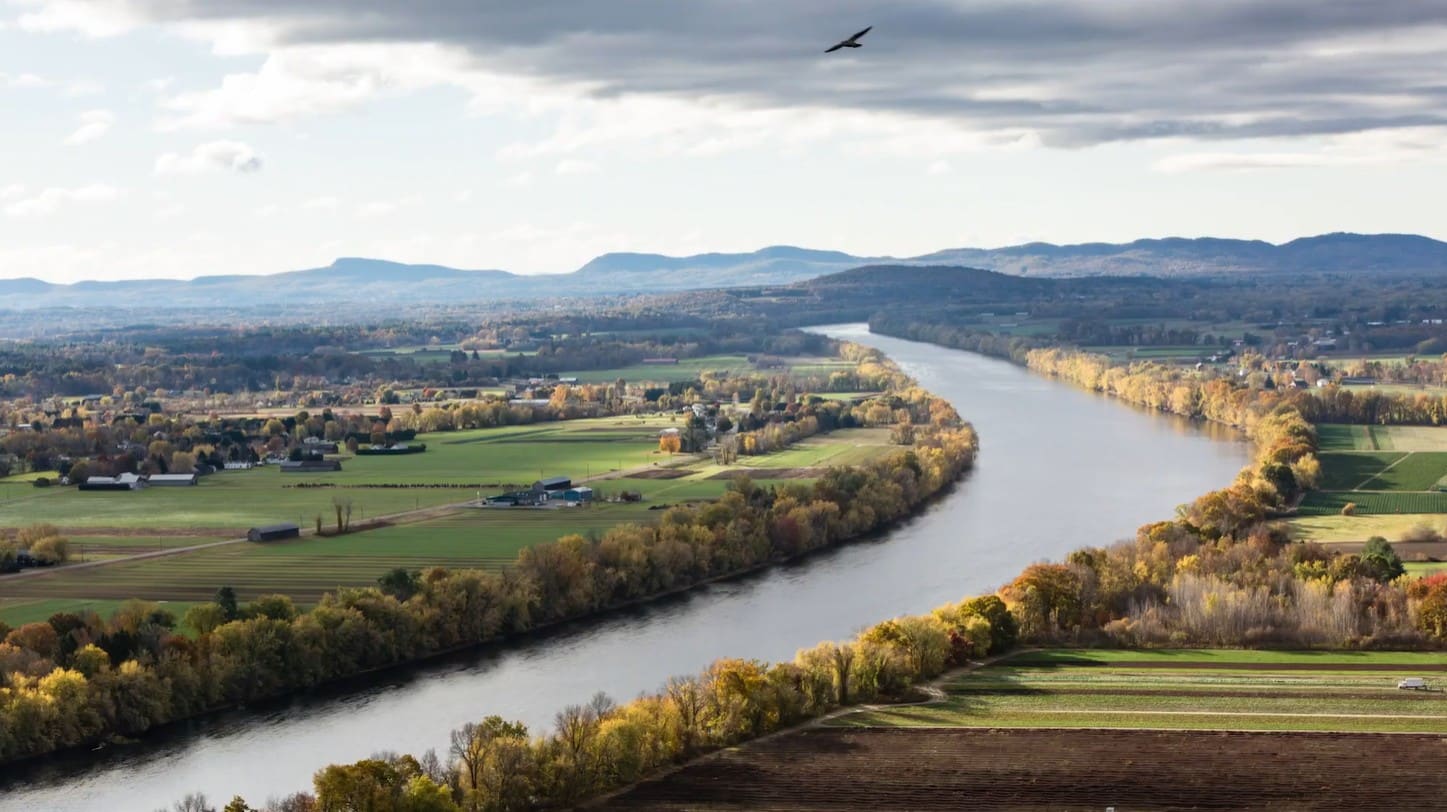
Amherst College’s public transportation includes traveling via car, bus, train, and plane. First-time visitors will find the campus easy to navigate: most college buildings come into view as you arrive at the stoplight at the top of the hill.
Public transportation options
The Pioneer Valley Transit Authority (PVTA) is the most practical transit option for getting around the area. College students ride free with their ID throughout the academic year, and buses connect Amherst to surrounding towns and all five consortium campuses. From Northampton, about six miles away, the PVTA B43 bus runs directly to the Amherst College campus.
Amtrak serves Northampton with limited stops, and Springfield, about 30 minutes from campus, offers more extensive rail service. Peter Pan Bus Lines, in partnership with Greyhound, provides regular intercity bus service to Amherst. Megabus runs daily routes between Amherst and New York City via Hartford, and between Amherst and Burlington, Vermont.
Getting there by car or other means
Amherst College is approximately two hours from downtown Boston, two and a half hours from Logan Airport, and three hours north of New York City.
If you are traveling by car from the east (Boston, Rhode Island), take I-90 to Exit 45 (I-91 North), then I-91 north to Exit 25 (Route 9 east), then Route 116 south to campus. From the north or south (New York, Connecticut, Vermont), take I-91 to Exit 25 or 26 onto Route 9 east, then Route 116 south. From the northeast (Maine, New Hampshire), take I-495 to Route 2 west, then Route 202 south through Pelham, which connects directly to downtown Amherst.
Visitor parking is available in front of and behind the Admission Office at 220 South Pleasant Street, along the semicircular driveway near Orr Hockey Rink, and in the Orr Rink Parking Lot.
Campus parking is restricted weekdays between 8:30 a.m. and 4:30 p.m.; visitors may park without a permit after 4:30 p.m.
The nearest airport is Bradley International Airport in Windsor Locks, Connecticut, about one hour from campus. Boston Logan is roughly two and a half hours away. Shuttle services including Valley Transporter and Seemo Shuttle connect both airports to campus.
Other regional options within two to two and a half hours include T.F. Green Airport (Providence), Manchester-Boston Regional Airport (New Hampshire), and Albany International Airport (New York).
Living Near Amherst College
Amherst, Massachusetts has a saying you will find on t-shirts and bumper stickers around town: “Amherst, where only the ‘h’ is silent.” It is a place that is vibrant, opinionated, and proud of it. More than 40 percent of the local population holds a graduate degree, and the presence of five colleges within a short distance gives the entire Pioneer Valley an unusual intellectual energy.
With 35,000 permanent residents and more than 30,000 college students in the area during the academic year, Amherst has a lively, layered character. It is a functioning college town with an active downtown, real political engagement, and a cultural life that extends well beyond any single campus.
Students tend to move fluidly between campus and town, drawn by the walkable downtown, the free PVTA bus system, and easy access to outdoor spaces like the college’s own Wildlife Sanctuary and the paved 11-mile Norwottuck Rail Trail connecting Amherst, Hadley, and Northampton.
On campus, 97 percent of students live in college housing, guaranteed for all four years. First-year students settle into the First-Year Quadrangle at the heart of campus, while upperclassmen choose from six residential areas ranging from suites and singles to theme communities built around shared interests.
Places to check out near Amherst College
The Pioneer Valley gives students plenty to explore, from campus museums and downtown coffee shops to hiking trails and regional cultural destinations.
On and around campus
The Mead Art Museum offers free admission and rotating exhibitions from the college’s permanent collection. The Beneski Museum of Natural History, one of the most substantive collections in New England, is also free to the public.
The Emily Dickinson Museum on Main Street, a short walk from campus, includes The Homestead and The Evergreens and offers a perspective on Amherst’s literary history that is impossible to replicate anywhere else.
Frost Library’s Archives and Special Collections holds Dickinson manuscripts, Native American literature, and rare institutional records worth exploring. The Russian Center Art Gallery in Webster Hall displays art and archival materials from the Thomas P. Whitney ’37 collection on 20th-century Russian culture.
Downtown Amherst
Downtown is walkable from campus and easy to cover in an afternoon. Antonio’s Pizza carries a reputation that extends well beyond the Five College area. Share Coffee and Amherst Coffee are the places students actually spend time, with Amherst Books nearby for anyone looking for a strong independent bookstore.
The Amherst Farmers’ Market brings local produce and crafts to the town center on a seasonal schedule. The Drake on Main Street doubles as a pub and live music venue. The Amherst Cinema Arts Center shows arthouse features, classic films, and documentaries alongside filmmaker discussions and National Theatre broadcasts.
Outdoor activities
Puffer’s Pond at the Mill River Recreation Area is a popular spot for hiking, fishing, and kayaking. Amethyst Brook Conservation Area offers quiet wooded trails. Mount Holyoke Range State Park, visible from the main quad on clear days, has hiking with panoramic views across the Connecticut River Valley. The Norwottuck Rail Trail runs directly from campus through the college’s Wildlife Sanctuary to Hadley and Northampton.
Nearby cultural attractions
The Eric Carle Museum of Picture Book Art and the National Yiddish Book Center are both close to campus. Historic Deerfield, about 15 miles north, is an authentic 18th-century New England village.
The Basketball Hall of Fame is in Springfield, about 30 minutes away. The Berkshires are roughly an hour’s drive and offer summer programs in theater, dance, art, and music. Boston is two hours east and New York City three hours south, both reachable directly by Megabus from Amherst.
Why You Should Visit Amherst College’s Campus
Reading about a campus and walking through it are two genuinely different experiences. Amherst College’s 1,000-acre hilltop campus, its views toward the Holyoke Range, its mix of 19th-century classical architecture and thoughtful modern buildings, and the particular energy of a small, highly engaged student body are things that read differently on paper than they feel in person.’
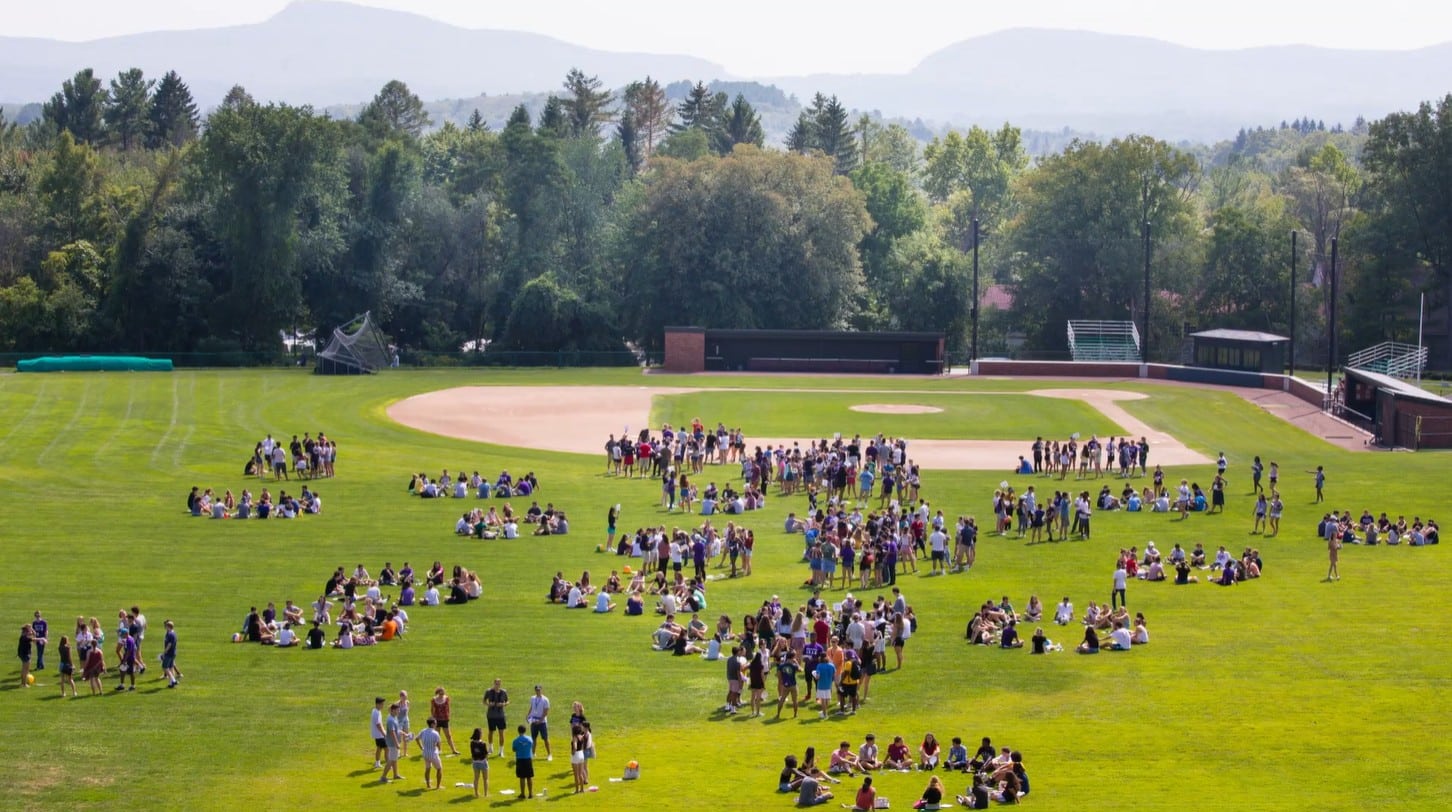
An Amherst College campus tour gives prospective students the opportunity to understand whether this kind of place fits how they want to learn and live. The college’s Open Curriculum, which has no distribution requirements and allows students to design their own academic paths, attracts students who want intellectual freedom and genuine agency in their education. That ethos is visible in how students talk about their courses, their professors, and their time here.
Amherst offers campus tours and information sessions through the Admission Office at 220 South Pleasant Street. An interactive campus map, a virtual tour, and a self-guided tour booklet are available through the college’s official website. For those who cannot make an in-person visit, the virtual tour on YouTube provides a student-led walkthrough of campus.
For students who want some support building their strategic college list before they visit, our Senior Editor College Application Program is worth exploring. The program helps students develop a well-researched college list and a competitive overall application, so that by the time they walk onto a campus like Amherst’s, they already have a clear sense of where it fits in their broader admissions plan.
Schedule a consultation to learn more about how AdmissionSight can help you approach the college search with confidence.
Frequently Asked Questions
1. What is Amherst College’s address?
The general mailing address is P.O. Box 5000, Amherst, MA 01002-5000. For physical deliveries, use the Service Building at 6 East Drive, Amherst, MA 01002. The Admission Office is at 220 South Pleasant Street.
2. How big is Amherst College’s campus?
The Amherst College campus spans 1,000 acres in Amherst, Massachusetts, adjacent to the town’s downtown area.
3. Can I visit Amherst College before applying?
Yes. The Admission Office offers campus tours, admission information sessions, and financial aid information sessions. The campus is open and easy to navigate for self-guided visits as well. Virtual tour options are also available online.
4. Is parking available at Amherst College?
Visitor parking is available near the Admission Office and along the campus’s main driveway. Campus parking is restricted on weekdays between 8:30 a.m. and 4:30 p.m. Visitors may park without a permit after 4:30 p.m. Handicapped placards are honored in all marked accessible spaces on campus.
5. What landmarks are near Amherst College?
Within walking distance of campus are Emily Dickinson Museum, Mead Art Museum, Beneski Museum of Natural History, Wilder Observatory, and downtown Amherst. A short drive away are Eric Carle Museum of Picture Book Art, National Yiddish Book Center, Historic Deerfield, and Puffer’s Pond. The Berkshires are about an hour away; Boston and New York City are two to three hours by car or bus.
Takeaways
- Amherst College is a 1,000-acre liberal arts campus in western Massachusetts, founded in 1821 and shaped by two centuries of architectural history.
- The college sits within the Five College Consortium alongside UMass Amherst, Hampshire, Smith, and Mount Holyoke, giving students access to 6,000 courses, 10 museums, and a library system of more than 11 million items.
- Amherst is reachable from Boston, New York, and major regional airports by car, bus, train, and shuttle, with the PVTA bus system providing free, convenient transportation for students throughout the academic year.
- Life near Amherst combines a walkable, intellectually engaged college town with easy access to outdoor spaces, museums, live music, and regional destinations.
- Choosing the right college starts well before the campus visit. Our Private Consulting Program helps students build a strategic, well-researched college list and develop a competitive application from the ground up. Schedule a consultation to get started.










