Williams College is a top private liberal arts college founded in 1793, making it the second-oldest institution of higher education in Massachusetts. The college is located at 880 Main Street, Williamstown, Massachusetts 01267, nestled in the Berkshire Hills of the state’s northwestern corner.
This guide covers everything a prospective student needs to know about the Williams College campus, its affiliated sites, how to get there, and what life in Williamstown looks and feels like day to day.
- Williams College Campus Location
- Getting to Williams College
- Living Near Williams College
- Why You Should Visit Williams College Campus
- Frequently Asked Questions
- Takeaways
Williams College Campus Location
Williams College is located in Williamstown, a small college town in Berkshire County, Massachusetts, roughly three hours by car from both Boston and New York City. The rural setting is surrounded by rolling hills, forests, and the scenic Berkshire Mountains, giving the campus a character that is immediately distinctive from urban or suburban peer institutions.

The college’s location in the Berkshires places it within one of the most culturally rich regions in the northeastern United States. The Clark Art Institute, a world-class museum and research center, sits just a few blocks from the main campus. MASS MoCA, one of the largest contemporary art centers in the world, and Jacob’s Pillow, an internationally recognized dance festival and school, are both a short drive away. The New York Times has described Williamstown itself as one of the loveliest communities in New England.
The Williams College campus covers more than 450 acres of contiguous land, with additional holdings that bring the college’s total managed acreage well above 3,000 acres, including Hopkins Forest, a 2,600-acre educational research forest located nearby. Campus buildings collectively exceed 3 million square feet and house everything from residence halls and dining facilities to academic departments, arts venues, and athletic complexes.
Architecturally, the Williams College campus reflects more than two centuries of building and rebuilding. The campus blends historic structures dating to the late eighteenth and early nineteenth centuries with modernist additions from the 1960s and contemporary, sustainability-focused buildings completed in recent decades.
The 1960s brought a wave of Bauhaus-influenced modernism to campus, most visibly in the Greylock Quadrangle, designed by Benjamin Thompson. More recent construction has emphasized green building standards, with the college pursuing certifications including LEED, Passive House, and the Living Building Challenge.
Main campus landmarks
Several buildings and spaces define the Williams College campus for students, visitors, and prospective applicants alike.
Paresky Center serves as the primary student center, combining dining, social, and community spaces in a building completed in 2007. It functions as the social heart of campus and one of the spaces that students describe as genuinely warm and well-used throughout the day.
Sawyer Library is the college’s main library and one of its most architecturally prominent buildings, featuring marble staircases and towering windows. The building includes a 24-hour reading room and serves as the primary academic research hub for undergraduates and faculty. The main quadrangle area between Paresky and Sawyer Library functions as a central gathering space, and the campus as a whole is known for its manicured lawns, athletic fields, and gardens set against the backdrop of the Berkshire Hills.
The Wachenheim Science Center and Hollander Hall represent the college’s more recent academic construction, offering modern research and classroom environments for students in the sciences and other disciplines.
The Greylock Quadrangle is a residential and academic complex from the 1960s that remains one of the campus’s most architecturally discussed spaces. Designed to create an irregular, relaxed enclosure without closing off views to the surrounding countryside, the quad reflects an approach to campus design that balances community and openness.
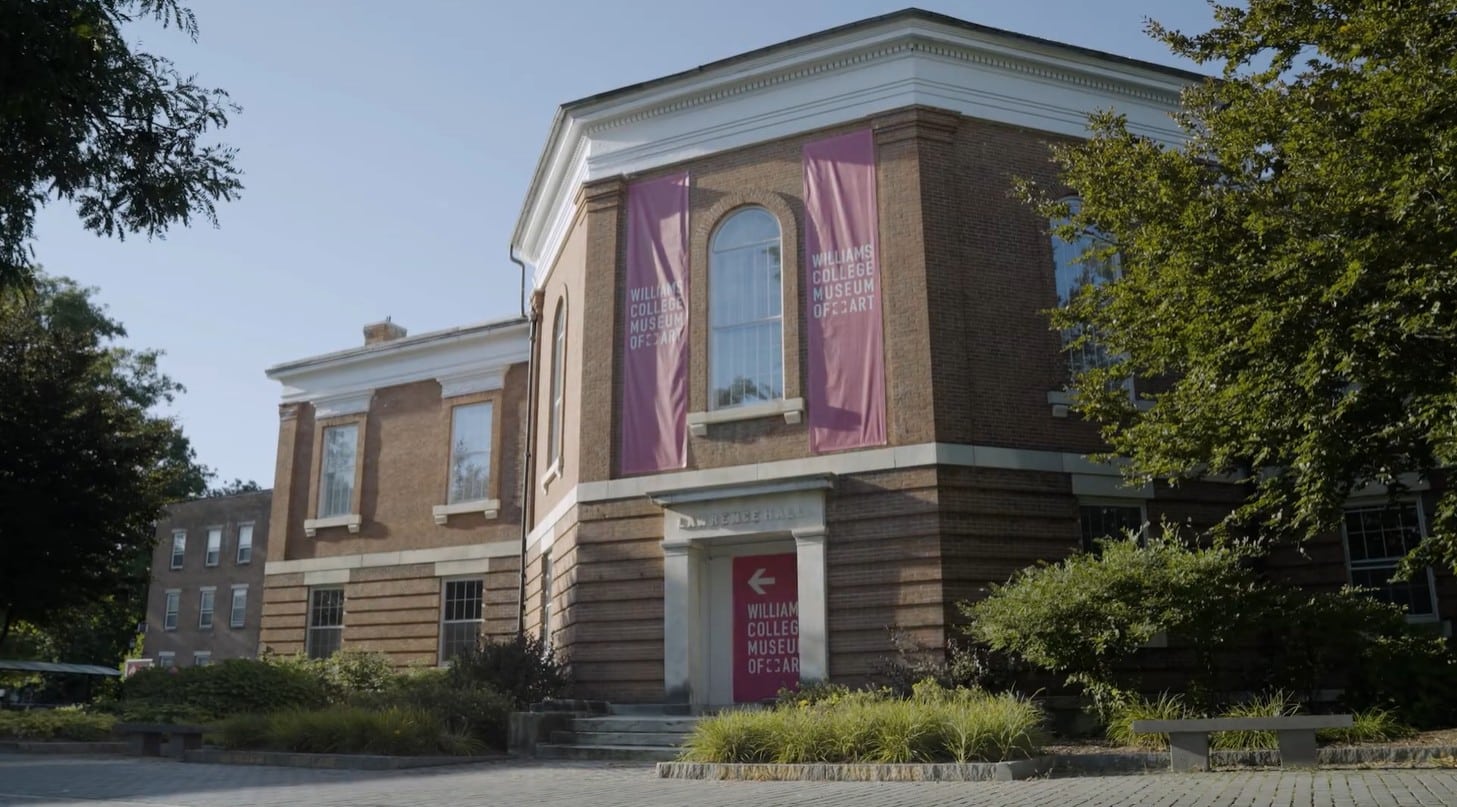
The Williams College Museum of Art (WCMA) anchors the college’s commitment to the visual arts. A new, purpose-built home for the museum is currently under development, designed with a focus on mass timber construction and high-performance sustainability standards.
The ’62 Center for Theatre and Dance houses performance and rehearsal spaces and serves as the home of the Tony Award-winning Williamstown Theatre Festival each summer.

Hopkins Memorial Gate and West College, which dates to 1790, represent some of the oldest surviving structures on campus and give the historic core of the Williams College campus its traditional character.
Williams College’s other campuses and affiliated sites
While the Williams College campus in Williamstown serves as the home for virtually all undergraduate education, the college maintains several affiliated sites that extend its academic reach significantly.
The Williams-Exeter Programme at Oxford (WEPO) allows a select group of Williams students to spend a year studying at Exeter College, University of Oxford, in England. Students in this program follow the Oxford tutorial model, working closely with faculty in an intensive one-on-one or small-group format.
The Williams-Mystic Maritime Studies Program, based in Mystic, Connecticut, offers a semester-long immersive experience combining coursework in literature, history, policy, and science with hands-on engagement with the sea. Students live and study together in Mystic for the full semester.
The Clark Art Institute is located just blocks from the main Williams College campus and is home to the Williams Graduate Program in the History of Art, a two-year master’s degree program operated in partnership between the college and the institute. This program represents one of Williams’ two graduate offerings.
Hopkins Forest, the college’s 2,600-acre educational research forest, sits near the main campus and serves as a living laboratory for environmental research and outdoor education. The Williams Outing Club, which maintains more than 2,100 pieces of borrowable equipment, draws heavily on the natural resources surrounding the campus.
Getting to Williams College
Williams College is located in a rural corner of northwestern Massachusetts, and reaching campus requires some planning, particularly for students and families traveling from major metropolitan areas.
The college’s address is 880 Main Street, Williamstown, MA 01267, and the Office of Admission in Weston Hall is the recommended starting point for campus visitors, with parking available in the lot directly behind the building.
Public transportation options
Direct public transit to Williamstown is limited, reflecting the rural character of the area. The college recommends that students traveling by train or air rent a car for the final leg of their journey, as rideshare services are generally not based in Williamstown and may be difficult to arrange locally.
For those arriving by rail, the nearest Amtrak station is in Pittsfield, Massachusetts, with additional service available from the Rensselaer, New York station across the state line. Peter Pan and Bonanza bus service provides regional connections, though schedules vary.
For first-year students arriving at the start of the academic year, Williams operates a dedicated motorcoach bus service from Albany International Airport directly to campus, offering a straightforward option for students flying into the region.
Getting there by car or other means
Driving is the most practical option for most visitors to the Williams College campus. The college sits approximately one hour from the Massachusetts Turnpike (I-90) and Interstates 91 and 87. Travel times by car are approximately three hours from Boston or New York City, one hour from Albany, New York, and two hours from Bradley International Airport outside Hartford, Connecticut.
Albany International Airport is the closest major airport to campus, and several car services operate between the airport and Williamstown, with fees typically ranging from $80 to $200. Bradley International Airport near Hartford provides an alternative for students traveling from the mid-Atlantic region or beyond.
For students and visitors arriving by rideshare, Uber and Lyft are available at Albany International Airport, but drivers are not currently based in Williamstown itself, so arranging a pickup from campus requires advance planning. Biking is an option for getting around once on campus, and the college offers Zipcar access for students needing occasional vehicle use.
Living Near Williams College
Life near the Williams College campus is shaped by the particular combination of a tight-knit college town, world-class cultural institutions, and immediate access to the natural landscape of the Berkshires. Williamstown is small, walkable, and deeply oriented around the college, but the surrounding region offers considerably more than a typical rural college setting.
Places to check out near Williams College
Spring Street, the heart of downtown Williamstown, runs close to campus and offers a range of dining options, independent shops, and gathering spots.
Dining and coffee
Tunnel City Coffee on Spring Street is the go-to local cafe for students and residents alike. Spring Street itself offers a variety of restaurants and casual dining options within easy walking distance of campus.
The college’s own dining program, which includes three dining halls and the student-run Goodrich Coffee Bar, means students have strong on-campus options as well, with internationally themed dinners at Driscoll Dining Hall and build-your-own grain bowls at Mission Park among the highlights.
Arts and culture
The Clark Art Institute, just a short walk from campus, offers world-class permanent and rotating collections and free admission to Williams students. MASS MoCA in nearby North Adams is one of the largest contemporary art museums in the world and a major cultural draw for the region.
The Williamstown Theatre Festival, which operates out of the ’62 Center for Theatre and Dance on campus each summer, brings professional theater to the community. Jacob’s Pillow in Becket is an internationally recognized dance festival and school, and Barrington Stage Company in Pittsfield rounds out the performing arts options within the Berkshires.
Outdoor spaces
Mount Greylock State Reservation is the most iconic natural destination near campus. The Williams Outing Club, with its extensive equipment lending program, makes it easy for students to access hiking, skiing, climbing, and water activities throughout the year. Hopkins Forest, the college’s own research forest, offers trails and natural spaces directly accessible from campus.
Why You Should Visit Williams College’s Campus
Reading about the Williams College campus may convey facts, but it does not convey feelings. The particular combination of a rural Berkshire setting, a small and intensely communal student body of around 2,100 undergraduates, a historic campus with architecture spanning more than two centuries, and immediate proximity to major cultural institutions creates an environment that reads very differently on paper than it does in person.

Visiting campus gives prospective students a chance to experience the Entry system firsthand, to see how the Frosh Quad and Berkshire Quad residence halls actually function as communities, to walk from Sawyer Library to Paresky Center, and to get a sense of what it means to live in Williamstown for four years.
Campus tours and information sessions run Monday through Friday from January through early May, each lasting one hour. Group visits for high school and community-based organizations are also available with advance notice. The college recommends contacting the Office of Admission at [email protected] or 413-597-2211 to plan a visit. The official campus visit page can be found at Visit Williams Campus.
Navigating the college search process well means doing more than visiting campuses. To get into Williams, students need a clear strategy. Our Senior Editor College Application Program pairs expert guidance with hands-on support so students are better positioned to make the most of every campus visit and every application they submit. Schedule a consultation today to start building a college list with genuine strategic clarity and creating an application that presents your full story effectively.
Frequently Asked Questions
1. What is Williams College’s address?
Williams College is located at 880 Main Street, Williamstown, Massachusetts 01267. The Office of Admission in Weston Hall is the recommended starting point for campus visitors.
2. How big is Williams College?
The Williams College campus covers more than 450 acres of contiguous land. Including Hopkins Forest, the college manages more than 3,000 acres total. Campus buildings exceed 3 million square feet.
3. Can I visit Williams College before applying?
Yes. Campus tours and information sessions are available Monday through Friday from January through early May. Prospective students can register through the college’s official visit calendar or contact the Office of Admission directly at [email protected] or 413-597-2211.
4. Is parking available at Williams College?
Visitor parking is available in the lot directly behind Weston Hall, the home of the Office of Admission. Additional parking areas are available across campus, and Campus Safety officers assist with parking logistics on high-traffic days such as move-in day.
5. What landmarks are near Williams College?
The Clark Art Institute is located just a few blocks from the main campus. MASS MoCA is in nearby North Adams, Jacob’s Pillow is in Becket, and Barrington Stage Company is in Pittsfield. Mount Greylock, the highest point in Massachusetts, is five miles from campus.
Takeaways
- Williams College is located in a rural setting. Tucked in the Berkshire Hills three hours from Boston and New York City, Williamstown puts students near world-class institutions like the Clark Art Institute, MASS MoCA, and Jacob’s Pillow.
- The campus blends more than two centuries of architectural history. Historic structures from the 1790s sit alongside sustainability-certified modern buildings, reflecting a campus that honors its past while investing in its future.
- Williams extends its academic reach well beyond Williamstown. Programs at Oxford, Mystic, and the Clark Art Institute give students transformative academic experiences far beyond the main campus.
- Getting to campus requires advance planning. Driving is the most practical option, with Albany International Airport serving as the closest major air hub.
- Building a strong college list takes more than campus research. Our Private Consulting Program can help you build a strategically sound college list and a competitive application from the ground up. Schedule a consultation today to get started.