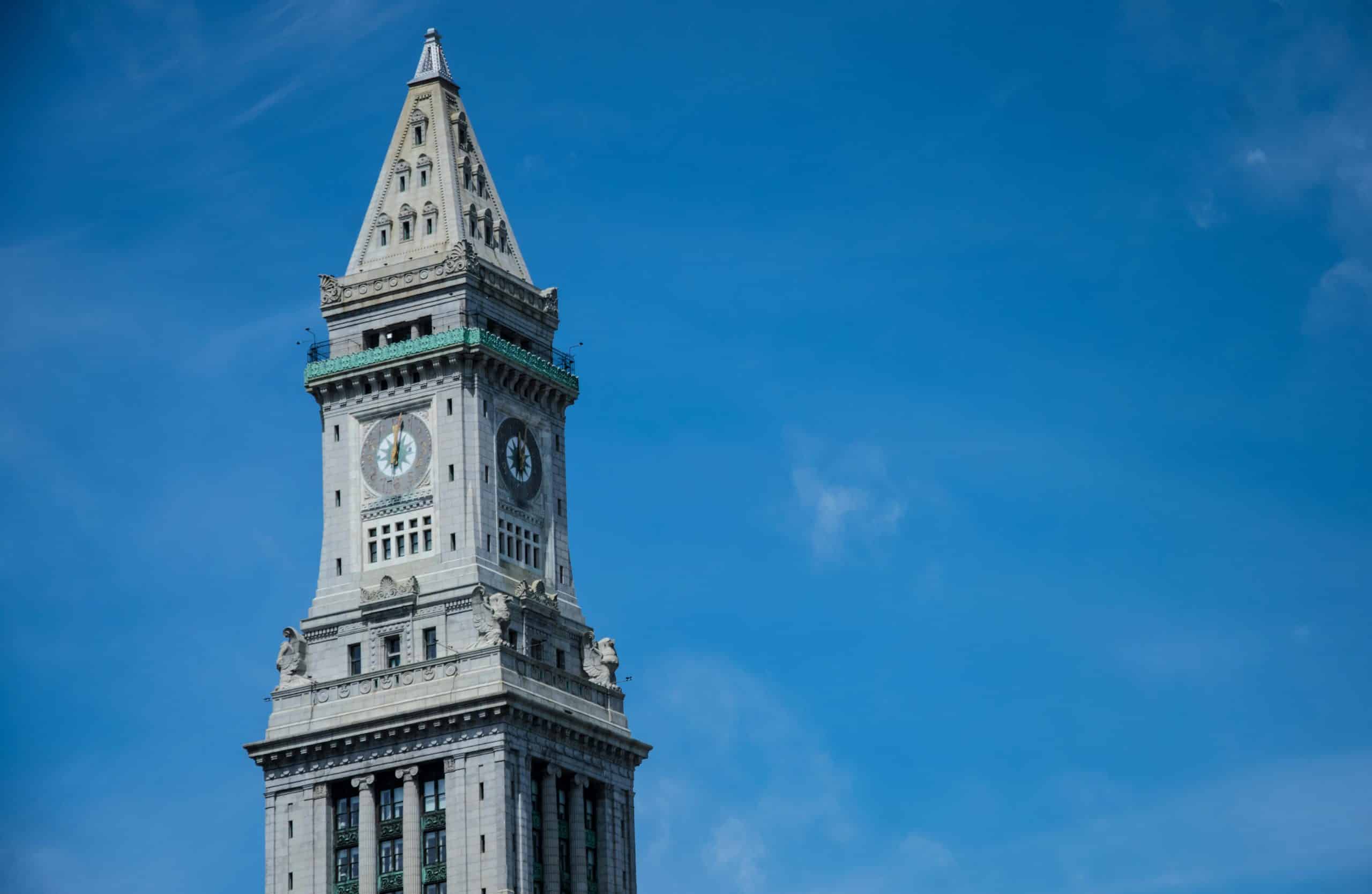
With over 300,000 students, Boston is the 4th largest college town in the U.S. Home to 44 colleges and universities, this city attracts students from all sorts of backgrounds. You’ve got everything from the heavyweights like Harvard and MIT to smaller, more specialized schools.
The sheer amount of choices—research universities, community colleges, and special-focus institutions—means there’s a lot to think about when choosing where to go. In this blog, we’ll break it all down for you. We’ll help you sift through the options and find the perfect fit for what you want out of college.
- List of Universities and Colleges in Boston
- Top 10 Colleges in Boston
- Colleges in Boston with High Acceptance Rates
- Affordable Colleges in Boston
- Frequently Asked Questions
- Takeaways
List of Universities and Colleges in Boston
Here’s a rundown of the colleges in Boston, sorted alphabetically, to give you a clearer sense of what this historic city has to offer academically.
| School | Location | Type | Enrollment | Founding Year |
| Benjamin Franklin Cummings Institute of Technology | Boston | Private | 513 | 1908 |
| Bentley University | Waltham | Private | 5,165 | 1917 |
| Berklee College of Music | Boston | Private | 8,282 | 1945 |
| Boston Architectural College | Boston | Private | 747 | 1889 |
| Boston Baptist College | Milton | Private | 43 | 1976 |
| Boston College | Newton | Private | 15,287 | 1863 |
| Boston Graduate School of Psychoanalysis | Brookline | Private | 155 | 1973 |
| Boston University | Boston | Private | 36,714 | 1839 |
| Brandeis University | Waltham | Private | 5,581 | 1948 |
| Bunker Hill Community College | Boston | Public | 8,439 | 1973 |
| Cambridge College | Boston | Private | 2,135 | 1971 |
| Curry College | Milton | Private | 2,052 | 1879 |
| Eastern Nazarene College | Quincy | Private | 535 | 1900 |
| Emerson College | Boston | Private | 5,891 | 1880 |
| Emmanuel College | Boston | Private | 2,012 | 1919 |
| Fisher College | Boston | Private | 1,421 | 1903 |
| Harvard University | Cambridge | Private | 30,631 | 1636 |
| Hebrew College | Newton | Private | 212 | 1921 |
| Hellenic College and Holy Cross Greek Orthodox School of Theology | Brookline | Private | 161 | 1937 |
| Hult International Business School | Cambridge | Private | 2,176 | 1964 |
| Labouré College | Milton | Private | 983 | 1892 |
| Lasell University | Newton | Private | 1,591 | 1851 |
| Lesley University | Cambridge | Private | 3,406 | 1909 |
| Longy School of Music of Bard College | Cambridge | Private | 315 | 1915 |
| Massachusetts College of Art and Design | Boston | Public | 1,939 | 1873 |
| Massachusetts College of Pharmacy and Health Sciences | Boston | Private | 6,824 | 1823 |
| Massachusetts Institute of Technology | Cambridge | Private | 11,858 | 1861 |
| MGH Institute of Health Professions | Boston | Private | 1,353 | 1977 |
| New England College of Optometry | Boston | Private | 536 | 1894 |
| New England Conservatory | Boston | Private | 796 | 1867 |
| New England Law | Boston | Boston | Private | Private | 1,060 |
| North Bennet Street School | Boston | Private | 152 | 1881 |
| Northeastern University | Boston | Private | 30,013 | 1898 |
| Quincy College | Quincy | Public | 2,602 | 1958 |
| Roxbury Community College | Boston | Public | 1,214 | 1973 |
| Saint John’s Seminary | Boston | Private | 103 | 1884 |
| Sattler College | Boston | Private | 93 | 2016 |
| Simmons University | Boston | Private | 5,710 | 1899 |
| Suffolk University | Boston | Private | 6,734 | 1906 |
| Tufts University | Medford | Private | 13,431 | 1852 |
| University of Massachusetts Boston | Boston | Public | 15,586 | 1964 |
| Urban College of Boston | Boston | Private | 596 | 1993 |
| Wentworth Institute of Technology | Boston | Private | 3,920 | 1904 |
| William James College | Newton | Private | 897 | 1974 |
Boston’s metropolitan area is home to 44 colleges and universities. Out of these, 39 are private, while five are public, with four run by the state of Massachusetts and one managed by the city of Quincy. The list is a mix of:
- 5 junior colleges, offering associate degrees and certificates.
- 11 colleges that mainly focus on bachelor’s and master’s degrees.
- 8 research universities, which are big on research and offer a wide range of undergrad, grad, and doctoral programs.
- 20 special-focus schools, which hone in on specific fields like music, art, law, or health sciences.
Some of these schools are right in Boston, while others are in nearby towns, all within the 128/95/1 loop, often called the “inner core” of Metropolitan Boston. This is different from the more suburban North Shore, South Shore, and MetroWest areas.
Even though some universities have multiple campuses (like Harvard Medical School or Tufts University School of Medicine), each school is only listed once, based on where its main campus is. And if you’ve heard of the “brainpower triangle” of greater Boston—Harvard, MIT, and Tufts—you know these schools are a pretty big deal.
Top 10 Colleges in Boston
Boston is home to some of the most prestigious universities out there, both nationally and globally. Based on the QS World University Rankings, this list looks at the top 10 colleges in Boston.
1. Harvard University
Acceptance rate: 3.4%
Harvard University is one of the oldest and most prestigious universities around. With a $53 billion endowment, world-class libraries, and top-tier research facilities, Harvard offers an unmatched environment for students and faculty to conduct groundbreaking research.
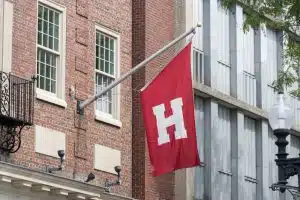
The university offers a wide range of renowned programs: Harvard Law School, Harvard Medical School, and Harvard Business School. Its liberal arts programs in the Faculty of Arts and Sciences, which include departments like economics, government, and history, are also strong contenders.
2. Massachusetts Institute of Technology
Acceptance rate: 4.8%
The Massachusetts Institute of Technology (MIT) is a global powerhouse in science, engineering, and technology. What makes MIT stand out is its collaborative culture and strong connections with industries, not just in Boston but worldwide, making it a hotbed for startups and tech innovations.
MIT’s programs in Computer Science, Electrical Engineering, Physics, and Artificial Intelligence are particularly famous. MIT’s approach to education has a heavy emphasis on research and entrepreneurship. The Media Lab and Lincoln Laboratory are two of its standout centers.
3. Boston University
Acceptance rate: 10.7%
Boston University (BU) is a large private research university with strong programs in Business, Communications, Engineering, and Medical Sciences. The School of Law, Questrom School of Business, and College of Communication are particularly well-regarded.
BU also takes pride in its research, hosting significant initiatives like the National Emerging Infectious Diseases Laboratories (NEIDL) and the BU Center for Antiracist Research. This blend of academic rigor, urban involvement, and global outlook makes BU a compelling choice for students from all over the world.
4. Tufts University
Acceptance rate: 10.1%
Tufts University is best known for its standout programs like the School of Medicine, Fletcher School of Law and Diplomacy, and the School of Dental Medicine. But don’t overlook its School of Arts and Sciences and School of Engineering, which offer strong undergrad programs focused on research, global perspectives, and civic engagement.
With robust study abroad options and the Institute for Global Leadership, Tufts takes its commitment to internationalism seriously. Located in the suburban town of Medford, just a few miles from Boston, Tufts gives you a cozy campus vibe while keeping the city’s cultural and professional perks within easy reach.
5. Northeastern University
Acceptance rate: 5.6%
Northeastern University stands out for its co-op program, which blends classroom learning with real-world work experience, giving students a hands-on approach to education. The university has a strong reputation in fields like Business, Engineering, Computer Science, and Health Sciences.
Northeastern’s D’Amore-McKim School of Business and Khoury College of Computer Sciences are particularly well-regarded, thanks to their solid industry ties that lead to plenty of internships and job opportunities. With a global network that includes campuses and study programs in cities like London, Toronto, and San Francisco, Northeastern puts a big emphasis on experiential learning and global engagement.
6. Boston College
Acceptance rate: 15%
A private Jesuit university, Boston College (BC) is especially known for its Carroll School of Management, Lynch School of Education and Human Development, and Boston College Law School. BC’s undergrad programs in Economics, Finance, and Political Science are also highly respected. The college draws students who are eyeing careers in business, education, or public service.

Located in the suburban area of Chestnut Hill, BC offers a close-knit campus feel with the added bonus of being near Boston, so you can enjoy both community and city life. Rooted in its Jesuit tradition, which promotes reflection, ethical decision-making, and service to others, BC encourages students to grow as whole individuals.
7. Brandeis University
Acceptance rate: 35%
Brandeis University is a private research university with strong liberal arts programs, known for its rigorous academics and deep commitment to social justice. Brandeis’ emphasis on diversity, inclusion, and social justice, rooted in its Jewish heritage, gives the campus a unique and dynamic atmosphere.
If you’re into Social Sciences, Life Sciences, International Relations, or Creative Arts, Brandeis has you covered. The Heller School for Social Policy and Management and the International Business School also stand out for their advanced degrees, especially those focusing on global and social issues.
8. University of Massachusetts Boston
Acceptance rate: 80%
University of Massachusetts Boston (UMass Boston) is the city’s only public research university, recognized for its dedication to urban and public service and its diverse and inclusive student body. The university shines in Nursing, Business, Public Affairs, and Environmental Sciences.
The institution is known for tackling real-world challenges and serving the community. Programs like the College of Nursing and Health Sciences and the McCormack Graduate School of Policy and Global Studies are standout examples.
9. Suffolk University
Acceptance rate: 85%
Right in the heart of downtown Boston, Suffolk focuses on experiential learning, career readiness, and building strong ties with the business and legal communities. Suffolk’s Sawyer Business School and Law School are particularly well-known.
The Sawyer Business School excels in Finance, Marketing, and Global Business, while the Law School is famous for its practical legal training. These programs offer students easy access to internships and job opportunities within Boston’s vibrant business and legal scene.
10. Simmons University
Acceptance rate: 75%
Simmons University is a private institution that takes pride in its focus on women’s education, leadership, and social justice. Noteworthy programs include: the School of Nursing and Health Sciences, School of Library and Information Science, and School of Social Work.
Known for its tough clinical training and close partnerships with Boston’s top healthcare institutions, Simmons’ Nursing program is one of the region’s most respected. If you’re eyeing a career in information management and library sciences, the nationally ranked Master of Library and Information Science (MLIS) program might be for you.
Colleges in Boston with High Acceptance Rates
Boston has several colleges with high acceptance rates, making them more accessible for a wide range of students. Despite their open-door policy, these schools still offer a quality education and unique programs that ensure your academic experience is both solid and fulfilling.
1. Boston Baptist College
Acceptance rate: 100%
Boston Baptist College is a small, private school with a tight-knit community of fewer than 100 students. The college is an accessible option for those who feel called to a biblically-centered education.

Their standout programs include the Bachelor of Biblical Studies and the Bachelor of Christian Ministries, both of which focus on deep biblical knowledge, practical ministry skills, and leadership development. Missions are a big deal here, too—students are required to participate in mission trips as part of their coursework, giving them hands-on experience in evangelism and service.
2. Cambridge College
Acceptance rate: 100%
Cambridge College is a great choice if you’re an adult learner or a working professional trying to juggle education with work and family. With over 2,000 students, many of whom are non-traditional, this college is all about flexibility. They offer bachelor’s degrees, master’s degrees, and professional certifications that fit into your busy life.
Their School of Education offers degrees like the Master of Education (MEd) with a focus on areas such as special education and educational leadership. For those looking to step into management roles, the School of Management’s Master of Management program is tailored to develop leadership skills that working professionals need.
3. Quincy College
Acceptance rate: 100%
Quincy College, a public two-year institution, is known for its small class sizes, boasting an average student-to-faculty ratio of 15:1. They offer a range of associate degrees and certificate programs, with a strong focus on Health Sciences, which is booming thanks to the high demand for healthcare workers.
Their Nursing program is particularly noteworthy and popular, and it had a 94% NCLEX-RN pass rate in 2021. Programs like Phlebotomy also draw a lot of interest, thanks to Quincy College’s practical approach to education.
4. Roxbury Community College
Acceptance rate: 100%
If you’re looking for a college that’s deeply connected to its community, Roxbury Community College (RCC) might be the right fit for you. RCC offers associate degree and certificate programs that directly respond to community needs. With over 80% of students identifying as students of color, RCC serves around 1,200 students and is celebrated for its diverse student body.
Their Nursing program had an NCLEX-RN pass rate of 89% in 2020. Their Radiologic Technology program, which boasts strong job placement rates, is a top choice for those looking to enter the medical imaging field.
5. Urban College of Boston
Acceptance rate: 100%
Urban College of Boston (UCB) caters to a diverse student body of around 600, most of whom are adult learners from underserved communities. UCB is particularly known for its associate degree programs in Early Childhood Education, Human Services Administration, and General Studies.
Their Early Childhood Education program is designed to meet the Massachusetts Department of Early Education and Care’s requirements, setting up students for roles like preschool teachers and childcare administrators. UCB’s flexibility is a huge draw—they offer evening and weekend classes, making it easier for students to balance work, family, and education.

Here are five more Boston colleges with high acceptance rates:
- Wentworth Institute of Technology (92%): Focuses on engineering, technology, and design, making it a solid choice for those fields.
- Bunker Hill Community College (90%): Known for its strong programs in health sciences, business, and IT.
- Longy School of Music of Bard College (89%): Famous for its Catalyst Curriculum, which blends music performance with teaching and community engagement.
- Curry College (88%): Strong in Nursing, Criminal Justice, and Education.
- Massachusetts College of Pharmacy and Health Sciences (88%): Renowned for healthcare programs, especially its Doctor of Pharmacy (PharmD) program.
Affordable Colleges in Boston
If you’re on the hunt for a college in Boston that won’t break the bank, you’re in luck. Boston has options that combine strong academics with reasonable costs. Let’s talk about some of the most affordable colleges in the area:
1. Roxbury Community College
Estimated tuition: $5,000 per year
Roxbury Community College (RCC) tops the list as the most affordable college in Boston. RCC is known for its deep commitment to serving the local community, offering a range of associate degrees and certificate programs that cater to the diverse needs of its students. The Nursing and Radiologic Technology programs are especially well-regarded.
Beyond the classroom, RCC provides plenty of support to help you succeed, like tutoring and career counseling, setting you up for success both in your studies and in whatever comes next.
2. Urban College of Boston
Estimated tuition: $7,000 per year
Urban College of Boston (UCB) is another wallet-friendly choice, especially for adult learners from underserved communities. UCB offers associate degrees and certificates that are accessible and relevant, particularly in fields like Early Childhood Education and Human Services Administration.
The college’s flexible scheduling, with evening and weekend classes, makes it possible to balance school with work and other responsibilities, making education doable without upending your life.
3. Bunker Hill Community College
Estimated tuition: $7,200 per year
Bunker Hill Community College (BHCC) is one of the largest community colleges in Massachusetts, serving a diverse student body of over 8,000. It’s especially known for its Nursing and Allied Health programs, which cater to the growing demand for healthcare professionals in the area.
The Nursing program is a standout, boasting a 96% NCLEX-RN pass rate in 2020—so if you’re looking to get into healthcare, you’ll be well-prepared here. BHCC also offers a solid range of support services, like academic advising and tutoring, plus transfer agreements with over 40 four-year schools, including UMass Boston and Northeastern University.
4. Quincy College
Estimated tuition: $7,300 per year
Quincy College provides a solid education at a reasonable price, with a focus on getting you career-ready. As a public two-year college, Quincy offers a variety of associate degrees and certificates, with popular programs in Health Sciences, Business, and Liberal Arts.

Their Nursing program stands out as particularly strong. With small class sizes and a student-to-faculty ratio of 15:1, Quincy College combines affordability with a personal touch. It’s a great option if you’re looking to jump into the workforce quickly or plan to transfer to a four-year school down the line.
5. Boston Baptist College
Estimated tuition: $13,500 per year
Boston Baptist College offers a unique blend of affordable education and a biblically-centered curriculum. If you’re interested in Christian Ministry or Biblical Studies, this is the place to be, with programs like the Bachelor of Biblical Studies and the Bachelor of Christian Ministries leading the way.
The college integrates faith and learning in a hands-on way, with mission trips and ministry experiences built into the curriculum, ensuring you’re not just academically prepared but spiritually grounded as well.
Here are five more affordable colleges in Boston:
- Massachusetts College of Art and Design ($14,900 per year): The only public, independent college of art and design in the U.S.
- University of Massachusetts Boston ($15,300 per year): Boston’s only public research university, known for its College of Management, School for the Environment, and College of Nursing and Health Sciences.
- Sattler College ($16,000 per year): A relatively new school offering degrees in Biblical and Religious Studies, Human Biology, History, Business, and Computer Science.
- Cambridge College ($18,000 per year): Famous for its programs in education, management, and counseling.
- Benjamin Franklin Cummings Institute of Technology ($19,000 per year): Specializes in technical and vocational programs in fields like engineering, automotive technology, and health information.
Frequently Asked Questions
1. Is Boston the biggest college city?
Boston is the 4th biggest college city and one of the most significant college cities in the U.S., right up there with New York, Los Angeles, and Chicago. With 44 colleges and universities packed into the Boston metro area, the city draws over 300,000 students from all over the globe.
2. What is the most affordable college in Boston?
Roxbury Community College (RCC) takes the crown as the most affordable college in Boston, with tuition set at about $5,000 a year for in-state students. As a public community college, RCC offers various associate degrees and certificates without the hefty price tag, making it a great choice if you’re looking to save on education while gaining valuable skills or planning to transfer to a four-year school.
3. What is the college with the highest acceptance rate in Boston?
A few colleges in Boston have a 100% acceptance rate, making them the most accessible in the city. These include Cambridge College, Quincy College, Roxbury Community College, Boston Baptist College, and Urban College of Boston. They offer a wide range of programs and are particularly welcoming to students from diverse backgrounds.
4. What is the most prestigious college in Boston?
Harvard University tops the list as the most prestigious college in Boston. It’s not just the best in the city but also ranks as among the top university in the country and the world, according to the QS World University Rankings.
5. Which is better: Boston University or Boston College?
Both Boston University (BU) and Boston College (BC) have solid reputations, but the right choice depends on what you’re looking for in a college:
- BU is a large, urban research university known for its business, communications, and engineering programs. It has a lively city vibe.
- BC, on the other hand, is a private Jesuit school that leans into liberal arts, business, and education. It offers a more suburban campus experience with a focus on social justice and ethics.
Your pick should match your academic goals and the type of environment you want.

Takeaways
Here’s a quick recap of what we’ve covered about colleges in Boston:
- Boston’s metropolitan area is home to 44 colleges, making it a major hub for higher education.
- The top schools in the region include Harvard University, MIT, Boston University, Tufts University, and Northeastern University.
- If you’re looking for schools with a 100% acceptance rate, check out Cambridge College, Quincy College, Roxbury Community College, Boston Baptist College, and Urban College of Boston.
- The most budget-friendly option is Roxbury Community College, with tuition at just $5,000 per year.
- Thinking about applying to a college in Boston? It might be worth reaching out to a college admissions consultant. They can offer expert guidance to help you handle the process.