Founded in 1946 to prepare leaders in government, business, and public affairs, Claremont McKenna College (CMC) is a highly selective private liberal arts college in Claremont, California, about 35 miles east of Los Angeles. Set along the tree-lined Claremont Colleges consortium, CMC’s compact, sunlit campus combines a residential college-town atmosphere with the academic energy of five neighboring undergraduate colleges, all within walking distance.
This guide explores the campus, nearby attractions, transportation, and what student life in Claremont and greater Los Angeles is really like.
- Claremont McKenna College Campus Location
- Getting to Claremont McKenna College
- Living Near Claremont McKenna College
- Why You Should Visit Claremont McKenna College’s Campus
- Frequently Asked Questions
- Takeaways
Claremont McKenna College Campus Location
Claremont McKenna College sits at 500 East Ninth Street in Claremont, California, on a 69-acre campus that will eventually expand to more than 150 acres through the new Roberts Campus development.
Architecturally, CMC blends mid-century California modernism with newer contemporary additions. Much of the original campus features low-rise brick residence halls and classroom buildings from the 1950s and ’60s arranged around open courtyards and palm-lined walkways, giving the campus a distinctly warm Southern California feel. More recent additions including the Kravis Center, designed by Rafael Viñoly, and the LEED Gold-certified Roberts Pavilion add a more modern architectural style.
CMC is part of The Claremont Colleges alongside Pomona College, Scripps College, Harvey Mudd College, and Pitzer College. The five undergraduate campuses sit within walking distance of one another, allowing students to cross-register for classes, share libraries and dining halls, and access a much broader academic and social environment than CMC’s size alone would suggest.
The campus is also a short walk from Claremont Village, a pedestrian-friendly downtown area filled with cafes, restaurants, and local shops.
Main campus landmarks
Campus life at Claremont McKenna College centers on Flamson Plaza, the courtyard framed by the Athenaeum, McKenna Auditorium, and the Hub.
At its center sits the Ponding fountain, home to one of CMC’s best-known traditions: students tossing friends into the water on their birthdays, a small but telling reflection of the college’s close-knit, playful culture. Nearby stands Story House, CMC’s first permanent building, originally a private mansion given to the college in 1946 and now home to student mailboxes.
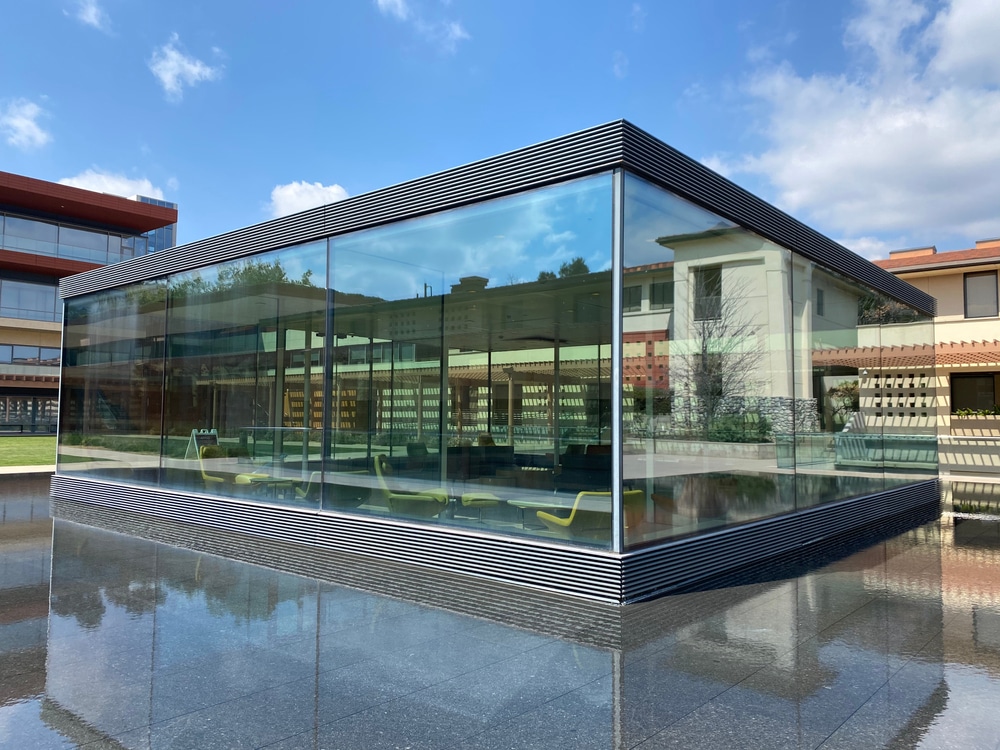
Kravis Center, the five-level complex designed by Rafael Viñoly, serves as CMC’s western gateway. It houses classrooms, faculty offices, research institutes, and the glass-enclosed “Kube,” one of the campus’s most recognizable student spaces.
On the eastern side of campus, the Robert Day Sciences Center anchors the expanding Roberts Campus and reflects CMC’s growing investment in undergraduate science education. Students also share access to the Honnold/Mudd Library, a consortium library system containing more than 2.5 million volumes.
Student life revolves around the Emett Student Center, home to the Hub Grill and Hub Store, and especially the Marian Miner Cook Athenaeum, one of CMC’s signature institutions. Four nights a week, the Athenaeum hosts scholars, policymakers, artists, and public figures for dinners, lectures, and student-led discussions. A small group of students dine directly with the speaker each evening, giving the program an unusually personal feel.
Daily life also runs through Collins Dining Hall, the campus’s all-you-can-eat dining facility and a reliable late-night study stop during finals season.
Athletics are based at Roberts Pavilion, the 130,000-square-foot home of Claremont-Mudd-Scripps Athletics. The complex includes a fitness center, arena, pool, track, and nearby athletic fields, with the ongoing Roberts Campus expansion set to add new aquatics facilities, practice spaces, and additional competition fields.
Claremont McKenna College other campuses and affiliated sites
Claremont McKenna College does not operate multiple campuses like a large research university, but its reach extends far beyond its 69-acre main campus through the uniquely integrated The Claremont Colleges consortium.
CMC shares a one-square-mile campus network with Pomona College, Scripps College, Harvey Mudd College, Pitzer College, Claremont Graduate University, and Keck Graduate Institute. Students can cross-register for more than 2,200 courses, use shared libraries and dining halls, and participate in a combined undergraduate community of roughly 7,000 students.
CMC also supports an unusually large research infrastructure for a liberal arts college of its size. Its eleven research institutes include the Rose Institute of State and Local Government, the Financial Economics Institute, and the Center for Human Rights Leadership. These centers regularly place undergraduates into faculty-led research projects, policy work, and publications typically associated with graduate-level institutions.
Beyond Claremont, CMC extends into major professional hubs through semester-long off-campus programs. The Washington Program places students in Washington, D.C. for internships and policy research, while the Silicon Valley Program connects students with internships and coursework at major technology and finance companies across Silicon Valley.
Physically, the college is also undergoing its largest expansion to date through the 75-acre Roberts Campus development east of Claremont Boulevard. Anchored by the Robert Day Sciences Center, the project will eventually add new academic buildings, athletic facilities, housing, and open space.

Getting to Claremont McKenna College
Claremont sits about 35 miles east of downtown Los Angeles in the foothills of the San Gabriel Mountains. Most visitors arrive via Interstate 10, exiting at Indian Hill Boulevard and heading north toward the Claremont Colleges district, where the Kravis Center serves as one of the campus’s most visible landmarks.
Once on campus, most transportation happens on foot within the compact consortium. Longer-distance travel is supported by Metrolink commuter rail, local bus routes, and several nearby regional airports.
Public transportation options
Public transit around Claremont McKenna College is more accessible than the suburban setting might suggest. Through the Foothill Transit Class Pass program, students receive free access to Foothill Transit’s local bus and Silver Streak routes, which connect Claremont to surrounding cities across eastern Los Angeles County. The pass is available to students across The Claremont Colleges through the TCCS Connection at Honnold/Mudd Library.
Most daily travel, however, happens on foot or by bike. The five undergraduate Claremont Colleges sit within a single square mile, making moving into campuses quick and easy.
For travel beyond Claremont, the Metrolink San Bernardino Line stops at the Claremont Metrolink Station, about ten blocks south of campus, with direct service to downtown Los Angeles in roughly an hour. The nearest Amtrak station is in Pomona, a few miles west of campus. For students commuting to internships, events, or weekend trips in Los Angeles, Metrolink is the most practical car-free option.
Getting there by car or other means
Driving to Claremont McKenna College is straightforward from most of Southern California. Most visitors arrive via Interstate 10, exiting at Indian Hill Boulevard and heading north toward campus along Sixth Street and Columbia Avenue.
Parking requires a permit, and first-year students are not allowed to bring cars to campus, encouraging walking, biking, and transit use from the start. Guest parking is available through hosting departments, with additional street parking nearby during larger events.
For air travel, Ontario International Airport is the closest and most convenient airport, located about ten miles west of campus. Los Angeles International Airport offers more flight options but is roughly 50 miles away. Other nearby alternatives include Hollywood Burbank Airport, John Wayne Airport, and Long Beach Airport.
Biking is one of the most practical ways to get around the Claremont Colleges because of the consortium’s flat, compact layout. CMC also operates a campus Bike Shop that provides free basic repairs for students. For trips beyond campus, rideshare services like Lyft and Uber are widely available throughout the Claremont area.

Living Near Claremont McKenna College
The area surrounding Claremont McKenna College feels distinct from both a traditional college town and typical Southern California suburbia. Claremont is notably walkable, with tree-lined streets, historic homes, and a downtown shaped for decades by the presence of the Claremont Colleges. The mix of students, faculty, and longtime residents gives the city a quiet but intellectually active atmosphere.
Student life naturally extends into Claremont Village, the downtown district just south of campus filled with independent cafes, restaurants, bookstores, and a popular weekend farmers market. Because the consortium is so compact, most social and academic life unfolds within a single square mile shared by the five undergraduate colleges, creating a close-knit campus environment despite access to far broader resources.
At the same time, Los Angeles is close enough for regular trips to internships, concerts, museums, and cultural events. On clear days, the nearby San Bernardino Mountains frame the campus skyline and provide easy access to hiking, camping, and skiing within a short drive.
Places to check out near Claremont McKenna College
Claremont Village is the heart of the area surrounding Claremont McKenna College, with more than 150 boutiques, cafés, galleries, and restaurants clustered around Yale Avenue and 2nd Street.
Nearby, the Claremont Packing House adds a more local feel with food halls, markets, and gathering spaces inside a restored citrus packing facility. For something uniquely Claremont, the Folk Music Center and Museum houses an interactive collection of instruments from around the world, while historic U.S. Route 66 runs directly through town along Foothill Boulevard.
The Claremont Colleges also offer strong arts and culture options within walking distance of campus. The Claremont Lewis Museum of Art, Benton Museum of Art at Pomona College, and the Ruth Chandler Williamson Gallery at Scripps College all feature rotating exhibitions and free admission. For live performances, Bridges Auditorium and Bridges Hall of Music regularly host concerts, lectures, and touring productions, while the outdoor Sontag Greek Theatre stands out for its mountain backdrop.
For outdoor escapes, Claremont Hills Wilderness Park offers hiking trails with panoramic views of the San Gabriel Mountains. Closer to campus, the California Botanic Garden showcases California native plants across 86 acres.
Other local highlights include the Raymond M. Alf Museum of Paleontology, known for its fossil collection, and Dividing the Light, a light installation on Pomona’s campus designed by James Turrell.
Why You Should Visit Claremont McKenna College’s Campus
Seeing Claremont McKenna College in person gives you a much clearer sense of its culture than any guide can. The consortium layout, Southern California setting, and unusually close-knit residential atmosphere feel very different once you experience them firsthand. Walking between the Claremont Colleges, sitting in on the energy around the Athenaeum, and seeing how seamlessly CMC blends a small liberal arts environment with big-city access often clarifies whether the school is truly the right fit.
CMC offers campus tours and information sessions that introduce visitors to the college’s academics, research institutes, student life, residential culture, and the broader Claremont Colleges consortium.
For a more strategic approach, AdmissionSight’s Senior Editor College Application Program helps you build a balanced college list and stronger application strategy, so by the time you visit CMC, you already understand where it fits within your broader admissions goals.
Frequently Asked Questions
1. What is Claremont McKenna’s address?
Claremont McKenna College is located at 500 East Ninth Street, Claremont, California 91711.
2. How big is Claremont McKenna?
CMC’s main campus currently spans about 69 acres, with the ongoing Roberts Campus expansion expected to increase its footprint to more than 150 acres.
3. Can I visit Claremont McKenna before applying?
Yes. CMC offers campus tours and information sessions for prospective students and families throughout the year.
4. Is parking available at Claremont McKenna?
Yes, parking is available on and around campus, though most campus lots require permits. Visitor and event parking options are also available nearby.
5. What landmarks are near Claremont McKenna?
Nearby landmarks include Claremont Village, Honnold/Mudd Library, the San Gabriel Mountains, and the neighboring campuses within The Claremont Colleges.

Takeaways
- Claremont McKenna College is located at 500 East Ninth Street in Claremont, about 35 miles east of downtown Los Angeles in the foothills of the San Gabriel Mountains.
- CMC’s campus currently spans about 69 acres, with the Roberts Campus expansion set to grow the college’s footprint to more than 150 acres in the coming years.
- The college is part of The Claremont Colleges, giving students access to shared courses, libraries, dining halls, and a broader academic and social environment across seven neighboring institutions.
- Students benefit from Claremont’s walkable college-town atmosphere, easy access to Claremont Village, and proximity to Los Angeles for internships, entertainment, research, and networking opportunities.
- Transportation is relatively convenient for Southern California, with access to Metrolink commuter rail, regional bus systems, nearby airports like Ontario International Airport, and a campus layout designed primarily for walking and biking.
- If you want to better understand how CMC’s consortium model, Southern California location, and leadership-focused environment fit into your college strategy, working with a college admissions expert can help you connect those opportunities directly to your academic and career goals.