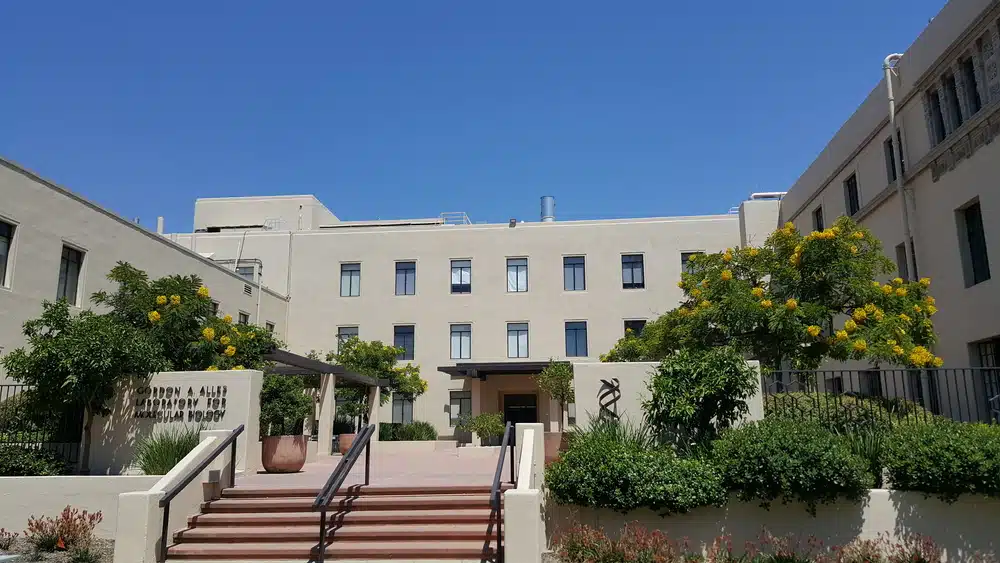
Caltech’s motto—“The truth shall make you free”—is a guiding belief that runs deep through the campus culture. You’ll spot it on official documents, hear it during commencement, and feel it in the way students and faculty approach their work every day. At its core, the motto speaks to the power of truth—how honest inquiry, evidence-based thinking, and intellectual integrity can unlock real freedom, both in science and in life.
If you’re thinking about applying or just trying to get a feel for what Caltech is all about, understanding this motto is a great place to start. It reflects a school that’s focused on building a community that values curiosity, responsibility, and fearless discovery. And if that resonates with you, it might just help you shape an application that feels truly aligned with Caltech’s mission.
- What Is Caltech’s Motto?
- History of Caltech’s Motto
- How Caltech Lives Up to Its Motto
- How to Reflect Caltech’s Motto in Your Application
- Frequently Asked Questions
- Takeaways
What Is Caltech’s Motto?
Caltech’s motto, “The truth shall make you free,” was chosen by the institute’s founder, Robert A. Millikan, in 1925. Caltech’s motto speaks to the institution’s devotion to rigorous inquiry, empirical evidence, and intellectual honesty. It champions the idea that knowledge grounded in factual truth opens the path to discovery and free thinking—especially in science, engineering, and research.
At Caltech, students and faculty are encouraged to question boldly, approach problems ethically, and accept results even when they’re uncomfortable.
History of Caltech’s Motto
Caltech traces its roots back to 1891, when it was founded as Throop University in Pasadena before evolving into the California Institute of Technology by 1920. As the school transformed into a dedicated science and engineering institution, its leaders sought a motto that captured their guiding ethos.
By 1907, astronomer George Ellery Hale had joined the board and insisted that Throop focus on science and engineering. He recruited educator James A. B. Scherer and chemist Arthur A. Noyes. Along with physicist Robert A. Millikan, they formed a “scientific triumvirate.”
These leaders embodied Caltech’s motto: they believed that pursuing scientific truth would free the institution from mediocrity and put it on the national stage. Their efforts paid off: by 1919, the school secured a major endowment, adopted a new educational philosophy, and changed its name to the California Institute of Technology.
In the 1920s Caltech was still small, offering graduate degrees only in physics, chemistry, and engineering. Yet its reputation attracted giants of European physics like Dirac, Schrödinger, Heisenberg, Lorentz and even Einstein, who visited the campus in the early 1930s.
Millikan steered clear of government funding, relying instead on private foundations and philanthropists. He believed science was the engine of the modern world, and he wanted Caltech to lead America’s scientific future.

The research portfolio under his leadership spanned everything from genetics and turbulence to quantum chemistry and seismology. This era showed how Caltech’s pursuit of truth—free from immediate commercial or military pressures—yielded breakthroughs across disciplines.
Over the decades, the motto remained central to Caltech’s identity. It evolved from a literal tagline into a lived ideal: students, faculty, and alumni frequently describe Caltech as a place where intellectual honesty, ethical responsibility, and fearless curiosity are an expectation.
Though the phrase echoes a biblical verse in John 8:32, Caltech’s interpretation is distinctively secular and science‑forward, emphasizing scientific truth over religious meaning—a modern twist on a classical maxim that continues to define the institution’s values into the present day.
How Caltech Lives Up to Its Motto
When you walk onto the Caltech campus (or just scroll through their news), you quickly get that the motto “The truth shall make you free” is both inspirational and foundational. You’ll feel it in every lab, classroom, and research project.
Innovation and technology
Consider the scale of inquiry happening right now: in fiscal year 2024, Caltech poured over $93 million into NSF-supported research—across 210 active awards—and spent more than $25 million on DOE‑supported projects. That reflects a serious commitment to pursuing truth through evidence-based work, even when federal support gets shaky.
In fact, Caltech recently joined a lawsuit against DOE over cuts to indirect cost rates, defending the infrastructure that makes deep scientific work possible.
Then there’s innovation driven by truth: in 2024, faculty developed a noninvasive wearable to track true blood pressure continuously, a smart mask for breath‑particulate monitoring, and a laser headset that measures cerebral blood flow to gauge stroke risk—tools grounded in rigorous science and designed to make a real difference in people’s lives.
Academic research
In 2024, Caltech researchers turned their attention to the planet’s most extreme environments—starting with the North and South Poles—to better understand how these frozen regions are responding to climate change.
In the Arctic, scientists discovered that melting permafrost—the once-permanently frozen ground—is redirecting water along new pathways, posing serious risks to downstream communities. At the opposite end of the globe, researchers revealed that Antarctic ice shelves are melting from below, as warm ocean currents slip underneath and destabilize the ice from beneath the surface.
Exploring Earth’s vast and mysterious oceans continues to challenge human researchers, whose bodies aren’t built for the pressures and conditions of the deep. So, Caltech scientists turned to nature for help: engineering “bionic” jellyfish outfitted with miniature electronic devices. These enhanced creatures can swim more efficiently and collect valuable data on salinity, temperature, and oxygen levels across the ocean.
Innovation also reached beneath our feet. Seismic sensors, originally developed for earthquake detection, are now being used in new ways. Caltech researchers repurposed these instruments to measure soil moisture in the shallow zones between Earth’s surface and underground aquifers.
They also demonstrated how the same sensors could detect seismic waves bouncing off the mantle, offering a window into the deep inner structure of the planet.
Beyond Earth, Caltech expanded our understanding of the solar system’s icy moons. A study of Enceladus, Saturn’s frozen satellite, found seismic signals suggesting that its icy crust may sit atop a global subsurface ocean rich in the chemical ingredients for life.
Meanwhile, researchers also confirmed that Jupiter’s moon Io has experienced intense volcanic activity for billions of years, driven by gravitational interactions with its massive host planet.

How to Reflect Caltech’s Motto in Your Application
Caltech’s motto—“The truth shall make you free”—is a deep commitment to intellectual honesty, curiosity, and fearless exploration. So if you’re applying, one of the best things you can do is show that you live by those values, too.
Essays
Caltech typically requires the following essays:
- 1 main personal essay
- Supplemental essays
- Optional short-answer essays
When you write your Caltech essays, think of the motto as a thread tying together all your stories. In your “STEM Academic Interests” essay, frame your academic passion as not only an interest but a quest for truth.
For example, you might say something like, “I want to study astrophysics to uncover the real nature of dark matter—even if the results challenge my assumptions.” That’s exactly the spirit of Caltech’s motto, aligning your curiosity with the institute’s mission
Then, in your “STEM Curiosity” essay, instead of simply describing a project, show how each unexpected outcome or failure brought you closer to a deeper understanding, emphasizing data over convenience.
When you talk about your “STEM Experiences,” don’t shy away from honest reflection. Share a story where a failure taught you more than success: perhaps debugging code that went wrong or experiments that didn’t pan out, because Caltech values intellectual honesty over perfection.
For the “Creativity in Action Question,” highlight how your innovation served truth-seeking. Maybe you created a sensor that prioritized accuracy over flashiness because reliable data mattered most.
Make your voice honest, curious, and reflective. Caltech admissions officers—many of whom are faculty themselves—want to hear how you’ve embraced rigorous inquiry, embraced mistakes as lessons, and pursued truth in your learning journey. In short: live the motto by writing your essays as evidence of your commitment to truth.
Do you need professional help to make your Caltech essays shine? We’ll polish your language, sharpen your structure, and ensure your brilliance comes through—just like Caltech expects. Start your editing session now.
Extracurricular activities
Since Caltech is all about STEM, your extracurriculars should show you’re just as passionate about science, tech, engineering, or math. Here are some activities that you can highlight:
- Research Science Institute (RSI)
- Garcia Research Scholar Program
- American Mathematics Competitions (AMC)
- Regeneron International Science and Engineering Fair (ISEF)
- FIRST Robotics
- VEX Robotics
- Stanford Pre-Collegiate Summer Institutes
- MIT Beaver Works Summer Institute
- PROMYS
- Ross Mathematics Program
Each of these experiences reflects a mindset Caltech looks for: one that’s driven not just by achievement, but by a deep desire to understand how the world works. When your extracurriculars show that you value truth and are willing to work hard to uncover it, you’re already living the spirit of Caltech’s motto.
Are you aiming for a spot at Caltech? AdmissionSight’s extracurricular planning service can help you strategically enhance your application. With personalized guidance, we’ll assist you in selecting and refining activities that highlight your strengths and align with Caltech’s values.

Letters of recommendation
Caltech asks for two recommendation letters. One of your recommendations should be from a teacher who taught you a STEM subject—like calculus, chemistry, or physics—and the other should be from a teacher in the humanities or social sciences, such as English or history. This balance reflects Caltech’s belief that truth is uncovered through both scientific reasoning and thoughtful communication.
You also have the option to submit an extra letter from someone like a coach, research mentor, or employer. Just be sure it brings something new to the table. Caltech values depth over repetition. The goal is to show who you are in a way that complements, not duplicates, the rest of your application.
To get strong letters, be the kind of student who’s genuinely curious: ask thoughtful questions, dig deeper into class topics, and seek help not just to get the right answer but to understand the concept. That pursuit of understanding—of truth—is what Caltech is all about.
Building strong relationships with your teachers and counselor takes time, so start early. Show your dedication, own your learning process, and engage fully. When your recommenders can speak to your integrity, work ethic, and passion for discovery, they’ll help paint a picture of someone who’s ready to live Caltech’s motto in every sense.
Frequently Asked Questions
1. What does the Caltech motto mean?
Caltech’s motto is “The truth shall make you free.” This powerful statement reflects Caltech’s deep commitment to intellectual honesty, rigorous inquiry, and the pursuit of knowledge through science and reason.
2. How can applicants reflect Caltech’s motto in their application?
Show that you’re driven by curiosity, honesty, and a desire to understand the world, not just to impress. Whether in your essays, recommendations, or activities, highlight experiences where you pursued knowledge for its own sake, challenged your own assumptions, or learned something through persistence and reflection.
3. Where does Caltech’s motto come from?
Caltech’s motto originates from the Bible (John 8:32): “And ye shall know the truth, and the truth shall make you free.” While it has religious roots, Caltech adopts a secular interpretation, emphasizing the pursuit of empirical truth through science, research, and critical thinking.

Takeaways
- Caltech’s motto, “The truth shall make you free,” reflects Caltech’s core belief that freedom—intellectual, personal, and societal—comes through the pursuit of truth.
- Caltech’s motto captures the Institute’s deep commitment to scientific integrity, evidence-based reasoning, and fearless inquiry.
- Your essays should reflect how you’ve sought truth through curiosity, critical thinking, and intellectual honesty. Use specific examples where you questioned assumptions, followed data over convenience, or pursued knowledge for its own sake.
- Your extracurriculars and recommendations should reinforce a consistent narrative of curiosity, integrity, and a drive to understand how the world works. Highlight experiences where you explored challenging ideas, conducted research, collaborated on complex projects, or demonstrated persistence in uncovering meaningful insights.
- Dreaming of studying at Caltech? Consider working with a college admissions consultant to refine your story and highlight your alignment with Caltech’s values.