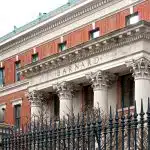
Have you ever wondered what the Black Ivy League is all about? Think of it as a group of historically Black colleges and universities (HBCUs) that stand out for their academic excellence, influential alumni, and dedication to shaping future African American leaders. The Black Ivy League schools are often considered pillars of the HBCU community.
In this blog, we’ll dive into the schools ranked by U.S. News & World Report and explore what makes each of them truly exceptional. Let’s get started!
What Are the Best Black Ivy League Schools?
While there is no official list of the Black Ivy League, some schools are highly esteemed and have produced numerous successful professionals, leaders, and cultural icons throughout history.
Over the years, these institutions have played an important role in developing and uplifting African American professionals and leaders. And while their historical contributions are impressive, their mission to promote higher education, social justice, and community impact is just as relevant.

Some of the most commonly recognized Black Ivy League schools include:
1. Spelman College
Acceptance rate: 28%
Average tuition cost: $28,207
Let’s talk about Spelman College, located in Atlanta, Georgia, and a standout among Black Ivy League schools. Ranked at the top by U.S. News, this private women’s liberal arts college is all about empowering and educating women of African descent.
Spelman is known for its rigorous academics, inspiring faculty, and a long list of impressive alumni, from celebrated writers and politicians to trailblazing business leaders. Aside from these, Spelman’s commitment to community service and social justice sets it apart.
The 39-acre campus buzzes with energy, offering everything from student-led clubs and volunteer opportunities to cultural events, lectures, and performances. It’s a place where you can dive into a rich and engaging college experience while building lifelong connections.
When it comes to academics, Spelman offers more than 30 majors and minors, including unique programs like African Diaspora and the World and Women’s Studies. Its strong sciences, social sciences, and humanities programs are a big draw, and with small class sizes and an 11:1 student-faculty ratio, you’ll get the kind of personal attention that makes a difference.
And let’s not forget Spelman’s alumni! Think icons like Alice Walker and Pearl Cleage, political leaders like Stacey Abrams and Keisha Lance Bottoms, and powerhouse business executives like Rosalind Brewer.
2. Howard University
Acceptance rate: 35%
Average tuition cost: $32,878
Howard University is ranked second among the Black Ivy League schools and a powerhouse in Washington, D.C. Since its founding in 1867, Howard has built a reputation as a top-tier institution, offering everything from undergraduate to graduate and professional programs.
Howard stands out as a leading producer of African American professionals across fields like medicine, law, engineering, and the arts. And being in the heart of the nation’s capital? That’s a game-changer. You’ll find endless opportunities for internships, networking, and immersing yourself in D.C.’s rich culture.
Howard’s 256-acre campus is complete with state-of-the-art facilities, sleek residence halls, a cutting-edge research library, and a student center. Plus, with over 150 student organizations, you’ll have no shortage of ways to get involved—whether it’s academics, arts, community service, or cultural awareness that sparks your interest.
Howard offers more than 120 areas of study across 13 schools and colleges. Some of its standout programs are in the School of Law, College of Medicine, School of Business, and College of Fine Arts. And if research excites you, Howard is tackling major issues like health disparities, social justice, and environmental sustainability.
Of course, Howard’s incredible alumni: Thurgood Marshall, the first African American Supreme Court Justice; Taraji P. Henson, the talented actress; and Kamala Harris, Vice President of the United States. These icons are just a glimpse of what’s possible with a Howard education.
3. Florida A&M University
Acceptance rate: 21%
Average tuition cost: $5,785 (in-state)
Florida A&M University, better known as FAMU, was founded in 1887. This public institution sits on 422 acres in the hills of Tallahassee. With around 7,800 undergraduate students, FAMU offers a close-knit yet dynamic community.
FAMU is the only historically Black institution in Florida’s State University System. While its mission focuses on educating African Americans, the university welcomes students from all racial, ethnic, and national backgrounds.
Despite the “Agricultural and Mechanical” in its name, FAMU has much more to offer—it’s got about 60 bachelor’s degree programs, with popular choices like architecture, journalism, and psychology. If you’re looking at grad school, they’ve got around 40 programs, including law and education.
Life at FAMU is anything but boring. With over 100 student organizations and a vibrant Greek life, there’s always something to get involved in. Sports fans will love cheering for the FAMU Rattlers, who compete in NCAA Division I’s Mid-Eastern Athletic Conference.
As for FAMU’s impressive alumni, you’ve got personalities like Pam Oliver, a Fox Sports reporter, and Keith Clinkscales, co-founder of Vibe magazine.

4. Tuskegee University
Acceptance rate: 30%
Average tuition cost: $21,064
Tuskegee University is a private, historically Black university with deep roots in Tuskegee, Alabama. Founded by Booker T. Washington in 1881, this iconic institution has always focused on practical education and uplifting African Americans through learning and opportunity.
One of Tuskegee’s most legendary contributions? The Tuskegee Airmen—the first African American military aviators in U.S. history. That’s just the beginning, though. Tuskegee is also home to a renowned College of Veterinary Medicine and offers over 60 degree programs across a variety of fields. Whether you’re interested in agriculture, engineering, business, or the arts, Tuskegee has something to offer.
The university is organized into five colleges and several schools, including Agriculture, Arts and Sciences, Veterinary Medicine, Education, Nursing, and more. And here’s a fun fact: Tuskegee is the only historically Black university with a fully accredited Doctor of Veterinary Medicine program. They’re also leading the way in aerospace science, nursing, and engineering.
Tuskegee is also famous for groundbreaking research. Ever heard of George Washington Carver? This agricultural genius, who called Tuskegee home, transformed Southern farming with his innovative ideas on crop rotation and his creation of over 300 uses for peanuts, sweet potatoes, and other crops.
5. Morehouse College
Acceptance rate: 58%
Average tuition cost: $28,964
Morehouse College is a private, historically Black men’s college in the heart of Atlanta, Georgia. Morehouse is all about shaping leaders who stand out for their excellence, integrity, and commitment to making a difference.
You can’t talk about Morehouse without mentioning its incredible alumni—civil rights legend Dr. Martin Luther King Jr., visionary filmmaker Spike Lee, and former Atlanta Mayor Maynard Jackson, just to name a few. The college’s dedication to community engagement and social justice truly sets it apart and cements its spot among the Black Ivy League schools.
Morehouse’s 66-acre campus is vibrant and full of life. You’ll find plenty of opportunities to get involved, whether it’s through student-led clubs, organizations, or volunteer work. The campus buzzes with cultural events, inspiring lectures, and performances, giving you a rich and engaging college experience that goes far beyond the classroom.
Academically, Morehouse is known for its strong liberal arts focus, offering over 30 undergraduate majors and minors across humanities, social sciences, business, and STEM. The programs are rigorous, but they’re also designed to develop ethical leaders who are ready to make an impact in their fields and communities.
6. Xavier University of Louisiana
Acceptance rate: 74%
Average tuition cost: $12,418
Xavier University of Louisiana is the only historically Black, Catholic university in the United States. Founded in 1915 by Saint Katharine Drexel and the Sisters of the Blessed Sacrament, Xavier has a rich history and a strong commitment to academic excellence and social justice.
Xavier is renowned for its exceptional programs in the sciences and liberal arts. It consistently ranks #1 in the nation for producing African American graduates who go on to complete medical school.
The university offers a wide range of undergraduate and graduate programs, providing a supportive and nurturing environment that fosters success and upward mobility for its students. In fact, Xavier has been recognized as the top HBCU for social mobility, highlighting its role in helping students achieve significant economic and professional advancement.

7. Hampton University
Acceptance rate: 48%
Average tuition cost: $26,198
Hampton University is a private, historically Black university located in Hampton, Virginia. Often recognized as one of the top Black Ivy League schools, Hampton has a rich history dating back to 1868 and is known for its exceptional academic programs in sciences, engineering, business, and liberal arts.
Hampton’s 314-acre campus is absolutely stunning. It’s right on the banks of the Virginia Peninsula, offering breathtaking views and a serene environment to study and live in. The campus is equipped with state-of-the-art facilities, modern residence halls, and a lively student center.
It’s not just about academics here—Hampton has over 100 clubs and organizations for you to explore. Whether you’re into arts, cultural awareness, or community service, you’ll find your niche. And if you’re into sports, you can cheer on the Hampton Pirates, who compete in NCAA Division I.
Academically, Hampton is top-notch. The university offers a wide range of undergraduate, graduate, and professional programs across 11 schools and colleges. Some of its standout programs include the Scripps Howard School of Journalism and Communications, the School of Nursing, the School of Science, and the School of Engineering and Technology.
8. Fisk University
Acceptance rate: 47%
Average tuition cost: $22,550
Fisk carries a legacy of academic excellence and social impact that makes it truly unique. It’s one of the oldest HBCUs, founded in 1866, and it has a reputation for producing leaders, innovators, and changemakers across various fields.
Whether you’re passionate about STEM, the arts, or social sciences, you’ll find plenty of opportunities to explore your interests. For example, Fisk’s STEM programs are especially impressive, with strong partnerships with institutions like NASA and Vanderbilt University. They offer programs like Computer Science, Data Science, and Biology, which are geared toward helping you thrive in competitive fields.
If the arts are more your thing, Fisk has a rich tradition of excellence there too. You’ve probably heard of the world-famous Fisk Jubilee Singers, who put the university on the map for their cultural and historical significance.
9. Dillard University
Acceptance rate: 66%
Average tuition cost: $19,281
Dillard University, located in New Orleans, Louisiana, is one of the distinguished Black Ivy League schools.
What sets Dillard apart is its strong liberal arts foundation and focus on preparing you for the global stage. The university offers a wide range of programs in fields like Public Health, Nursing, Mass Communications, Business Administration, and Urban Studies.
One of its standout programs is Nursing, which has a reputation for producing highly skilled healthcare professionals. If you’re interested in science or technology, Dillard also has strong STEM offerings, complete with research opportunities that can give you hands-on experience.
10. Clark Atlanta University
Acceptance rate: 58%
Average tuition cost: $24,012
As a proud HBCU and often mentioned in conversations about Black Ivy League schools, Clark Atlanta has a rich history of promoting academic excellence and preparing students to lead in their fields and communities.
Located in Atlanta, Georgia, the university is right in the heart of one of the most dynamic cities in the country. Atlanta’s thriving business, cultural, and tech scenes give you countless opportunities to gain real-world experience while you’re earning your degree.
Plus, being part of the Atlanta University Center Consortium (AUC) means you’ll have access to resources and connections with nearby schools like Spelman College, Morehouse College, and Morris Brown College.
The university’s Business School is especially noteworthy, with strong programs in marketing, finance, and supply chain management. If the arts or media are your thing, the Mass Media Arts program has produced countless successful alumni in film, TV, and journalism.
As one of the Black Ivy League schools, Clark Atlanta also prides itself on its campus life. From Greek organizations and student-led initiatives to cultural events and networking opportunities, there’s always something happening that will help you expand your horizons and build lifelong connections.

History of HBCUs
Historically Black Colleges and Universities (HBCUs) were born out of necessity during a time when education for African Americans was severely restricted. In fact, laws in the United States once prohibited enslaved and freed Black people from learning to read or write, making the very idea of higher education an uphill battle.
The first HBCU, Cheyney University, was founded in 1837 as the Institute for Colored Youth. It paved the way for other schools like Lincoln University and Wilberforce University, which also emerged during those early years.
After slavery was abolished in 1865, more private HBCUs were established, particularly in the South, where most African Americans lived. Back then, these schools often started in the basements of homes, churches, and small schoolhouses before growing into the respected institutions we know today.
Things took a turn in 1890 with the Second Morrill Act, which required any school receiving federal funds to either integrate or establish separate institutions for African American students. Southern states largely chose to create separate colleges instead of integrating, which led to the founding of land-grant institutions like Alabama A&M University and Tennessee State University.
Despite their vital role in education, HBCUs have faced persistent underfunding. Over the last 30 years, they’ve received $12.8 billion less in funding compared to non-HBCU schools.
Even with these challenges, HBCUs have achieved incredible milestones. While they make up just 3% of colleges in the U.S., they produce 25% of Black graduates in STEM fields. That’s huge!
Nearly a third of Black students earning degrees in astronomy, biology, chemistry, math, and physics graduate from HBCUs. And more than half of the nation’s Black public school teachers, dentists, and physicians have HBCU degrees.
Frequently Asked Questions
1. Is Howard University a Black Ivy League school?
Yes, Howard University is widely regarded as a Black Ivy League school. This informal designation recognizes historically Black colleges and universities (HBCUs) that excel in academics, leadership development, cultural significance, and producing influential alumni.
2. Are there other types of Unofficial Ivies?
Yes, beyond the Black Ivy League, several other unofficial “Ivy” groups recognize schools for their prestige, academic excellence, or cultural significance. Here are some examples:
- Hidden Ivy League schools
- Little Ivies
- Ivy Plus schools
- Southern Ivy League schools
- Public Ivies
3. Why are Black Ivy League schools important?
Black Ivy League schools are crucial in shaping future leaders, particularly in African American communities. They were established to provide access to higher education when systemic barriers excluded Black students from most institutions. Today, they continue to produce a significant percentage of Black professionals in fields like STEM, law, medicine, and education.

Takeaways
- Some of the best Black Ivy League schools include Howard University, Tuskegee University, and Spelman College.
- Black Ivy League schools have cultivated generations of leaders, innovators, and changemakers who have shaped the world in countless ways. By providing top-tier education, promoting a deep sense of community, and championing social justice, these schools remain a vital part African-American communities.
- For students aspiring to attend a Black Ivy League school, the journey starts with understanding the unique opportunities and challenges these institutions offer. Crafting a compelling application that highlights your strengths, passions, and alignment with a school’s values can make all the difference.
- That’s where AdmissionSight’s private consulting program comes in. With over a decade of experience, we specialize in guiding students like you through the admissions process, whether you’re targeting a Black Ivy League school or any other top institution. We’ll help you stand out in a competitive applicant pool.