

The University of California, Berkeley (or simply UC Berkeley) is among the world’s top 5 public universities. Alongside its reputation for academic excellence, UC Berkeley is also full of fun facts that make it truly unique. Located in the Bay Area, Berkeley offers something for everyone, from a thriving foodie scene to stunning natural landscapes.
But how much do you really know about Berkeley? Whether you’re applying this fall or already a proud Golden Bear, keep reading to learn some fun facts about UC Berkeley you might be surprised to know.
- 10 Fun Facts about UC Berkeley
- UC Berkeley Traditions You Should Join
- Frequently Asked Questions
- Takeaways
10 Fun Facts about UC Berkeley
UC Berkeley is known for its outstanding undergraduate programs in engineering, natural sciences, social sciences, law, education, and business. This vibrant city is a culinary hub, plus it’s socially diverse and culturally progressive. No wonder they receive many applications yearly from native Californians to transfer students.
But what truly sets Berkeley apart from other colleges, including the UC schools? If you’re curious, here are 10 fun facts you need to know.
1. First campus of the UC system
Did you know that UC Berkeley was the first-ever UC school? After the Gold Rush brought thousands of people to California, the state needed a top university. So in 1868, two schools, the College of California in Oakland and the Agricultural, Mining, and Mechanical Arts College, decided to team up.

But why is it called UC Berkeley? The founders named it after George Berkeley, an Irish philosopher who believed education could shape the future. When the university officially opened in 1873, the city started growing around it. Then, after the 1906 San Francisco earthquake, many people moved across the bay, making Berkeley even bigger.
Today, UC Berkeley is known for innovation, activism, and academic excellence—just the kind of legacy its namesake would’ve loved.
2. Bleed blue and gold
UC Berkeley bleeds Berkeley blue and California gold, and there’s a cool story behind it. Back in 1873, the school needed official colors, so they picked blue for the California sky (and as a nod to the Yale grads who helped start the university) and gold for, well, the Golden State.
Now, you’ll see these colors everywhere: on campus signs, in school merch, and especially on game days when students pack the stadium to cheer for the Golden Bears alongside the Berkeley cheerleading team and other spirit groups.
3. Oski, the golden bear
UC Berkeley’s mascot, Oski the Golden Bear, has been hyping up students for decades. But did you know UC Berkeley used to have real bear cubs as mascots? Yep, that was a thing. But as you can probably guess, a growing bear on campus wasn’t exactly practical. So in 1941, Oski, as we know him today, made his big debut at a freshman rally.
Another fun fact: Oski got his name from an old-school UC Berkeley cheer that started with, “Oski wow wow! Whiskey wee wee!” (Yeah, no one really says that anymore.) These days, you’ll spot him at big events, pumping up the crowd and posing for photos. If you ever see him around campus, consider it good luck!
4. UC Berkeley’s motto
UC Berkeley’s motto is “Fiat Lux,” which means “Let there be light.” It’s not just about actual sunlight (though Berkeley gets plenty of that). It’s about knowledge, basically shining a light on new ideas, discoveries, and ways of thinking.
Since 1868, Berkeley has been about pushing boundaries, asking big questions, and making an impact. Whether it’s groundbreaking research or student activism, that whole “light” thing? UC Berkeley takes it seriously. So, if you ever visit campus and see those words, remember you’re standing in a place built to spark brilliance.
5. A campus like no other
UC Berkeley is where history, nature, and California culture come together. The campus is open to the public, so on any given day, you’ll see students rushing to class, tourists exploring, and locals enjoying the scenery. Whether you’re walking past grand old buildings or grabbing coffee near Sproul Plaza, there’s always something happening.
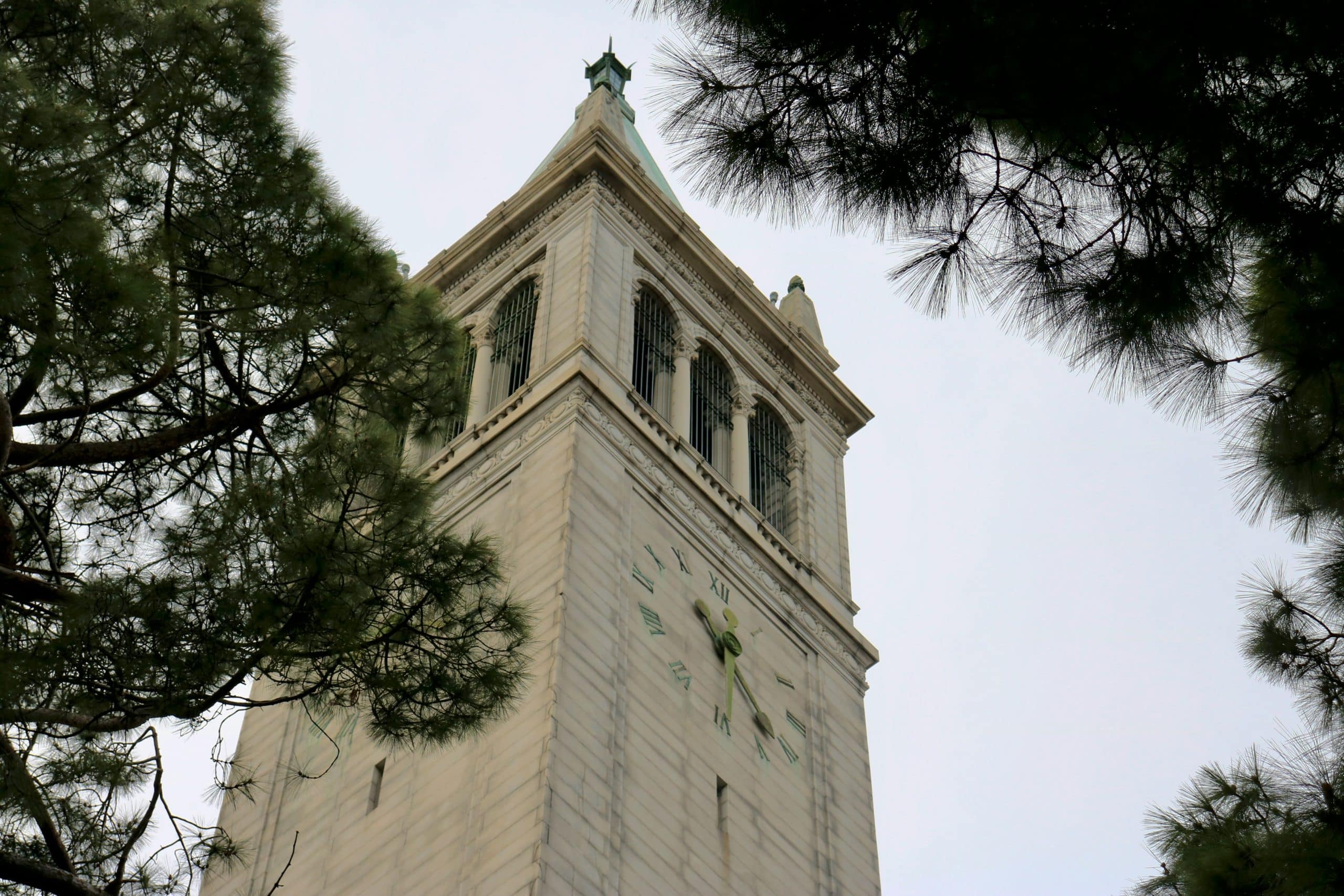
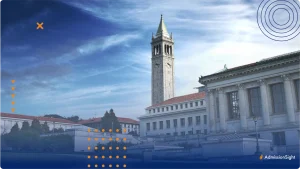
One of the coolest things? There are actual redwood trees right on campus. Yep, in the middle of Berkeley, you can walk among towering redwoods without leaving school. And if you’re up for a climb, head to the top of the Campanile for insane views of the Bay Area. You might even hear the tower’s carillon bells playing, which is another Berkeley tradition.
6. Where a movement was born
In the 1960s, UC Berkeley was the epicenter of a movement that changed history. In 1964, students had enough of being told what they could and couldn’t say on campus. They launched the Free Speech Movement, demanding their right to speak on political and social issues.
What started as small protests quickly grew, with thousands of students rallying in front of Sproul Hall. Eventually, their activism led to new policies protecting free expression on campus, and their impact stretched far beyond Berkeley.
But the activism didn’t stop there. During the late 1960s and 1970s, UC Berkeley became a major center for anti-Vietnam War protests. Even today, you can feel that spirit of activism in the air. Whether it’s a protest, a rally, or a passionate debate on campus, UC Berkeley has always been a place where people stand up for what they believe in.

7. Home to Nobel laureates
No top-tier school is complete without Nobel laureates, and UC Berkeley is home to 107 of them. Some of the world’s brightest minds have studied or taught at UC Berkeley and have earned the highest honors in physics, chemistry, medicine, economics, and more.
UC Berkeley’s Nobel legacy began in the 1930s with alumni Harold Urey, who discovered heavy hydrogen, and professor Ernest Lawrence, who was awarded for his work on the cyclotron. Since then, the list has only grown. You could walk around campus and might pass a professor who’s made groundbreaking discoveries!
8. UC Berkeley’s Green revolution
UC Berkeley has been all about going green long before it was cool. The city has made huge efforts to reduce waste, promote renewable energy, and lower its carbon footprint. It has over 52 parks and recreational facilities, so residents and visitors can enjoy plenty of green space.
That’s not all! Berkeley is serious about fighting climate change. The city has a Climate Action Plan to reduce greenhouse gas emissions, and you’ll see solar panels on tons of homes and businesses. From bike-friendly streets to eco-conscious policies, UC Berkeley proves that sustainability isn’t a trend but a way of life.
9. Berkeley Time
If you ever take a class at UC Berkeley, you’ll notice something pretty unique. Lectures don’t actually start on the hour! Instead, they start 10 minutes later. This little quirk is called Berkeley Time, and it gives students a chance to get from one class to the next without having to sprint across campus.
Basically, if your schedule says a class starts at 10:00 am, you really don’t have to be there until 10:10. It might not seem like a big deal, but trust me, those extra minutes are a lifesaver, whether you need to grab a coffee, catch your breath, or just avoid the stress of rushing.
10. The battle for the Stanford Axe
If there’s one thing that gets Berkeley students fired up, it’s the battle for the Axe. This legendary rivalry between UC Berkeley and Stanford has been going strong since 1899. And the prize? A literal axe.
But hey, it’s not just any axe! The Stanford Axe has a wild history of being stolen, reclaimed, and turned into one of college football’s most famous trophies.

It all started at a Cal vs. Stanford baseball game, when Stanford fans waved the axe in celebration. But by the end of the game, Cal fans weren’t having it, and they snatched the axe and took off with it! What followed was a chaotic back-and-forth of stealing and hiding the axe for decades, until it was finally made the official trophy of the schools’ annual football showdown, known as The Big Game, in the 1930s.
Today, the Stanford Axe is proudly displayed on campus whenever UC Berkeley wins The Big Game. If Stanford wins, well… let’s just say Cal fans start plotting how to take it back next year.
UC Berkeley Traditions You Should Join
Now that you know some fun facts about Berkeley, what campus traditions make student life even more exciting? Let’s go over them below.
1. Rub for a 4.0
Legend has it that luck can go a long way when it comes to exams at UC Berkeley. That’s where the “4.0 Ball” comes in. This stone sphere sits in front of the Campanile, and while it’s been there for over a century, students only recently started using it as a good luck charm.
The tradition is simple, really. Before a big exam, give the ball a quick rub, and hopefully, you’ll be on your way to a perfect 4.0 GPA. Whether it’s superstition or just a fun ritual, plenty of students swear by it. So, if you ever find yourself stressing over a test, you might as well give the 4.0 Ball a try. It can’t hurt, right?
2. Big Game bonfire
We’ve already covered the Stanford Axe and the legendary Big Game, but there’s another tradition that takes school spirit to the next level: the Big Game Bonfire.

Held at the Hearst Greek Theatre the night before the Big Game, this rally tradition is about hyping up students, alumni, and fans for the showdown against the Stanford Cardinal. Thousands of people gather to watch the massive bonfire blaze, hear speeches from football players and coaches, and soak in the energy. If you ever get the chance to experience it, you’ll see just how seriously Berkeley takes this rivalry!
3. Cal Day
Cal Day is UC Berkeley’s ultimate welcome party. Every April, the campus opens its doors to thousands of prospective students, families, and curious visitors. It’s a day of performances, campus tours, and even the chance to attend actual lectures. It’s the perfect way for admitted students to get a taste of life at UC Berkeley before making their final college decision.
Cal Day isn’t just for future students, by the way. It’s a celebration of everything that makes UC Berkeley special. Clubs and orgs set up booths, labs show off cool research projects, and the whole campus feels like a festival. If you’re exploring historic buildings, meeting future classmates, or just soaking in the lively atmosphere, it’s an experience you won’t want to miss.
Frequently Asked Questions
1. When was UC Berkeley founded?
UC Berkeley was founded in 1868, making it the first campus in the University of California system. It all started when two schools decided to join forces. The university officially opened in 1873, and the city of Berkeley grew up around it.
2. What is UC Berkeley most known for?
UC Berkeley is widely considered a “public Ivy” and known for its top-tier academics, groundbreaking research, and strong activist culture. It was the birthplace of the Free Speech Movement in the 1960s and remains a center for social change today. Plus, the city also boasts a treasure trove of attractions, including restaurants, theaters, galleries, and local festivals, making it an exciting place to live and learn.
3. What are some interesting facts about UC Berkeley?
UC Berkeley has no shortage of fun facts! Its mascot, Oski the Bear, replaced real bear cubs that once roamed the sidelines at games. Berkeley Time means classes start 10 minutes late, so students get a built-in grace period. And if you need good luck before a test, rubbing the 4.0 Ball in front of the Campanile is a must.
Takeaways
- UC Berkeley’s fun facts highlight its activist spirit and unique traditions. Students know how to balance academics with a memorable college experience.
- The school has a strong sports culture, including its long-standing rivalry with Stanford.
- The campus is open to the public and offers stunning natural spaces, from redwood forests to scenic walking paths.
- Not sure where to start your UC Berkeley journey? An admissions expert can provide personalized advice to boost your application and increase your chances of getting in.










