

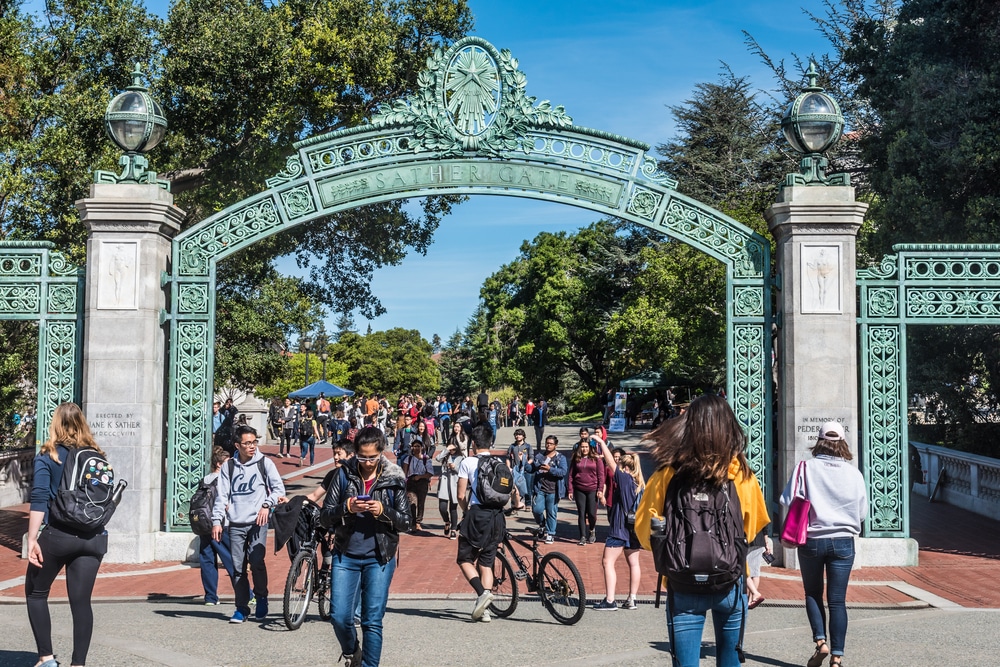
Are you thinking of applying to graduate school? The University of California, Berkeley offers degrees through several academic divisions, including the Haas School of Business, the School of Law, the College of Engineering, and the Graduate School of Education.
While the graduate school application process can be tedious, applying to Berkeley Graduate School is an exciting step toward achieving your dreams. This easy-to-follow guide will help simplify the application process for you.
The Berkeley Graduate School Programs
Berkeley focuses on lifelong learning as part of its mission. To help students qualify for more career opportunities, the Berkeley Graduate School offers programs rooted in excellence and a commitment to producing well-rounded graduates.
UC Berkeley offers a wide range of graduate programs across various fields, such as:
Business Administration & Law (MBA/JD). The full-time MBA program at Berkeley Haas offers a detailed general management curriculum to prepare students with the best knowledge and skills needed to become leaders in various organizations.
Development Engineering (MDevEng). The emphasis in Development Engineering combines coursework, mentorship in research, and professional development, enabling students to design, evaluate, and implement technological solutions focused on improving human and economic conditions in aggregate, resource-limited settings.
Economics (PhD). The UC Berkeley Economics PhD program is for those who are willing to perform advanced studies and engage in original economic research. Earning this degree demostrates the individual’s expertise as a comprehensive economist.
Energy and Resources (MA). The two-year Master’s program in Energy and Resources trains interdisciplinary leaders. It is intended for individuals completing their formal education and serves as a foundation for doctoral candidates, focusing on significant challenges related to energy, resources, and the environment through comprehensive and in-depth coursework.
Social Welfare (PhD). The doctoral program in Berkeley Social Welfare develops scholars who are critical about established norms and make a significant impact on the field through excellent research, teaching, policy innovation, and administration in social work.
Full-Time MBA. The Berkeley Haas Full-time MBA Program features a challenging general management curriculum aimed at equipping students with the necessary skills and knowledge to lead in any organizational environment.
Optometry OD. Prepares students to become professionals capable of addressing a wide array of responsibilities, offering high-quality clinical training with an education in vision science.
These programs highlight Berkeley’s strong emphasis on academic rigor and interdisciplinary approaches. Berkeley has a total of 205 graduate programs you can choose from.
Berkeley’s Top Graduate Programs
UC Berkeley offers several top graduate programs designed to foster expertise and leadership:
Part-time MBA. The Berkeley MBA Program prioritizes innovative leadership, creative problem-solving, and making a positive difference within a highly-skilled, diverse, and collaborative community. This network offers invaluable connections that last a lifetime.
Chemistry PhD. Focuses on groundbreaking scientific research. Consequently, the research project becomes the most critical component of each student’s curriculum.
Computer Science MS and PhD programs. Provides two graduate pathways in Computer Science: the Master of Science (MS) and the Doctor of Philosophy (PhD). The MS program is geared towards research preparation, often acting as an antecedent to the PhD. On the other hand, the PhD program combines coursework and original research under faculty mentorship.

Jurisprudence and Social Policy (JSP). Berkeley Law stands out among top U.S. law schools because of its unique interdisciplinary graduate program, Jurisprudence and Social Policy (JSP), offering both MA and PhD degrees. JSP delves into law and legal institutions through various disciplines, including history, economics, philosophy, sociology, and political science.
City Planning & Civil and Environmental Engineering. The University of California, Berkeley, offers a two-year Master of City Planning (M.C.P.) program and a Ph.D. in City and Regional Planning. The M.C.P. curriculum covers basic concepts in city and regional planning, while also providing opportunities to specialize in areas such as Environmental Planning, Housing, Transportation, and Urban Design. The Ph.D. program provides advanced training in urban planning theory, research, and practice..
UC Berkeley offers a variety of competitive graduate programs designed to equip students with the specialized knowledge and skills needed for success in fields such as business, law, and public health. Whether you’re pursuing an MBA, JD, or MPH, these programs are structured to help you achieve your professional aspirations.
These programs demonstrate Berkeley’s commitment to academic excellence and its wide range of graduate options.
What is Berkeley Known For?
Founded in 1868, UC Berkeley is the oldest institution in the University of California (UC) system and one of the top universities in the USA. Its rankings have consistently placed it among the top two universities in the UC system and the top 30 nationally.
In global rankings, UC Berkeley’s graduate programs have excelled, while securing top positions. The university ranked first worldwide in Chemistry, Computer Science, English, History, Part-time MBA, Psychology, and Sociology. Additionally, 14 other programs ranked in the top 10, including Statistics (2nd), Biological Sciences, Clinical Psychology, Earth Sciences, Engineering, Mathematics, Physics (3rd), and Economics, Political Science, and Public Affairs (4th). These rankings showcase Berkeley’s academic strength across various disciplines.
How to Choose a Graduate Program
If you’re unsure about which graduate program to choose, consider several factors before making a decision. With numerous options available, it can feel overwhelming, but these tips can guide you:
Evaluate your strengths, interests, and goals. This will help narrow down the ideal program for you, whether it’s a certificate or a full degree course. Explore programs that align with your career ambitions.
Check requirements and prerequisites. Ensure you meet the necessary requirements for your chosen program.
| Master Programs | Ph.D. Programs |
| Minimum GPA – 2.5
Bachelor’s or master’s degree 2-3 letters of recommendation At least one year of relevant work experience GRE, GMAT Scores, based on the school requirement; TOEFL or IELTS if you are a non-native English speaker |
Minimum GPA – 3.0
Bachelor’s or master’s degree 2-3 letters of recommendation 2-3 years of research, teaching, or applied leadership experience GRE scores, based on the school requirement; TOEFL or IELTS if you are a non-native English speaker |
Speak with credible advisors. Academic advisors can offer valuable insights and opinions to help you determine which Berkeley graduate school program aligns with your goals. Meeting with your advisor could be one of the best decisions you make to avoid future regrets.

Location. If you are unable to relocate for in-person attendance, check if the graduate program is available online. Some online classes may still require on-campus attendance for certain subjects. Verify with the school if there is a residency requirement and whether you can fulfill it.
Professional experience of professors. Consider the industry experience of the faculty members, as it adds depth to your academic learning. Once you’ve identified potential programs, research the professors’ experience outside academia. If they are actively working in industries or technical organizations, it can enhance your education and improve your chances of finding a job after graduate school.
Alumni success. The success of alumni is a strong indicator of how a graduate program can positively impact your career.
Financial aid options. Many factors influence the cost of a graduate program, but it’s important to explore financial aid opportunities. Research scholarships, fellowships, and other options that could make the program more affordable for you.
Berkeley Graduate School Requirements
When you’re ready to begin your application, here are the necessary requirements:
You can apply to Berkeley Graduate School if you have an undergraduate degree or equivalent from an accredited institution or will complete it before enrolling at Berkeley.
A regionally accredited college refers to an institution of higher education accredited by one of the following regional accreditation associations in the U.S.:
- New England Association of Schools and Colleges
- Middle States Commission on Higher Education
- Northwest Commission on Colleges and Universities
- The Higher Learning Commission (formerly North Central Association of Colleges and Schools)
- WASC Senior College and University Commission
- Southern Association of Colleges and Schools Commission on Colleges
It is recommended that applicants have a GPA of 3.0 or higher. Undergraduate research or training experience is also beneficial.
Transcripts. You must submit scanned copies of transcripts from all post-secondary institutions attended, including community colleges, undergraduate programs, summer sessions, and extension programs.
Required Documents. Upload a scanned copy of your transcript and degree certificate for each institution attended after high school. If your academic records are not in English or Spanish, you have two options for submitting translations:
- Provide translations prepared by certified translators, such as those from the American Translators Association or the Ministry of Education. Ensure that degree names and grades are transcribed into English, not converted into U.S. grade equivalents (A-F).
- Alternatively, you can submit an official World Education Services (WES) International Credential Advantage Package (ICAP) evaluation.
To submit your WES ICAP electronically, follow WES instructions and select “University of California at Berkeley,” specifically “Graduate Admissions” at 318 Sproul Hall #5900, Berkeley, CA 94720-5900, as the recipient.
This ensures that your records are accurately and appropriately evaluated.
Evidence of your English language proficiency. If you earned a degree in a country or region where English is not the official language, you must provide official proof of your English proficiency. This requirement applies to institutions in regions such as Bangladesh, Nepal, India, Pakistan, Latin America, the Middle East, Israel, China, Taiwan, Japan, Korea, Southeast Asia, most European countries, and non-English-speaking African nations.

You can fulfill this requirement by taking one of two standardized tests:
- The Test of English as a Foreign Language (TOEFL) or the International English Language Testing System (IELTS). UC Berkeley accepts the internet-based TOEFL (iBT) and iBT Home Edition only. A minimum score of 90 is required for the iBT.
If you plan to apply for Fall 2025, your score will only be valid if the test was taken after June 1, 2023.
You may qualify for a TOEFL/IELTS exemption if you meet one of the following conditions:
- You hold a degree from a recognized institution in a country where English is the official language.
- You have completed a degree (basic or advanced) at a U.S. institution or a U.S.-affiliated institution abroad, where English is the language of instruction, and the school is accredited by a U.S. regional accrediting agency.
- You have completed at least one year of full-time academic coursework at a U.S. regionally accredited institution with grades of B or better.
Note that you will not qualify for an exemption if courses like English as a Second Language (ESL) or non-academic courses are not conducted in English. If you do not meet these criteria, TOEFL or IELTS scores are still required.
Standardized Tests. Some programs may require additional standardized tests like the GRE General Test, GMAT, GRE Subject Test, or MCAT.
Letters of Recommendation. Your recommenders should assess your intellectual ability, professional skills, research potential, character, work quality, and your potential to receive scholarships. The letters of recommendation should be from people who know you academically (professors and/or advisors).
Statement of Purpose, Personal History Statement, and Other Essays. The Statement of Purpose should reflect your motivation for applying to the graduate program, including your specializations and preparation. This is where you discuss your research interests, academic plans, and career goals.
Tips for Writing the Statement of Purpose
When writing your statement, focus on your academic preparation, interests, motivations, career goals, and any specializations that align with your field of study.
Academic experiences. Highlight significant academic studies, research pursuits, employment, internships, publications, presentations, or other relevant experiences that have prepared you for graduate school. Also, mention experiences that will enrich your graduate study.
Understand what grad schools want. While each program has different prompts, they generally seek the same information:
- What graduate program do you want to study?
- Why do you want to study it?
- What experiences do you have that are related to the field?
- What are your plans for using your degree?
Admissions committees seek candidates with clear, well-defined interests grounded in experience. With this in mind, your statement of purpose should demonstrate your deep passion for your chosen discipline and showcase the background that supports your sentiments and ideas. It should also convey your diligence and commitment to seeing the program through to the end.
Explain why this program suits you. Admissions panels want to see how well students understand their goals and how those align with the vision and values of the school.
Summarize. Once you have addressed all the required points, the final paragraph should revisit the highlights and wrap everything up.
The Personal History Statement must discuss your background and experiences that led to your decision to pursue the degree.

Tips for Writing a Good Personal History Statement
Start early. Begin your personal history statement at least two to three months before the deadline. If you have other commitments, allow yourself extra time to write. The reason for this is that you want to have all your thoughts gathered before drafting. You are also giving yourself enough time to identify your experiences and personal characteristics that will make your essay more compelling.
Highlight key aspects of yourself. Introduce yourself by emphasizing significant elements of your background, showcasing what makes you a strong candidate for both the school and the program.
- Clearly articulate your academic interests, posing specific questions or defining problems you wish to explore in graduate school.
- Relevant work experience. Mention any professional experience related to your intended graduate studies, emphasizing responsibilities in testing, design, research, or internships that align with your future academic goals.
- Describe your undergraduate and previous graduate research, including the collaborators, project title, your specific roles, and the outcomes.
- This is your opportunity to present your academic successes, extracurricular involvement, and leadership experiences, showcasing how you have thrived in your field.
Do your research. Tailor your essay to the specific program, mentioning faculty or courses that align with your interests to demonstrate that you’ve done your homework.
Reflect on your motivations. When preparing your personal statement, it’s crucial to consider why you’re pursuing a specific program or field. To effectively address this, ask yourself the following questions:
- What experiences or goals led you to apply to this program?
- How will this program contribute to your personal growth?
- What sparked your interest in the field, and why do you want to explore it further?
- What research interests do you have, and how did they develop over time?
- Are there particular professors whose work aligns with your academic or professional goals?
Proofread thoroughly. Ensure your essay is error-free, and seek feedback from others to refine your structure, grammar, and flow.
Fees. The application fee for US citizens or permanent resident is $135. If you are not a US citize or permanent resident, you need to pay $155. The deadline for application is November 30.
UC Berkeley acceptance rate
In recent years, UC Berkeley’s acceptance rate has generally declined:
| Class | Acceptance rate |
| Class of 2023 | 16.8% |
| Class of 2024 | 17.5% |
| Class of 2025 | 14.5% |
| Class of 2026 | 14% |
| Class of 2027 | 11.6% |
Most recently, for the Class of 2027, the university received a total of 125,910 applications, admitting only 14,566 students. The acceptance rate for this class was 11.6%.
UC Berkeley graduate school acceptance rate 2022-2023
Of the 45,307 students at Berkeley, almost 28% are enrolled in doctoral and master’s programs across over 100 fields. The incoming graduate class for fall 2022, consisting of 4,041 students, was chosen from a pool of more than 40,000 applicants. This is equivalent to an acceptance rate of 8.92%.
Here is a table to show the student profile:
| Origin of students | Doctoral | Master’s |
| California | 27% | 49% |
| Other states | 45% | 26% |
| International | 28% | 49% |
UC Berkeley offers a variety of competitive graduate programs designed to equip students with the specialized knowledge and skills needed for success in fields such as business, law, and public health. Whether you’re pursuing an MBA, JD, or MPH, these programs are structured to help you meet your professional aspirations. However, acceptance rates can fluctuate annually based on factors such as the number of applicants and the competitiveness of the applicant pool. Thorough research and careful preparation are essential for maximizing your chances of admission.
Frequently Asked Questions
What is the UC Berkeley tuition fee per semester?
UC Berkeley graduate school tuition fee:
| Student Type | In-State | Out-State |
| Tuition and fees | $15,094 | $30,196 |
| Health insurance | $6,156 | $6,156 |
| Total cost | $21,250 | $36,352 |
You can check if you qualify for financial aid.
Are all the academic programs and courses available at any campus?
Not all programs are offered at every campus. Some courses may need to be taken at another campus or online.
Can I apply to more than one graduate program at Berkeley in the same admission cycle?
You are only allowed to apply to one graduate program per admission cycle.
Takeaways
- Admission to UC Berkeley’s graduate programs is highly competitive, with varying acceptance rates depending on the applicant pool. A well-crafted and thorough application is crucial for success.
- Before choosing a program, it’s essential to understand the application process and how to succeed.
- If you are planning to apply to UC Berkeley Graduate School, consider contacting a college admissions counselor to assist you with the process.










