

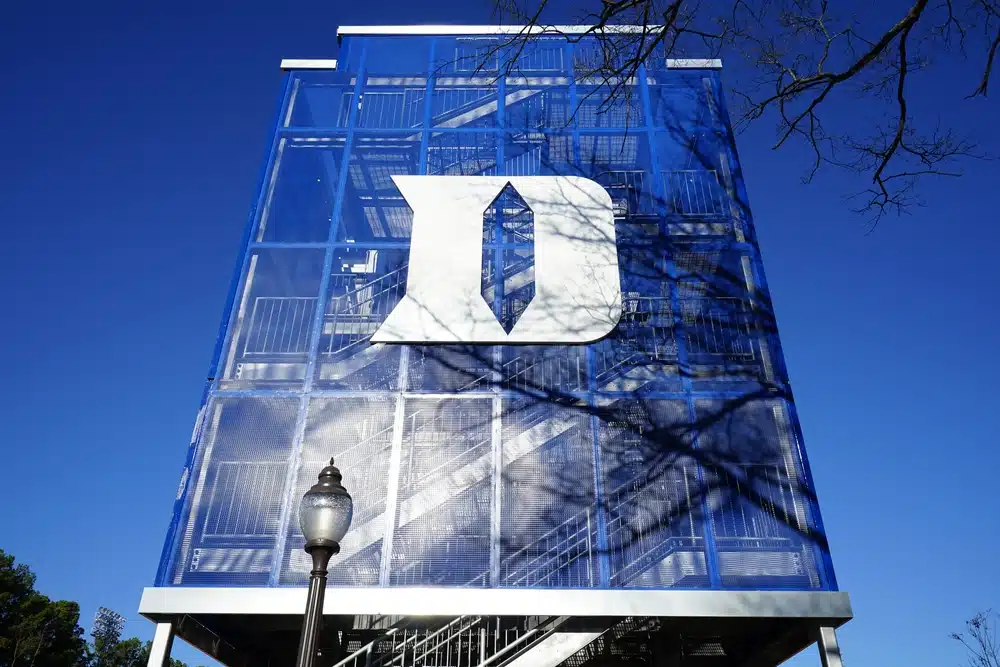
When you think of Duke, you might picture the roaring Cameron Crazies or those epic basketball games. But what Duke is known for really goes way beyond sports. It’s one of the top universities in the U.S., with elite academics, powerhouse research, a vibrant campus, and a tradition of success that stretches across every field.
Whether you care about rankings, research opportunities, social life, or career outcomes, Duke delivers on all fronts. Let’s break down exactly what Duke is known for and why it continues to attract some of the brightest students every year.
- Duke Is Known for Its Academic Excellence
- Duke Is Known for Its Cutting-Edge Research
- Duke Is Known for Its Vibrant Campus Life
- Duke Is Known for Its Legendary Athletics
- Duke Is Known for Its Influential Alumni
- Duke Is Known for Its Career Outcomes
- Frequently Asked Questions
- Takeaways
Duke Is Known for Its Academic Excellence
Duke’s reputation for academics is one of its strongest selling points. When people ask what Duke is known for academically, the answer is simple: across nearly every field, Duke ranks near the top.
Top-ranked programs
Duke consistently places among the top 10 national universities according to the U.S. News & World Report. For 2025, Duke University sits at the #6 spot.
The university is home to some of the strongest academic programs you can find. Here are a few highlights:
- Nursing (#2)
- Biomedical Engineering (#3)
- Writing in the Disciplines (#3)
- Psychology (#8)
- Environmental/Environmental Health (#9)
- Biocomputing/Bioinformatics/Biotechnology (#9)
- Economics (#15)
Their top-ranked programs show that what Duke is known for includes some of the best majors in the country. If you are aiming for top graduate schools or leadership in your field, Duke sets you up with one of the best academic foundations available.
Personalized learning environment
Another big reason why Duke University’s academic strengths stand out is the way students interact with faculty. With a 7:1 student-to-faculty ratio, students have direct access to professors who are leaders in their fields.
Classes are small, discussions are the norm, and professors actually know your name. At Duke, you are part of a close academic community that encourages mentorship, collaboration, and research involvement starting early.
Interdisciplinary flexibility
Duke pushes students to think across traditional academic lines. It is common to see students double-majoring in completely different fields, like combining Public Policy with Computer Science or pairing Biology with Visual Arts.
Programs like Program II give students even more freedom to shape their academic path. It’s designed for those who have a specific vision that doesn’t quite fit into a traditional major. Instead of choosing from the usual list of degree programs, you build your own—literally.
You work closely with a faculty advisor to design an individualized curriculum around a central theme or question you want to explore. For example, you could create a program that combines neuroscience, philosophy, and ethics to study consciousness, or something like tech and design for social change that blends computer science, visual arts, and public policy.

The program is rigorous, and you have to justify your choices with real academic goals, but for students who want full control over what they learn, Program II is one of the most unique academic options at Duke.
You can also layer in certificates in areas like Entrepreneurship, Innovation, Global Health, or Energy and the Environment. These are focused, interdisciplinary programs that add depth and real-world application to your major, without the pressure of another full degree.
If you want a place that values curiosity and flexibility, Duke delivers.
Duke Is Known for Its Cutting-Edge Research
Beyond classes and grades, what Duke is known for is pushing the frontiers of research. The university is a powerhouse of innovation, discovery, and real-world impact.
Research opportunities for all students
Duke invests heavily in research. For 2024, Duke spent $1.5 billion in total research expenditures and $863 million in federally sponsored research. But what makes Duke special is how early undergraduates get involved.
Through programs like Bass Connections and DukeEngage, students can join serious research projects in their first or second year. Whether you are interested in building robots, fighting diseases, or shaping public policy, there are real opportunities to make a difference from day one.
Saving lives through cancer research
One of the most impactful areas where Duke leads is in cancer research and treatment. The work coming out of Duke Health and the Duke Cancer Institute has not only advanced the science of oncology—it has literally saved lives.
In just the past year, Duke researchers have made breakthroughs in drug trials that have already helped patients beat the odds. One man, Lenny Santoro, survived stage 4 prostate cancer after enrolling in a Duke-led clinical trial.
Lenny’s case is now part of a larger wave of experimental treatments that are expected to help thousands more cancer patients in the coming years.
Stories like that of Sabrina Lewandowski—a young woman diagnosed with a rare brain tumor that most people don’t survive—show how Duke’s research is not just theoretical, but deeply human. Thanks to a combination of surgery and an experimental treatment at Duke, she was successfully treated and given a second chance at life.
And it is not just about treating late-stage illness. Duke is also known for early interventions and personalized cancer care, combining genetics, targeted therapies, and next-gen imaging to treat tumors more effectively and less invasively.
If you’re wondering what Duke is known for in the medical world, this is it. Cancer research at Duke is not just saving lives. It’s rewriting what survival looks like for thousands of people and shaping the future of care worldwide.
Duke Is Known for Its Vibrant Campus Life
Academics are only part of the story. Another major part of what Duke is known for is its lively, tight-knit, and proud campus culture.
A stunning, inspiring campus
You cannot talk about Duke without mentioning how beautiful it is. West Campus, with its Gothic architecture and the famous Duke Chapel, looks like something out of a movie. East Campus, where all freshmen live, has a more historic, residential feel that creates a strong sense of community.

Outside the classrooms, you have Sarah P. Duke Gardens, which boasts 55 acres of beautifully landscaped gardens perfect for relaxing, studying, or taking a walk. For those who love the outdoors, Duke Forest provides 7,000 acres of trails and nature.
Duke is definitely one of the most visually impressive and inspiring campuses in the country.
Clubs, organizations, and events
Life at Duke is busy in the best way. There are over 800 organizations to join, from student government and service groups to performing arts troupes and niche hobby clubs.
Events happen almost daily, from lectures and concerts to cultural festivals and career fairs. Duke students stay active, connected, and involved.
Famous traditions
Duke students love their traditions, and new students jump right into them. Some favorites include:
- Krzyzewskiville (“K-Ville”). Students camp outside Cameron Indoor Stadium for weeks to get basketball tickets.
- Cameron Crazies. The legendary fan section that makes Duke basketball games unforgettable
- Last Day of Classes (LDOC). A massive spring festival with live concerts and food.
- Chapel Climb. Seniors climb the Duke Chapel tower before graduating.
Traditions at Duke build strong bonds between students and create memories that last a lifetime.
Duke Is Known for Its Legendary Athletics
It is impossible to talk about what Duke is known for without bringing up sports. Athletic excellence and school spirit are a huge part of the experience here.
Basketball powerhouse
Duke’s men’s basketball program is world-famous. Under Coach Mike Krzyzewski (Coach K), the Blue Devils won five NCAA national championships and produced dozens of NBA stars, including:
- Grant Hill
- Kyrie Irving
- Zion Williamson
- Christian Laettner
The rivalry with UNC is one of the most intense in college sports, and a Duke-UNC basketball game at Cameron Indoor Stadium is an experience like no other.
Athletic strength across the board
Duke is not just about basketball. Other strong programs include:
- Men’s Lacrosse. 3 NCAA national championships (2010, 2013, 2014).
- Women’s Golf. 7 NCAA team titles (most recently in 2019).
- Men’s Soccer. 1 NCAA championship (1986) and frequent tournament appearances.
- Women’s Tennis. 1 NCAA championship (2009) and over 22 ACC titles.
Sports culture at Duke is inclusive. Even if you are not on a varsity team, club sports and intramurals are huge and keep the competitive spirit alive.
Duke Is Known for Its Influential Alumni
Another obvious sign of what Duke is known for is the success of its graduates. Duke’s alumni network is filled with famous and influential figures:
- Tim Cook. He is the CEO of Apple and one of the most powerful tech executives in the world. After earning his MBA at Duke’s Fuqua School of Business, Cook went on to lead Apple into a new era of innovation, sustainability, and global growth.

- Melinda French Gates. A philanthropist and businesswoman, she is the co-founder of the Bill & Melinda Gates Foundation, one of the largest private charitable organizations on the planet.
- Richard Nixon. The 37th President of the United States, Nixon earned his law degree from Duke in 1937. His presidency left a lasting mark on American politics, especially in foreign policy and executive power.
- Adam Silver. He is the Commissioner of the NBA and a key figure in modernizing the league both globally and socially. Under his leadership, the NBA has expanded its international reach and taken a strong stance on social justice and player empowerment.
- Rand Paul. A U.S. Senator from Kentucky, Paul is known for his libertarian-leaning positions on government spending, privacy rights, and foreign policy. He completed his undergraduate studies at Baylor but earned his medical degree from Duke School of Medicine.
- Elizabeth Dole. A former U.S. Senator, Secretary of Transportation, and Secretary of Labor, Dole was one of the first women to hold multiple cabinet-level positions in the U.S. government. She has spent decades in public service and philanthropy.
- Jay Bilas. An ESPN analyst and former Duke basketball player, Bilas played under Coach Mike Krzyzewski and later earned his law degree from Duke. He is now one of the most respected voices in college basketball and a strong advocate for student-athlete rights.
Duke graduates excel in business, technology, medicine, law, public service, and the arts. The network is global and loyal.
Duke Is Known for Its Career Outcomes
Finally, what Duke is known for is launching students into successful futures. Duke isn’t just about four great years on campus. It’s also about what happens after you graduate, and spoiler alert: Duke grads do extremely well.
Whether you’re heading straight into a job, continuing on to grad school, or launching your own venture, Duke sets you up with options.
Near-universal success after graduation
Let’s talk numbers. According to Duke’s Class of 2024 outcome report, 98.5% of surveyed students were either employed, enrolled in graduate school, serving in the military, or doing volunteer work shortly after graduation.
Here’s a breakdown:
- 77% were employed full-time
- 20% pursued continuing education
- A small percentage entered military service (0.46%), volunteer work (0.23%), or fellowships (0.12%)
Only 1.5% were still seeking opportunities, and 1.5% weren’t seeking at all. That means nearly everyone found a meaningful next step.
Top industries hiring Duke grads
Duke grads go everywhere. The most popular industries include:
- Finance – 19%
- Business & Management Consulting – 16%
- Computers, IT, and Technology – 10%
- Healthcare & Medicine – 10%
- Engineering, Architecture, & Design – 6%
- Education, Research, and Science – 9% combined
It’s a wide spread, showing that Duke doesn’t funnel everyone into one mold. If you want to work with algorithms, manage portfolios, or launch public health campaigns, there’s a track record of grads doing just that.
Big-name employers
Students from the Class of 2024 were hired by 602 unique employers. That’s a massive range. Even more impressive: 53 companies hired at least three Duke grads, and 12 companies hired ten or more.

Some of the top employers hiring Duke grads include:
- Capital One
- JPMorgan Chase
- Bain & Company
- McKinsey & Company
- Microsoft
- Meta
- Goldman Sachs
- Duke Health
- Morgan Stanley
- Duke University itself
Those names speak for themselves. Duke students graduate and head straight into competitive roles at some of the most recognizable companies on the planet.
Where Duke grads go
Geographically, Duke alumni head all over, but the top five U.S. locations are:
- New York
- North Carolina
- California
- Massachusetts
- Washington, D.C.
Internationally, the top destinations are:
- England
- France
- Germany
- Canada
- Spain
Whether they’re consulting in London, coding in San Francisco, or starting med school in Boston, Duke students end up in some of the world’s most exciting places.
Frequently Asked Questions
1. What is Duke known for academically?
Duke is known for top-ranked programs in fields like Nursing (#2), Biomedical Engineering (#3), Computer Science, Public Policy, and Psychology (#8). It also stands out for its strong research output, small class sizes, and flexible academic options like Program II and interdisciplinary certificates.
2. Is Duke University a good school?
Absolutely. Duke consistently ranks in the top 10 national universities, ranking #6 for 2025, and is respected around the world for its academics, research, medical innovations, athletics, and alumni network. It’s also known for its campus culture, tight student community, and high post-grad success rates. If you’re wondering whether Duke is a good school, the answer is: yes, and then some.
3. What is Duke University’s acceptance rate?
For the Class of 2029, Duke’s overall acceptance rate was a record-low 4.8%, making it one of the most selective schools in the country. The low rate reflects how many high-achieving students see Duke as a top choice.
4. How much does it cost to attend Duke?
For the 2025–2026 academic year, tuition alone is $70,265. When you factor in housing, meals, fees, books, and personal expenses, the total cost can reach up to $94,217. That said, Duke is need-blind for U.S. applicants and meets 100% of demonstrated financial need, making it surprisingly affordable for many families.
Takeaways
So, what is Duke known for? A lot, honestly. But if you’re skimming for the big points, here’s what to remember:
- Duke ranks among the top universities in the U.S., with highly respected programs in nursing (#2), biomedical engineering (#3), psychology (#8), and more. Its academic structure is flexible and student-driven, allowing for custom majors and unique certificate combinations.
- Research is a huge part of the Duke experience, even at the undergrad level. Students jump into meaningful projects as early as their first year, with standout work in fields like global health, engineering, and life-saving cancer research.
- Campus life is vibrant, tradition-filled, and community-focused. From the Gothic buildings and Duke Gardens to over 800 student groups and wild basketball traditions, Duke offers a college experience that’s equal parts rigorous and fun.
- Duke is known for producing successful graduates. With a 98.5% positive post-grad outcome rate, alumni head to top employers like Microsoft, JPMorgan, McKinsey, and Duke Health, as well as elite grad schools around the world.
- Need help crafting a Duke-ready application? A college admissions consultant can offer expert, one-on-one guidance to help you stand out to top schools like Duke.










