

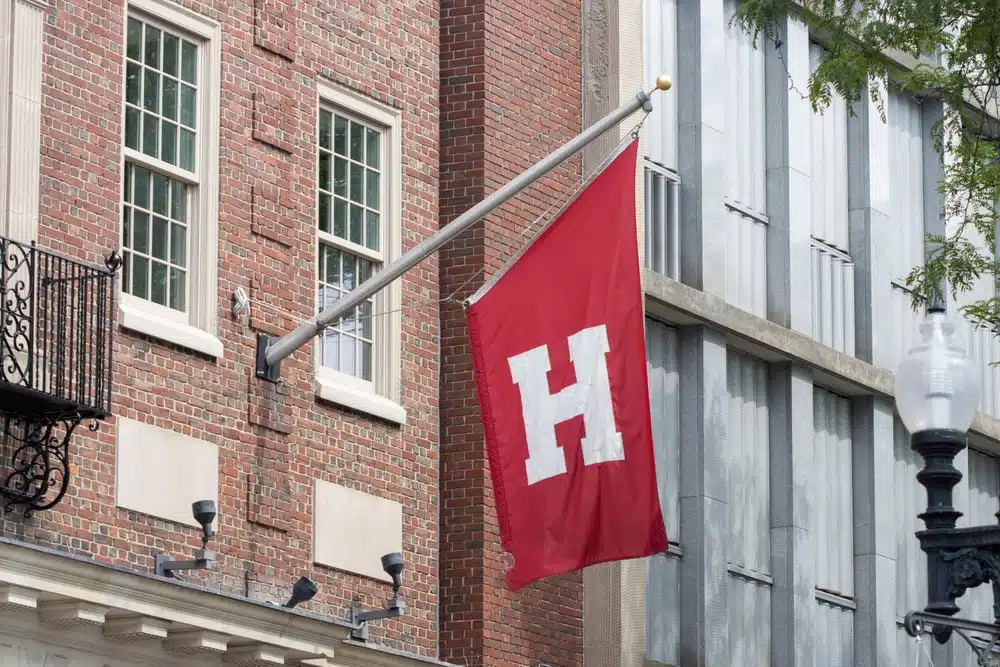
There might be a bit of an MIT vs. Harvard rivalry, but it’s not the classic kind you’d see between schools like Harvard and Yale or USC and UCLA. This one’s more friendly and nerdy than full-on competitive. Think smart banter, not school spirit showdowns. Both schools are absolute heavyweights, often landing in the top 5 best universities in the country.
If these two schools are at the top of your college list, you’ll want to look closely at what makes each one unique and where they overlap. In this blog, we’ll walk you through how MIT and Harvard compare across key areas like academics, cost, rankings, and admissions.
- MIT vs Harvard: Acceptance Rates
- MIT vs Harvard: Rankings
- MIT vs Harvard: Admission Requirements
- MIT vs. Harvard: Cost of Attendance
- MIT vs Harvard: Financial Aid and Scholarships
- MIT vs Harvard: Cross Registration
- Final Verdict
- Frequently Asked Questions
- Takeaways
MIT vs Harvard: Quick Overview
Both MIT and Harvard are total powerhouses, but instead of clashing on the football field, it’s more like comparing two kinds of brilliance.
MIT is all about tech, innovation, and hands-on problem solving. Harvard leans into leadership, law, big ideas, and shaping how the world works. They’re practically neighbors in Cambridge, just across the river from each other. And because of that, students can actually take classes at both schools.
When you’re trying to choose between them, it often comes down to your style of thinking. Are you into big-picture theory and policy (hello, Harvard)? Or do you get excited about building, coding, and experimenting (definitely MIT)?
But before we break down what makes them different today, let’s rewind a bit and see how it all started.
Massachusetts Institute of Technology
MIT, short for the Massachusetts Institute of Technology, was founded in 1861, right around the start of the Civil War. At a time when most universities were focused on classical education, MIT took a different route. The school wanted students to get their hands dirty, literally. Its goal was to offer a more practical, hands-on approach to learning, especially in science and engineering.

The school officially opened its doors in 1865, just after the war ended, and from the beginning, it stood out by focusing on solving real-world problems. That mindset stuck, and it’s become part of the school’s identity.
Over the years, MIT has changed the way people think about education, especially in STEM. It helped pioneer project-based learning, encouraging students to learn by doing. One example is the Undergraduate Research Opportunities Program (UROP), which gives students the chance to work on research even before they graduate. In 2001, MIT was also way ahead of the curve with its OpenCourseWare initiative, offering free online versions of its classes before online learning became a trend.
And of course, some incredible people have come out of MIT. Kofi Annan, former UN Secretary-General and Nobel Peace Prize winner, was one of them. Amar Bose, who founded Bose Corporation, got his start there. So did Drew Houston, the co-founder and CEO of Dropbox. These are just a few names on a long list of MIT grads who’ve made a serious impact in the world.
Harvard University
Harvard University was founded all the way back in 1636, making it the oldest college in the U.S. Harvard originally started as a small school to train ministers in the Massachusetts Bay Colony. But it didn’t stay small for long. The school was named after John Harvard, a young minister who donated his library and half his estate to help get things started.
Fast forward a few centuries, and Harvard has grown into a global academic giant. Today, it comprises 13 schools, including some of the most renowned institutions—Harvard Law, Harvard Business, and Harvard Medical School. Harvard has played a huge role in shaping education, especially in the U.S. It helped set the tone for the liberal arts model through mixing general education with specialized learning.

Harvard’s alumni list is also stacked. Barack Obama went to Harvard Law. Mark Zuckerberg launched Facebook while studying there, before dropping out to run it full-time. You’ve also got big names like Ruth Bader Ginsburg, Ban Ki-moon, and Natalie Portman. Presidents, Supreme Court justices, global leaders, and even Oscar winners have all walked Harvard’s halls.
MIT vs Harvard: Acceptance Rates
MIT and Harvard are two of the toughest schools to get into. Every year, they receive tens of thousands of applications from top students worldwide and admit only a small fraction. Here’s a quick look at the Class of 2028 acceptance rates:
| School | Acceptance Rate |
| MIT | 4.5% |
| Harvard | 3.6% |
For the Class of 2028, MIT had an acceptance rate of just 4.5%. That means out of 28,232 applicants, only 1,284 were accepted. Harvard was just as competitive, admitting 1,937 students out of a massive 54,008 applications.
These numbers show just how selective both schools are. Getting in takes more than just good grades; you will need to stand out in a crowd of achievers.
MIT vs Harvard: Rankings
When you’re deciding between MIT and Harvard, looking at university rankings can give you a strong sense of what each school is known for. Rankings aren’t the whole story, but they’re a helpful starting point, especially if you’re curious about things like research impact, global reputation, or career outcomes after graduation.
Here’s a quick look at how MIT and Harvard have stacked up in recent years across three major sources: Times Higher Education, QS World University Rankings, and U.S. News & World Report.
| World Rankings | MIT | Harvard |
| Times Higher Education 2025 | #2 | #3 |
| Times Higher Education 2024 | #3 | #4 |
| Times Higher Education 2023 | #5 | #2 |
| QS World University Rankings 2025 | #1 | #4 |
| QS World University Rankings 2024 | #1 | #4 |
| QS World University Rankings 2023 | #1 | #5 |
| US News Best National University Rankings 2025 | #2 | #3 |
| US News Best National University Rankings 2024 | #2 | #3 |
| US News Best National University Rankings 2023 | #2 | #3 |
The numbers shift a little each year, but one thing’s clear: MIT and Harvard are always right at the top. MIT usually takes the lead in the QS rankings, while Harvard tends to score higher in Times Higher Education (THE).
Each ranking system looks at different things. THE focuses on teaching, research, international reach, and how effectively a school shares knowledge, providing a broad view of academic strength. QS cares more about what other schools and employers think, plus how diverse and well-supported the student body is.
U.S. News, on the other hand, is more U.S.-focused. It looks at things like graduation rates, financial aid, and how well schools support students overall.
If you’re choosing between MIT and Harvard, these rankings can help you get a better sense of what each school is known for. MIT shines in science, tech, and innovation, while Harvard offers a wider mix of strengths, from politics and economics to public service and the humanities.
Regardless of which path you’re leaning toward, both schools offer a wealth of opportunities and an impressive network.
MIT vs Harvard: Admission Requirements
Let’s take a look at what it takes to apply to MIT and Harvard. Both are among the most prestigious universities in the world, but they have slightly different admissions processes and look for different strengths in their applicants.
Here’s a quick breakdown of what you’ll need for both the MIT and Harvard applications:
| Application Requirement | Harvard Requirements | MIT Requirements |
| Application Platforms | Common Application
Coalition Application QuestBridge |
MIT Application Portal
QuestBridge Application |
| Application Fee | $85 application fee (waivers available for eligible students) | $75 or fee waiver available |
| Standardized Tests | Harvard requires test scores.
SAT: 1500–1580 ACT: 34–36 |
MIT requires test scores.
SAT: 1520-1580 ACT: 34-36 |
| High School Coursework Recommendations | 4 years of English
4 years of math 4 years of science 4 years of a foreign language 3 years of social studies 2 years of history |
No specific requirements but the requirements are typically:
Math including calculus Science,including physics, chemistry, and/or biology Humanities, arts, and social sciences (English, history, economics, music, and/or foreign languages) |
| GPA | No minimum GPA
Average GPA: 4.2 (weighted) |
No minimum requirements
Average GPA: 4.2 |
| Letters of Recommendation | 3 recommendations required:
2 teacher recommendation letters 1 counselor letter (included in the School Report) |
3 recommendations required:
2 teacher recommendation letters 1 counselor letter (included in the School Report) |
| Supplemental Essays | In addition to the Common/Coalition App personal essay, Harvard requires five short-answer essays (each ~150 words) as its supplement. | 5 short-answer essay questions |
| Application Deadlines | Restrictive Early Action (non-binding) deadline: November 1
Regular Decision deadline: January 1 |
Early Action: November 1
Regular Decision: January 6 |
To apply to MIT or Harvard, you’ll need a strong, well-rounded application but each school has its own approach when it comes to what they’re looking for.
Both MIT and Harvard require standardized test scores for the 2024–2025 admissions cycle. These are not optional, so you’ll want to aim high if you’re applying to either school. For MIT, the average SAT scores fall between 1520 and 1580, while the ACT range is 34 to 36.
Harvard’s numbers are almost identical, with admitted students typically scoring between 1500 and 1580 on the SAT and 34 to 36 on the ACT. On top of that, most admitted students have nearly perfect GPAs and take the most challenging courses available to them.
Harvard looks for students who show depth, initiative, and leadership. For example, maybe you’ve done original research through programs like the Research Science Institute (RSI) or MIT’s PRIMES.
Harvard is also drawn to creativity and thought leadership. If you’ve created a podcast about social justice, built a digital platform or app, organized a community art show, or published writing in The Concord Review or Scholastic Art & Writing Awards, that speaks volumes.
MIT, on the other hand, looks for students who are builders, innovators, and problem-solvers. If you’ve been involved in programs like MIT THINK, Regeneron Science Talent Search, or Google Science Fair, that’s a great fit.

Participation in FIRST Robotics, VEX Robotics, or CodeDay also speaks directly to MIT’s hands-on, collaborative spirit. Maybe you’ve attended Girls Who Code, HackerRank competitions, or done summer research through RISE (Research in Science & Engineering at Boston University) or COSMOS (California State Summer School for Math & Science).
Both schools are incredibly selective, but they’re looking for different types of excellence. Harvard leans into leadership and influence across all fields. MIT wants students who dream up solutions and actually build them.
If you’re trying to figure out how to put together a standout application for MIT or Harvard, we’ve got updated guides to help you through every step:
MIT vs. Harvard: Cost of Attendance
Here’s a quick breakdown of the estimated cost of attending MIT and Harvard for the 2024–2025 school year:
| School | Tuition and Fees | Living Costs | Total |
| MIT | Tuition: $61,990
Student life fee: $406 |
Housing: $13,060
Food: $7,220 Books: $910 Personal: $2,374 Student activities fee: |
$85,960 |
| Harvard | Tuition: $56,550
Fees: $5,126 |
Housing: $12,922
Food: $8,268 Books: $1,000 Transportation: $4,800 |
$88,666 |
Keep in mind that these numbers are before financial aid is applied. To choose between Harvard or MIT means you’re investing in a top-tier education but that kind of experience doesn’t come cheap.
Between tuition, housing, meals, and other expenses, the costs can add up quickly. That’s why it’s important to get a full picture of what you’ll be paying before you commit.
MIT vs Harvard: Financial Aid and Scholarships
MIT and Harvard are both high-cost schools, but they also have some of the strongest financial aid programs out there, designed to make their education accessible to students from all income levels.
At Harvard, financial aid is incredibly generous. Admissions are need-blind for all applicants, including international students, and the school promises to meet 100% of demonstrated financial need.
Harvard also follows a no-loan policy, which means all financial aid comes in the form of grants, not loans, so most students graduate without student debt. In fact, families earning under $85,000 a year typically pay nothing for tuition, room, or board.
MIT offers a similarly robust financial aid program. It’s also need-blind for all applicants and meets full demonstrated need. About 90% of students receive some form of financial aid, and families earning less than $200,000 a year usually attend tuition-free, with the school covering most living expenses as well.

MIT’s aid package may include a small student contribution or work-study, but the goal is still to keep debt low and make sure finances don’t get in the way of a top-tier education.
So while the sticker price is steep at both schools, the actual cost for many students ends up being far more affordable thanks to these strong aid programs.
Here’s a look at the types of financial aid and scholarships available at each school:
Financial aid and scholarships at MIT
- MIT Scholarship. This is the primary form of financial aid at MIT, awarded based solely on financial need. Funded by MIT’s endowment and alumni contributions, it doesn’t require repayment. For the 2023–2024 academic year, the median MIT Scholarship was $66,663.
- First Year Grant. To assist low-income first-year students with initial college expenses, MIT provides a $2,000 grant. This helps cover costs like bedding, winter clothing, and other essentials.
- Federal Grants. Eligible students may receive federal grants such as the Pell Grant, Federal Supplemental Educational Opportunity Grant (FSEOG), and the Iraq and Afghanistan Service Grant. These are awarded based on financial need and do not require repayment.
- Jack Kent Cooke Foundation College Scholarship. Provides up to $55,000 per year to high-achieving high school seniors with financial need and supports tuition, living expenses, books, and other fees.
- Elks National Foundation Most Valuable Student Scholarship. Awards range from $1,000 to $12,500 per year, renewable for four years. This scholarship is open to high school seniors who demonstrate leadership and financial need.
Financial aid and scholarships at Harvard
- Frank Knox Memorial Fellowship. This fellowship supports graduate students from Australia, Canada, New Zealand, and the UK pursuing studies at Harvard. It covers tuition and provides a generous stipend for living expenses.
- Harvard Financial Aid Initiative (HFAI). Designed for undergraduate students, HFAI ensures that families earning under $85,000 per year pay nothing for tuition, room, or board. Harvard meets 100% of demonstrated financial need without requiring loans.
- Henry Fellowship. Each year, this fellowship funds four full-time postgraduate students to study at institutions like Harvard, Yale, Oxford, or Cambridge. It covers tuition, health insurance, travel expenses, and provides a maintenance grant.
- Aga Khan Foundation’s International Scholarship Programme. This program offers scholarships to outstanding students from select developing countries who have no other means of financing their studies. Harvard students have been among the beneficiaries.
MIT vs Harvard: Cross Registration
If you’re a full-time student at MIT, you’ve got the cool option to take classes at Harvard, Wellesley College, or MassArt during the fall and spring terms. Each school has its own rules, so you’ll want to double-check their guidelines to make sure you’re eligible. You can’t take more than half of your classes at another school in one semester.
There’s no extra tuition to worry about, but grade release timelines might be different, so don’t be surprised if some grades show up later than others. Also, certain classes like labs or studio courses might charge extra fees, which MIT will bill directly.
If you’re a Harvard student looking to take a class at MIT, that’s an option too, but not through Harvard Extension or Summer School, and UROP isn’t open for cross-registration either. If you’re in your final semester, it’s probably not the best time to cross-register, as MIT’s term ends later than Harvard’s, and your grade might not arrive in time for graduation decisions
Start of registration: August 25, 2025
If you want to take advantage of this MIT-Harvard partnership, follow these simple steps.
For Harvard students who want to enroll in MIT:
- Find your class using MIT’s Subject Listing & Schedule.
- Submit your petition through Harvard’s official cross-registration process.
- Once approved, you’ll receive your MIT ID number and Kerberos login info.
- Install MIT certificates in your browser to access MIT systems.
- Get your MIT student ID at MIT Card Services
- Update your emergency contact information in MIT’s WebSIS system.
- If you decide to drop a class, follow Harvard’s drop procedure and email MIT at [email protected] to confirm the change.
For MIT students who want to enroll in Harvard:
- Submit your cross-registration request through my.harvard. (Fellows are not eligible to cross-register at MIT.)
- Wait for the MIT instructor to approve your request
- Once approved, a “Permission Granted” icon will appear in your my.harvard account.
- Enroll in the course. You are not officially enrolled until you complete this final step in my.harvard after receiving permission from the MIT instructor.
Final Verdict
MIT and Harvard are two of the most prestigious universities in the world, but they offer very different experiences.
- Harvard has that classic Ivy League environment, historic buildings, a broad liberal arts curriculum, and endless resources. It’s a place where you can explore multiple interests, from politics and economics to the arts and sciences, all while being part of a tradition that’s produced presidents, Nobel Prize winners, and global leaders.
- MIT, on the other hand, is all about innovation and problem-solving. It’s fast-paced, tech-driven, and deeply focused on science, math, and engineering. Students at MIT are builders and doers. The energy there is rooted in creativity, research, and applying knowledge to real-world challenges.
So which one fits you better? If you’re excited by theory, leadership, and exploring a range of fields, Harvard might be the right fit. If you love building, experimenting, and diving deep into technical challenges, MIT could be the better match.

Both will push you, challenge you, and open doors. It just depends on what kind of journey you’re looking for.
Frequently Asked Questions
1. Is MIT an Ivy League?
No, MIT is not an Ivy League school but it’s often ranked higher than many of them. The Ivy League is actually a sports conference that includes eight private colleges in the Northeastern U.S.: Harvard, Yale, Princeton, Columbia, Brown, Dartmouth, Cornell, and the University of Pennsylvania.
2. In terms of rankings, which is better between MIT and Harvard?
Neither is “better” across the board. If you’re focused on science, tech, or engineering, MIT is usually considered the top choice. If you’re more interested in law, politics, business, or the humanities, Harvard tends to take the lead. Ranking-wise, they trade places depending on the criteria, but they’re both in the top tier worldwide.
3. Is there a rivalry between Harvard and MIT?
Yes, but it’s more of a friendly, academic rivalry than a traditional one. Harvard and MIT respect each other deeply, but they compete in areas like research, innovation, and attracting top talent.
Takeaways
MIT and Harvard are two of the most prestigious universities in the world, but the student experience at each is quite different.
- Harvard offers a traditional Ivy League campus with a broad liberal arts focus and deep strength across fields like law, politics, economics, and the humanities. MIT, meanwhile, is known for its hands-on, tech-driven environment, and focus on STEM.
- For the Class of 2028, Harvard had an acceptance rate of 3.6%, while MIT was slightly more selective at 4.5%. Both are extremely competitive and attract top talent from around the globe.
- MIT often takes the #1 spot globally for STEM fields and frequently ranks at or near the top overall. Harvard usually lands in the top 1–3 worldwide, with a broader reach across both sciences and the humanities.
- Both schools come with high price tags—MIT’s cost of attendance is about $82,730, while Harvard’s is around $88,666. Still, each school offers strong, need-based financial aid that covers 100% of demonstrated need.
- If you’re aiming for either, doing your homework, crafting a strong application, and seeking guidance from a college admissions expert can make a real difference in standing out from the competition.










