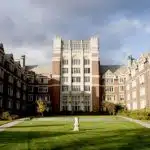
The University of Pennsylvania’s (UPenn) Pre-College Program gives high school students a real taste of college life. The program is built for curious learners who are ready to challenge themselves with university-level courses and earn college credit.
In this guide, we’ll walk you through everything you need to know about the program: what it offers, the 2025 schedule and requirements, how to apply, and why it could be one of the most rewarding steps on your path to college and beyond.
- What Is the UPenn Pre-College Program?
- UPenn Pre-College Program Application Deadline
- UPenn Pre-College Program Requirements
- How to Get into the UPenn Pre-College Program
- Why Join the UPenn Pre-College Program?
- Frequently Asked Questions
- Takeaways
What Is the UPenn Pre-College Program?
The University of Pennsylvania’s Pre-College Program is a six-week summer experience for high-achieving high school students seeking an authentic taste of Ivy League academics. Participants enroll in real, credit-bearing undergraduate courses taught by UPenn faculty and taken alongside current UPenn students.
Offered in both residential and online formats, the program typically runs from late June through early August, following UPenn’s summer academic calendar. Let’s take a closer look at the courses available in each format:
Residential format
The Residential Program covers a wide range of subjects across science, humanities, and the social sciences. The session runs from June 30 to August 8, and students can choose from several credit options:
| Course Title | Description |
| Introduction to Biology | Learn the foundations of biology, from cell structures to complex organisms, and practice lab-based problem-solving. |
| Introduction to Media Studies | Understand how media shapes culture, communication, and perception in a digital-first world. |
| Introduction to Microeconomics | Study how individuals and businesses make decisions, and see how economics applies to real-life scenarios. |
| Science, Technology & War | Analyze how scientific progress and military innovation have influenced society throughout history. |
| History of Modern Philosophy | Explore key philosophical questions and thinkers who have shaped modern thought. |
| Introduction to Experimental Psychology | Gain insight into human behavior through studies on perception, emotion, and cognition. |
| Law and Society | Examine how laws are created, interpreted, and enforced, and how they reflect the values of different communities. |
Each course is credit-bearing and will appear on your official University of Pennsylvania transcript, which shows your ability to handle college-level work before you even graduate high school.
Online format
In the Online Program, you stay wherever you are while participating fully in Penn’s undergraduate courses. These classes are credit-bearing and follow the same academic expectations as on-campus courses, including assignments, research papers, midterms, and finals.
Furthermore, the online format offers two study sessions—Session I and Session II—each featuring different sets of courses and disciplines. Session I runs from May 26 to July 1, and Session II runs from July 2 to August 7.
Session I gives you a chance to explore subjects across the humanities, social sciences, and natural sciences:
| Course Title | Description |
| Music of Africa | Study the rhythms, instruments, and cultural contexts that shape African music traditions and their global influence. |
| Human Origins, Evolution, and Diversity | Learn how humans evolved through fossil evidence, genetics, and cultural adaptations. |
| World Film History | Trace the growth of global cinema, from early silent films to modern international masterpieces. |
| Narrative Across Cultures | Compare storytelling traditions from around the world to understand how culture shapes human expression. |
| Introduction to Microeconomics | Explore how individuals and firms make financial choices, how markets work, and why prices fluctuate. |
| Earth Systems Science | Examine how Earth’s systems—land, water, air, and life—interact to shape our environment. |
| Gender and Society | Learn how gender influences identity, opportunity, and power across different societies. |
| Ancient Greece | Study Greek history, literature, and philosophy, and how they laid the groundwork for modern thought. |
| Introduction to Linguistics | Learn how language is structured and why it changes over time. |
| Introduction to Sociolinguistics | Understand how language use reflects social class, identity, and cultural belonging. |
| Introduction to Philosophy | Explore fundamental philosophical ideas about knowledge, ethics, and human existence. |
| Philosophy of Science | Discuss what defines science, how it progresses, and how it differs from other forms of inquiry. |
| Introduction to International Relations | Study global politics, diplomacy, and how nations interact on the world stage. |
| Modern Biology and Social Implications | Look at how breakthroughs in biology affect ethics, medicine, and modern life. |
On the other hand, Session II offers another set of thought-provoking courses that help you deepen your academic interests or explore new disciplines:
| Course Title | Description |
| Ancient Rome | Discover the history, culture, and political legacy of one of the world’s most influential civilizations. |
| Impressionism | Study the rise of Impressionist art and its role in reshaping visual expression in the nineteenth century. |
| World Literature | Read and analyze texts from different cultures to understand diverse human experiences and perspectives. |
| Introductory Economics: Macro | Learn how national economies function, exploring inflation, unemployment, and growth. |
| Introduction to Linguistics | Delve into the structure, sound systems, and meaning of human languages. |
| Introduction to Calculus | Build a foundation in limits, derivatives, and integrals, and apply them to solve practical problems. |
| Calculus, Part I | Strengthen your mathematical reasoning through problem-solving and analytical thinking. |
| Ideas in Mathematics | Explore the concepts behind mathematical thought and how they shape science and technology. |
| The Social Contract | Study influential political theories about government, rights, and society. |
| Introduction to PPE: Ethics and Economics of Wealth Creation | Examine how ethics, politics, and economics intersect in understanding value, fairness, and decision-making. |
Each course in the online program carries full Penn undergraduate credit (1 c.u.), which appears on an official University of Pennsylvania transcript.
UPenn Pre-College Program Application Deadline
Historically, final application deadlines fall between late March and late April, but exact dates are announced each year on the official program website. While there’s no fixed cutoff date, admissions happen on a rolling basis, which means the program closes once spots are filled.
Notifications and other key dates
Most students hear back within a few weeks of submitting a completed application. That means the earlier you apply, the sooner you’ll know if you’re in.
Before the program begins, you’ll complete a few pre-arrival and onboarding steps, like submitting your course preferences and confirming your housing or online setup. Once everything’s in place, you’ll be ready to begin classes taught by Penn faculty and connect with students from around the world.
The applications for the UPenn Pre-College Program open in early December 2025.
UPenn Pre-College Program Requirements
Before you start your application to UPenn’s Pre-College Program, here’s everything you need to know about who’s eligible, what documents to prepare, and how much the program costs.
Eligibility
To get started, make sure you meet the basic eligibility requirements:
- You must be a current high school student, typically in 10th or 11th grade at the time of application.
- The program welcomes students from across the U.S. and around the world, making it a diverse and global learning environment.
- Residential students are required to live on campus for the duration of the program. You must be at least 13 years old by the program start date to stay in the residence halls (and at least 15 to access gym facilities).
- Penn expects strong academic performance. Applicants should generally have a minimum 3.5 GPA (unweighted on a 4.0 scale). The admissions team looks for students who demonstrate intellectual curiosity, independence, and the motivation to handle university-level studies.
- Standardized test scores (SAT, PSAT, ACT) are not required but highly encouraged to strengthen your application.
Required documents
Once you confirm your eligibility, the next step is to prepare your application materials carefully. Here’s what you’ll need:
- Online application form. Complete the official application through Penn’s online portal.
- Application fee. There’s a $100 non-refundable fee due at submission.
- High school transcript. Official or unofficial copies are accepted, as long as they’re in English or include a certified translation.
- One letter of recommendation. From a teacher, counselor, or mentor who knows your academic strengths.
- Two short essays. You’ll answer specific prompts (each around 400 words) that let you share your goals, interests, and reasons for applying.
- English proficiency test (for non-native speakers). TOEFL, IELTS, or Duolingo English Test (DET) scores are accepted. This requirement can be waived if you’ve studied in an English-medium school for at least two years before enrolling.
All applications are reviewed on a rolling basis, so submitting early gives you a better chance of being considered before courses fill up.
Program costs
Before you apply, it helps to understand the full price of the UPenn Pre-College Program and what each option includes. Tuition varies by program type (residential or online) and by the number of course units you take. A $1,500 non-refundable deposit holds your spot and counts toward your final bill.
Here’s the breakdown for the Residential Program:
| Course Units | Program Fee | Tuition | General Fee | Total Cost |
| 1 | $9,100 | $5,396 | $466 | $14,962 |
| 1.5 | $9,100 | $8,094 | $466 | $17,660 |
| 2 | $9,100 | $10,792 | $466 | $20,358 |
| 2.5 | $9,100 | $13,490 | $466 | $23,056 |
The enrollment deposit counts toward the program fee. What the residential program covers:
- Tuition for your selected credit courses
- On-campus housing and a full meal plan
- Access to Penn’s gym (available to students 15 and older)
- Linens, weekend activities, and staff supervision
Additional expenses to plan for:
- $100 application fee
- Travel, course materials, and any meals taken off campus
- Personal items such as laundry, souvenirs, or medical needs
Students joining the online format follow a different cost structure:
| Course Units | Program fee | Tuition | General Fee | Total Cost |
| 1 | $2,600 | $5,396 | $466 | $8,462 |
| 2 | $2,600 | $10,792 | $466 | $13,858 |
The deposit applies to the program fee.
If your plans shift, tuition can be refunded (minus the $1,500 deposit) until May 15. Email the program office to formally withdraw.
How to Get into the UPenn Pre-College Program
Getting into the UPenn Pre-College Program takes careful preparation and attention to detail. Admission is selective, and applicants are evaluated on academic performance, essays, recommendations, and overall readiness for college-level work.
Here’s how to approach each step of the process effectively:
Step 1: Review eligibility and program details.
Before starting your application, make sure you meet the basic requirements. You must be a current 10th or 11th grade student with a strong GPA—typically 3.5 or higher—and capable of handling challenging university coursework. International students should review the English proficiency requirements and confirm whether they need an F-1 visa for residential study.
Step 2: Gather all required materials.
The application requires several key documents. Collect these early to avoid delays:
- High school transcript (official or unofficial, in English)
- One letter of recommendation from a teacher or counselor
- Short essays describing your academic interests and goals
- Optional standardized test scores (SAT, ACT, PSAT, or PACT)
Having everything ready before the portal opens ensures you can complete your submission smoothly.
Step 3: Write strong, personal essays.
Your essays are one of the most important parts of the application. They help the admissions team understand who you are beyond grades and transcripts. Write clearly, be specific about your interests, and explain how Penn’s courses align with your goals. Instead of repeating your résumé, use examples that show your curiosity and motivation.
Step 4: Choose the right program format.
UPenn offers two versions of the pre-college program: residential and online. Choose residential if you want to live on campus and experience full college life. Choose online if you prefer flexibility or are joining from abroad. Both options offer the same credit-bearing Penn courses taught by faculty, so base your choice on logistics and learning style.
Step 5: Apply early.
Applications are reviewed on a rolling basis until the program is full. Submitting early gives you the best chance to secure your preferred courses and housing. Once submitted, expect a decision within about six weeks.
Step 6: Prepare for enrollment if accepted.
If you’re admitted, you’ll receive details about course registration, housing (for residential students), and orientation. Be ready to confirm your participation quickly—Penn requires a deposit and enrollment forms soon after acceptance. For international students, this is also when visa processing begins.
Why Join the UPenn Pre-College Program?
The UPenn Pre-College Program offers an opportunity to experience Ivy League academics, earn college credit, and grow both personally and academically. Here’s why this program is worth pursuing:
1. Academic challenge and Ivy League experience
The UPenn pre-college program gives high school students the chance to take real undergraduate courses taught by Penn faculty. You’ll learn in the same classrooms, tackle the same assignments, and earn official Penn credits that can transfer to future college studies.
This exposure to Ivy League-level instruction helps you understand what college academics truly demand—a rare experience for any high school student.

2. Access to Penn’s world-class resources
As a participant, you’ll have access to Penn’s extensive resources, including its libraries, research labs, and digital learning platforms. Whichever mode you join in person or online, you’ll be studying through systems designed for university students, giving you a genuine sense of what academic life at Penn feels like.
Residential students also benefit from workshops, excursions, and campus events that extend learning beyond the classroom.
3. A strong addition to college applications
Completing a rigorous program at an Ivy League university demonstrates initiative, intellectual maturity, and readiness for higher education.
Admissions officers value students who take on challenging academic experiences outside their school curriculum. Having Penn coursework and credits on your transcript is a tangible sign of your drive and capability.
4. Networking and peer connections
The program draws talented students from across the United States and around the world. You’ll meet peers who share your curiosity and ambition, form friendships through classes and activities, and engage with professors who are leaders in their fields. These connections can become part of your future academic and professional networks.
5. Personal growth and confidence
Taking college courses in a fast-paced environment strengthens time management, independence, and critical thinking—all essential skills for college success. By the end of the program, you’ll not only have earned credits but also gained the confidence that you can thrive in a competitive university setting.
Frequently Asked Questions
1. How hard is it to get into UPenn’s Pre-College Program?
Admission is selective. Penn looks for academically strong high school students, typically with a GPA of 3.5 or higher, who demonstrate motivation and readiness for college-level work. Applications are reviewed holistically, considering transcripts, essays, and recommendations. Early, complete submissions improve your chances.
2. Can international students apply to UPenn’s Pre-College Program?
Yes. The program welcomes international students for both online and residential formats. Non-native English speakers must submit proof of English proficiency through TOEFL, IELTS, or Duolingo English Test scores. Those attending in person may require an F-1 visa and must register for at least 1.5 course units.
3. Do students earn college credit through UPenn’s Pre-College Program?
Yes. All courses in the UPenn pre-college program are credit-bearing undergraduate classes taught by Penn faculty. Upon successful completion, students receive an official University of Pennsylvania transcript, and credits earned may be transferable to other universities, depending on individual college policies.
Takeaways
- UPenn’s Pre-College Program gives high school students the chance to experience life at an Ivy League university while earning real college credit.
- You’ll study with Penn faculty, take rigorous undergraduate courses, and learn what it’s like to manage college-level academics before even graduating high school.
- Applications typically open in December, and because admission is selective and rolling, early submission gives you the best chance to secure a spot.
- Completing this program strengthens your college applications, builds academic confidence, and connects you with like-minded peers from around the world.
- Want expert guidance on preparing for UPenn’s Pre-College Program and crafting a standout application? Our Private Consulting Program can help you every step of the way.