

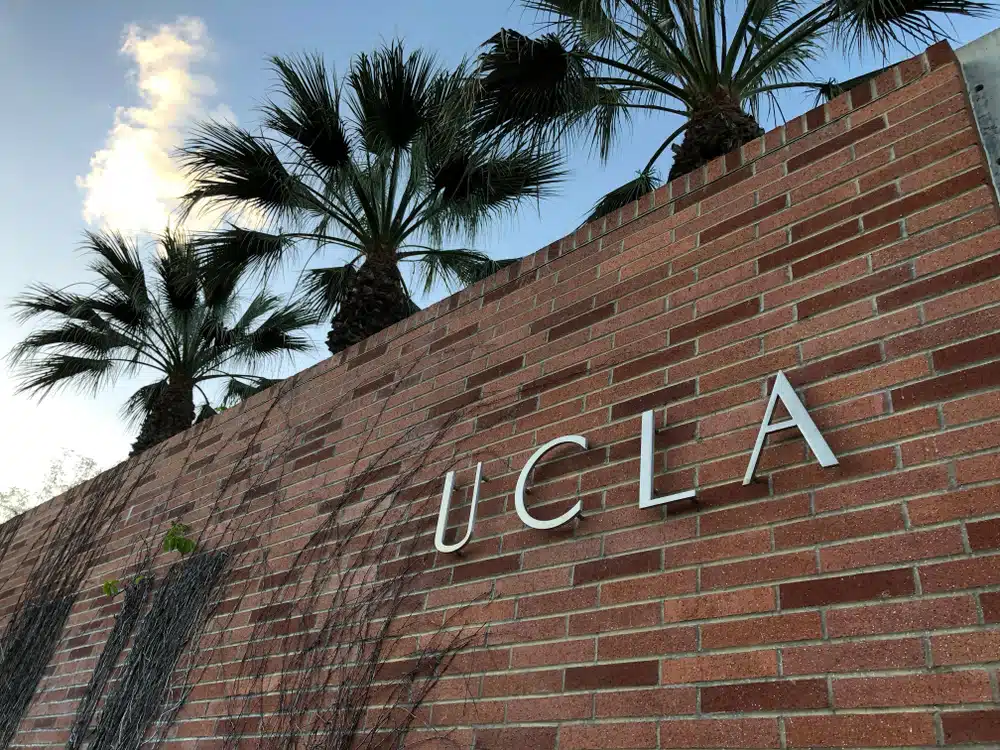
When it comes to prestigious public universities, the UCLA Graduate School system stands out as one of the most respected and dynamic in the world. From groundbreaking research to innovative professional programs, UCLA attracts tens of thousands of applicants annually who aspire to study in one of its graduate-level disciplines.
In this comprehensive guide, we’ll break down everything you need to know about UCLA Graduate School: its schools and programs, application requirements, funding opportunities, and practical tips on how to get into UCLA Graduate School.
- UCLA Graduate School Overview
- Degrees Offered by UCLA Graduate School
- Schools and Divisions within the UCLA Graduate Programs
- UCLA Graduate School Acceptance Rate and Application Statistics
- How to Get into UCLA Graduate School
- Frequently Asked Questions
- Takeaways
UCLA Graduate School Overview
UCLA Graduate School is a thriving hub of research, professional development, and intellectual curiosity. Unlike a single standalone graduate entity, UCLA’s graduate education spans across multiple schools and divisions within the university.
With more than 12,000 graduate students enrolled and over 40% identifying as first-generation college students, UCLA is deeply committed to access, diversity, and academic excellence.
According to UCLA’s Graduate Division, the university offers 133 graduate programs, making it one of the largest graduate education providers in the nation. These programs are recognized globally, with many consistently ranking in the top 10 or 20 in their respective fields. UCLA Graduate School combines academic prestige with the vibrant, opportunity-rich atmosphere of Los Angeles.
Degrees Offered by UCLA Graduate School
UCLA Graduate School offers a wide range of degrees to match the diverse interests and career goals of its applicants. Here’s an overview of the types of degrees available:
| Degree Type | Examples | Purpose |
| Academic Master’s | MA, MS | Research-focused programs for students aiming for academic or research careers |
| Professional Master’s | MPA, MEd, MFA, MPH, MArch | Practice-based programs preparing students for careers in public service, education, design, and health |
| Doctoral Degrees | PhD, EdD | Intensive research training culminating in a dissertation |
| Professional Degrees | JD, MD, DDS, MBA | Terminal degrees preparing students for practice in law, medicine, dentistry, and business |
| Dual/Joint Degrees | JD/MBA, MD/PhD, MBA/MPH | Combine two programs for interdisciplinary expertise |
Regardless of the program, each degree requires a strong foundation of academic preparation, purpose-driven goals, and a desire to contribute to your field.
Schools and Divisions within the UCLA Graduate Programs
At UCLA, graduate education is structured across several distinct schools and divisions, each offering specialized training, world-class faculty, and access to groundbreaking research opportunities. Understanding the scope and focus of each school is a crucial first step when navigating UCLA graduate admissions.
Below is a breakdown of UCLA’s core graduate schools and what you can expect from each:
David Geffen School of Medicine at UCLA
The David Geffen School of Medicine is one of the nation’s leading medical schools and offers a wide range of graduate biomedical education, including the MD, MD/PhD, and PhD programs in biosciences. With research spanning neuroscience, immunology, and genomics, the medical school places heavy emphasis on translational research that bridges the gap between lab and clinic.
Medical students and PhD candidates often collaborate with UCLA Health and affiliated research hospitals, making this one of the most competitive and research-intensive divisions in the UCLA Graduate School system.
Anderson School of Management
UCLA Anderson is the hub for business-related UCLA graduate programs, offering the full-time MBA, Executive MBA (EMBA), Master of Financial Engineering (MFE), Master of Science in Business Analytics (MSBA), and PhD in Management.
Known for its data-driven curriculum, entrepreneurship accelerator, and strong alumni network, Anderson prepares students to lead in business, finance, and tech industries. Admission is highly selective, and strong GMAT/GRE scores, along with leadership experience, are often necessary to gain entry.
School of Law
Ranked among the top law schools in the U.S., the UCLA School of Law offers JD, LLM, SJD, and dual-degree programs like JD/MBA or JD/MPP. The school is known for its Centers of Excellence, including the Williams Institute (focused on sexual orientation law and public policy), the Emmett Institute on Climate Change, and the Criminal Justice Program.
Students receive training in doctrinal law, as well as in advocacy, litigation, and emerging areas such as intellectual property and environmental law.
School of Theater, Film, and Television (TFT)
For students seeking advanced training in the arts, the School of Theater, Film, and Television offers MFA and PhD degrees in areas such as film production, screenwriting, cinematography, and theater arts.
One of the oldest film schools in the country, TFT provides unique access to Los Angeles’s entertainment industry. Students benefit from studio-quality facilities, Hollywood-connected faculty, and competitive opportunities like the Producers Program and Directing MFA.
Luskin School of Public Affairs
The Luskin School of Public Affairs offers interdisciplinary UCLA graduate programs in Social Welfare (MSW, PhD), Urban Planning (MURP, PhD), and Public Policy (MPP). It is highly regarded for its emphasis on community-based solutions, social justice, and policy reform.
Students often engage in hands-on work with nonprofits, city planning departments, and state agencies, making this school a great choice for those aiming to make tangible changes in public service and civic life.
School of Dentistry
The UCLA School of Dentistry offers graduate and professional degree programs that combine clinical expertise with advanced research and academic rigor. Graduate students can pursue DDS, MS, and PhD programs, as well as postdoctoral specialty residencies in areas such as orthodontics, periodontics, endodontics, and oral and maxillofacial surgery.
The school emphasizes translational research and community-based care, preparing students not only for private practice but also for academic, public health, and research careers. Located within a leading medical campus, dental students have access to interdisciplinary collaborations across health sciences.
Fielding School of Public Health
The Fielding School prepares students to address today’s most pressing health challenges through its MPH, MS, and PhD programs. With concentrations in Epidemiology, Health Policy, Environmental Health Sciences, and more, Fielding students often conduct global health research, contribute to disease prevention strategies, and engage in policy analysis.
The school also maintains partnerships with institutions like the World Health Organization and the Los Angeles County Department of Public Health.
Henry Samueli School of Engineering
Home to over 6,000 graduate students, the Henry Samueli School of Engineering offers MS and PhD programs in fields like Civil Engineering, Electrical Engineering, Mechanical & Aerospace Engineering, and Bioengineering.
Known for its cutting-edge labs and research in AI, robotics, and nanotechnology, Samueli emphasizes both theory and application. Students often participate in interdisciplinary initiatives across campus or collaborate with tech companies in Silicon Beach.
Herb Alpert School of Music
The UCLA Herb Alpert School of Music is the first music school in the University of California system and offers specialized graduate degrees in performance, composition, ethnomusicology, and musicology. Programs include the MA, MM, and PhD, as well as DMA (Doctor of Musical Arts) degrees.
Known for its integration of global music traditions and rigorous scholarship, the school blends performance with research, offering students access to world-class faculty, state-of-the-art facilities, and L.A.’s vibrant music scene.
Whether you’re studying Hindustani classical music, opera, or hip-hop production, this school prepares students for careers as performers, educators, and scholars.
School of Nursing
The UCLA School of Nursing is nationally recognized for its commitment to academic excellence, clinical leadership, and health equity. Graduate offerings include the Master of Science in Nursing (MSN) – Advanced Practice, Doctor of Nursing Practice (DNP), and PhD in Nursing.
These UCLA graduate programs are designed to prepare nurse practitioners, researchers, and healthcare leaders who can influence policy and practice in diverse communities. Students benefit from clinical placements at UCLA Health and other top-ranked hospitals, cutting-edge simulation labs, and access to cross-disciplinary research across the medical and public health fields.
School of Education and Information Studies
This School of Education and Information Studies combines two academic pillars: the Graduate School of Education and the Graduate School of Library & Information Science. It offers MA, MEd, EdD, and PhD degrees with a focus on educational leadership, policy studies, social research methodologies, and information systems.
The education division is deeply engaged with local schools and education equity initiatives, while the information science programs lead research on digital literacy, library sciences, and data ethics.

School of the Arts and Architecture
If your interests lie in creative and spatial disciplines, the School of the Arts and Architecture offers MFA and MA degrees in Architecture, Design Media Arts, Art, and World Arts and Cultures/Dance.
The architecture program emphasizes sustainability and social engagement, while other tracks focus on contemporary art, choreography, and cultural studies. Facilities include the UCLA Art Studios, IDEAS Campus, and access to L.A.’s vast creative scene.
UCLA Graduate School Acceptance Rate and Application Statistics
Over the past decade, the UCLA Graduate School has maintained a fairly consistent acceptance rate of around 25%, despite a steady increase in applications. The Fall 2024 cycle reached a new high of 37,836 applications, with 9,084 admits, reflecting the continued competitiveness of the school. Although the admission rate dipped slightly to 24%, the yield rate remained strong at 49%, just a hair below the 11-year average of 51.4%.
This sustained interest and consistent enrollment rate affirm UCLA’s position as one of the most sought-after graduate institutions in the world—balancing selectivity with accessibility across dozens of academic and professional fields.
However, the acceptance rate can vary widely depending on the program, degree level, and size of the applicant pool. Below is a breakdown of estimated acceptance rates for some of UCLA’s most competitive graduate schools and professional programs:
| Graduate School Program | Acceptance Rate |
| David Geffen Medical School | 3.3% |
| Anderson School of Management | 10% |
| School of Law | 4.6% |
The David Geffen School of Medicine remains the toughest UCLA graduate program to enter. With an admit rate of just 3.3%, only a small fraction of thousands of applicants are admitted each year. This exceptionally low rate underscores both the intense demand for medical education and UCLA’s reputation as one of the nation’s premier medical institutions.
These figures underscore the intense competitiveness of admission to the UCLA Graduate School. Even in programs where the acceptance rate appears higher, the applicant pool is exceptionally strong, and admitted students are consistently among the top in their fields.
How to Get into UCLA Graduate School
Meeting the UCLA graduate admissions requirements is only the beginning. With thousands of highly qualified applicants each year, your application must not only fulfill the basic criteria but also demonstrate exceptional academic readiness, research interest, and alignment with the program’s strengths.
Below is a breakdown of everything you need to know about UCLA graduate admissions:
General criteria for admission
To apply, you must have a bachelor’s degree from a regionally accredited institution in the U.S. or a comparable degree from a recognized international university. The minimum GPA requirement for most applicants is a 3.0 on a 4.0 scale.
However, applicants who fall slightly below this GPA may still be considered under UCLA’s Dean’s Special Action (DSA) process, provided the rest of their application shows strong academic or professional potential.
International applicants should have completed at least four years of post-secondary education with an above-average scholarship. All degrees must be based on organized coursework, not credit by exam or non-academic prior learning.
When to apply
Most UCLA graduate programs have deadlines in November or early December for admission to the following fall term. This means you’ll need to begin preparing nearly a year in advance. Late applications may be considered at the department’s discretion, depending on enrollment capacity and funding availability.
For the AY 2025-26, applications will go live this September. To confirm deadlines and policies for your specific major, always refer to the department’s official website or consult the Graduate Program Deadlines list. If an extension is granted, it will typically be posted online.
Statement of purpose
The statement of purpose is a core component of your UCLA application. While word limits vary by program (typically 500 to 1,500 words), your SOP should cover the following:
- What is your purpose in applying for graduate study in your specified degree program? Describe your area(s) of interest, including any subfield(s) or interdisciplinary interests.
- What experiences have prepared you for advanced study or research in this degree program? What relevant skills have you gained from these experiences? Have your experiences led to specific or tangible outcomes that would support your potential to contribute to this field?
- What additional information about your past experience may aid the selection committee in evaluating your preparation and aptitude for graduate study at UCLA?
- Why is the UCLA graduate program to which you are applying is the best place for you to pursue your academic goals? If you are applying for a research master’s or doctoral program, we encourage you to indicate specific research interests and potential faculty mentors.
- What are your plans for your career after earning this degree?

This statement also plays a role in merit-based funding decisions. Always tailor your SOP to each program’s priorities.
Personal statement
Separate from your SOP, the personal statement focuses on your personal background, identity, and motivation. It may be used to determine eligibility for diversity-related fellowships such as the Eugene Cota-Robles Award or the Graduate Opportunity Program.
You’ll be prompted to discuss:
- Educational, cultural, or socioeconomic barriers you’ve faced
- Community service or leadership contributions
- Your alignment with UCLA’s values of diversity and inclusion
The personal statement is usually capped at 500 words and is optional for some programs, but highly recommended.
Do you want to craft essays that set you apart? Our essay editing program gives you expert guidance to develop clear, compelling, and authentic essays that highlight your unique story and boost your chances of admission.
How to apply
UCLA uses a centralized graduate application system for all programs except:
- MD (David Geffen School of Medicine)
- JD, LLM, SJD (School of Law)
- DDS (School of Dentistry)
- MBA, MFE (Anderson School of Management)
Each applicant may only apply to one program per cycle, unless applying to an approved dual or articulated degree. For example, JD/MBA or MD/PhD candidates will follow joint application procedures.
Frequently Asked Questions
1. Does UCLA Graduate School accept international students?
Yes, international students are welcome and make up a significant portion of the graduate student population. Be sure to check for visa requirements and English language tests.
2. Can I apply to more than one UCLA graduate program?
You may only apply to one graduate program per application cycle, unless a joint-degree program allows otherwise.
3. What’s the difference between the Statement of Purpose and Personal History Statement?
The SOP is academic-focused, explaining your research goals and why UCLA is a good fit. The Personal History Statement highlights personal background, diversity, and overcoming challenges.
Takeaways
- UCLA Graduate School offers over 133 graduate-level programs across professional schools and academic divisions, making it one of the largest and most diverse graduate education providers in the nation.
- Admission is highly competitive, with a general acceptance rate around 24–25%, though programs like the David Geffen School of Medicine admit fewer than 4% of applicants.
- Each school has its own admissions process, but all applicants must demonstrate strong academic readiness, compelling statements, and alignment with faculty and program priorities.
- UCLA offers extensive opportunities for funding, including fellowships, assistantships, and fee waiver programs, which expand access for students from all backgrounds.
- Beyond academics, UCLA graduate students benefit from career resources, interdisciplinary research, and the cultural and professional advantages of studying in Los Angeles.
- Ready to strengthen your graduate school applications? AdmissionSight’s Graduate School Admissions Program helps you develop a personalized strategy tailored to competitive graduate programs like UCLA’s.










